Birthstone Jewelry for Men: A Practical Choosing Guide
Birthstone jewelry works for men — when you pick darker, denser stones and masculine settings. Which stones read best, sizing that actually fits, and when men actually wear it.
Yueounb Editorial
Jewelry Expert
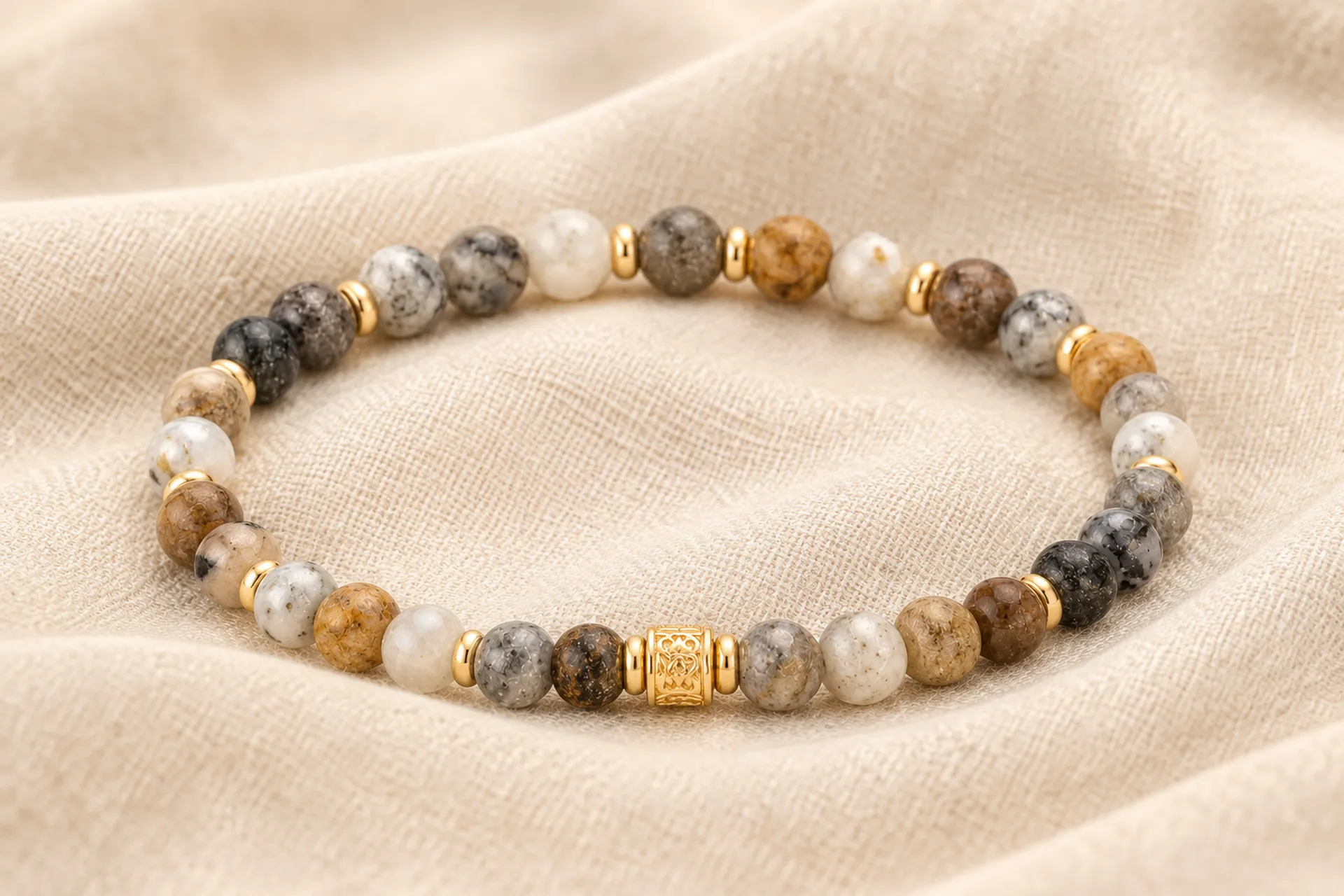
Wondering if birthstone jewelry works for men? It absolutely does—when you pick darker, denser stones (our stone durability ranking covers which hold up) and masculine-leaning settings. This guide covers which monthly stones suit men's styles best, how to size rings and bracelets correctly, and where each piece fits in real life: work, weekends, and everything in between.
Quick Answer
Birthstone jewelry for men is a growing category, and the key is stone selection and setting style. Most men gravitate toward darker birthstones—garnet, onyx-adjacent tones, sapphire, ruby, and tourmaline—set in signet rings, beaded bracelets, dog tags, or simple studs. Durability matters more than for typical women's fashion jewelry, so prioritize stones at 8+ on the Mohs scale for rings (garnet at 6.5–7.5 is better suited to pendants or occasional wear). For sizing, measure an existing ring or use a printable sizing guide rather than guessing. Birthstone pieces make strong personalized gifts—Father's Day, birthdays, and the birth of a child are the three most common occasions. The International Gem Society's Mohs chart orders every major stone — the shortcut for checking a daily-wear pick.
Which Birthstones Work Best for Men's Styles
Not every birthstone translates well to men's jewelry. Color saturation, size of the cut, and setting design all matter. Here's an honest month-by-month breakdown:
| Month | Birthstone | Mohs Hardness | Men's Style Verdict |
| --- | --- | --- | --- |
| January | Garnet | 6.5–7.5 | Deep red works well; best in pendants or signets, not daily-wear rings |
| February | Amethyst | 7 | Purple reads feminine to many men; smaller, dark-toned cuts help |
| March | Aquamarine | 7.5–8 | Light blue can work in minimalist studs or a tie-bar accent |
| April | Diamond | 10 | Excellent—black or salt-and-pepper diamonds are especially popular for men |
| May | Emerald | 7.5–8 | Rich green works, but emeralds are brittle (poor toughness); protect in bezel settings |
| June | Pearl / Alexandrite | 2.5–4.5 / 8.5 | Skip pearls for daily wear; alexandrite is a strong masculine option |
| July | Ruby | 9 | One of the best choices—deep red, extremely durable |
| August | Peridot / Spinel | 6.5–7 / 8 | Spinel in dark red or black is the better men's pick |
| September | Sapphire | 9 | The best overall men's birthstone; blue, black, and green sapphires all work |
| October | Opal / Tourmaline | 5.5–6.5 / 7–7.5 | Black opal or dark green tourmaline suit men; white opal is fragile |
| November | Topaz / Citrine | 8 / 7 | Smoky or London blue topaz reads more masculine than golden tones |
| December | Turquoise / Tanzanite / Zircon | 5–6 / 6.5–7 / 6.5–7.5 | Turquoise in beaded bracelets works well; tanzanite is too soft for rings |
A note on hardness vs. durability: Mohs hardness measures scratch resistance only. Emeralds and opals are hard but brittle—poor toughness means they chip from knocks. Sapphires and rubies combine high hardness with good toughness, which is why they dominate men's daily-wear rings. Also ask vendors about treatments: many sapphires are heat-treated (standard and stable), while some topaz and tanzanite color comes from irradiation or heat—both acceptable, but worth knowing for care instructions.
Which Styles Read as Masculine?
Signet rings and bezel settings. The signet is the classic men's birthstone vehicle—a flat top with an inset stone reads traditional and understated. Bezel settings (metal wrapping the stone's edge) offer far better chip protection than prongs, important for anyone working with their hands.
Beaded and leather bracelets. A strand of 8mm or 10mm beads in a birthstone color is the lowest-commitment entry point. Black onyx-style looks, dark garnet, or lapis-like blues dominate this category. Note that softer beads like turquoise and opal will scuff over time with wrist wear.
Dog tags and pendants. A brushed-metal dog tag with an inset birthstone—especially popular as a father's piece with a child's birthstone—suits casual and layered looks.
Studs and cufflinks. Small dark-toned studs (sapphire, ruby, black diamond) and birthstone cufflinks work for men who want subtle personalization under dress codes.
How Do You Size Men's Birthstone Jewelry?
Rings: Men's ring sizes in the US typically run 8–13. Never guess—finger size fluctuates with temperature and time of day, so measure in the afternoon at room temperature. The two most reliable methods: (1) take an existing ring he wears on the correct finger to a jeweler for measurement, or (2) use a printed ring-size chart checked against a physical ruler for calibration. For wide bands (8mm+), size up a half size—wider bands fit tighter.
Bracelets: Measure wrist circumference with a soft tape and add 0.5–0.75 inches for a comfortable fit. Men's standard bracelet lengths run 8–9 inches; beaded bracelets should slide over the hand but not spin freely on the wrist.
Necklaces: 20–24 inch chains sit at or below the collarbone—the most common men's range. Dog tags typically hang best on 22–24 inch chains.
When and Where Do Men Actually Wear It?
- Daily wear (work, hands-on jobs): Sapphire, ruby, or diamond pieces in bezel or signet settings. Remove rings for gym work and manual labor regardless of stone. - Business and formal: Cufflinks, studs, or a slim signet. Alexandrite's color-shift is a subtle conversation starter. - Weekend and casual: Beaded bracelets and pendants—this is where softer stones like turquoise are fine because replacement cost is low. - Gift occasions: Birthday (the obvious one), Father's Day, and new-father gifts with a child's birthstone are the three most common purchase drivers in this category.
Where to Shop
Browse the full selection of men's-friendly birthstone pieces at our shop page, or dig into a specific month:
- January: garnet - April: diamond - July: ruby - September: sapphire
Frequently asked.
Is birthstone jewelry popular for men?
Yes, and growing. Signet rings, beaded bracelets, and dog-tag pendants with birthstones have moved from niche to mainstream men's jewelry over the past decade, driven largely by the personalized-gift market. The most popular men's birthstone categories are ruby (July), sapphire (September), and diamond (April).
Which birthstones are too fragile for a men's daily-wear ring?
Opal (Mohs 5.5–6.5), pearl (2.5–4.5), turquoise (5–6), and emerald (hard but brittle due to natural fractures) are poor choices for a ring worn every day. Save them for pendants, bracelets, or occasional wear. For daily rings, stick with sapphire, ruby, or diamond.
How do I find a man's ring size without him knowing?
Borrow a ring he already wears on the intended finger and trace the inner circle on paper, or press it into a bar of soap to capture the circumference—then match against a sizing chart. For accuracy, a jeweler can measure the traced circle. Confirm which finger he wears it on; dominant-hand fingers run slightly larger.
Related Articles
A Brief History of Birthstones
From the twelve tribes of Israel to the 1912 standard that rules the modern list — the 3,500-year origin story of why we wear our birth month.
Read MoreThe Ultimate Birthstone Cleaning Guide
Keep every piece in your collection gleaming. Step-by-step methods for gold, silver, and delicate birthstones — no harsh chemicals needed.
Read MoreBirthstone Energy: A Complete Crystal Healing Guide
From root chakra grounding to crown chakra clarity, discover how each birthstone carries healing energy. Learn to activate your crystal for meditation, sleep, and daily intention.
Read More