September Birthstone

Sapphire

Deep blue, boundless depth.

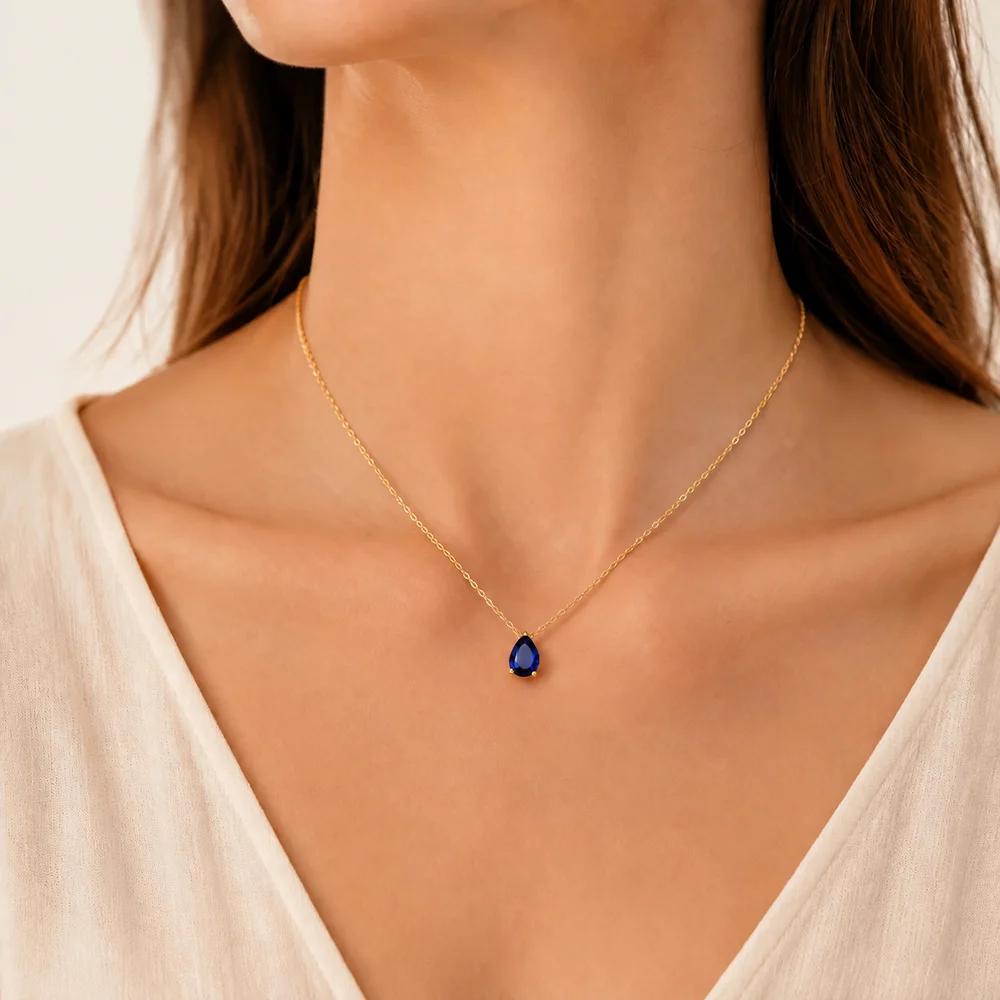
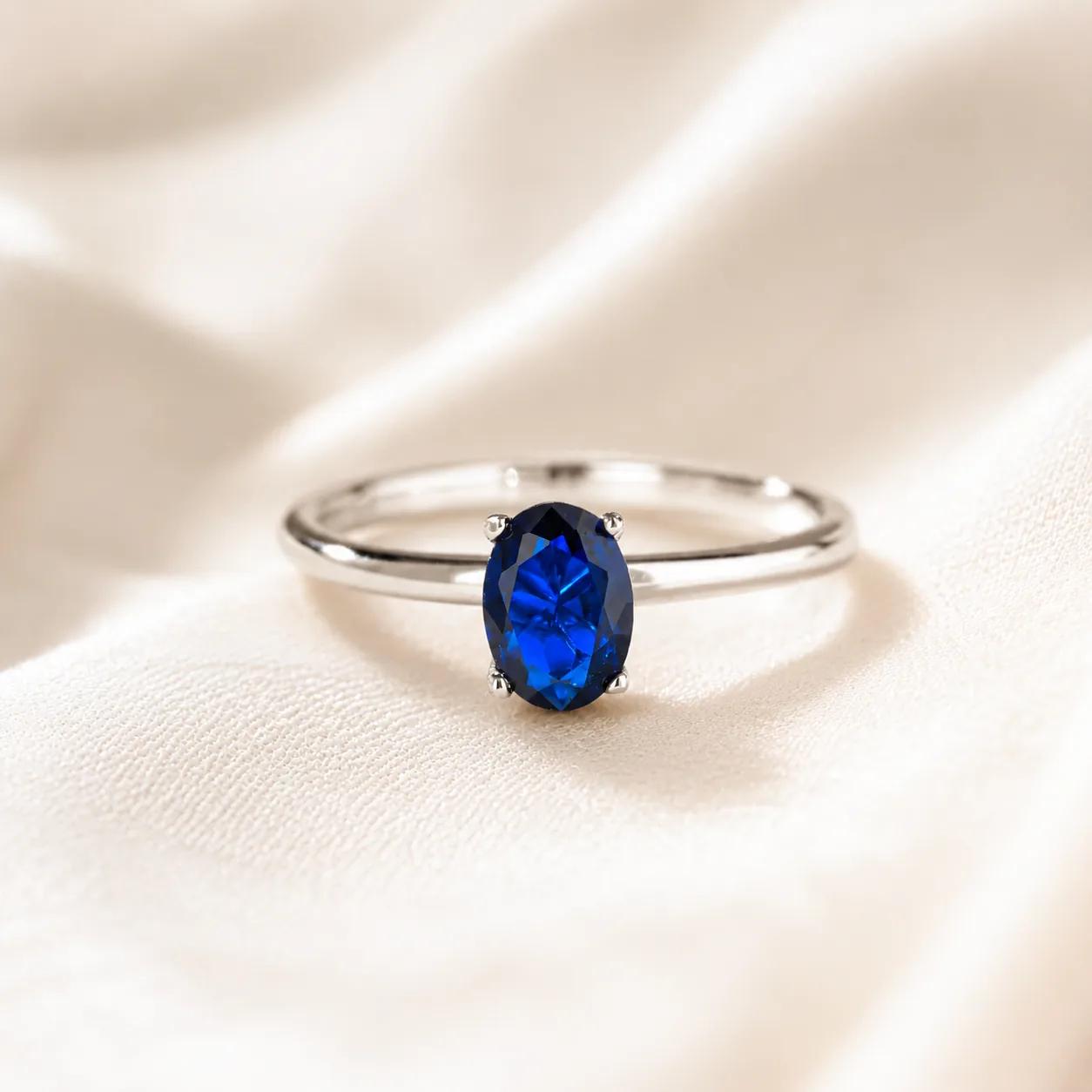
September's birthstone is Sapphire (or Lapis Lazuli) — a gemstone symbolizing wisdom, loyalty, and focused concentration. It rates 9 on the Mohs hardness scale and is the traditional stone for September birthdays, set in handcrafted necklaces, rings, earrings and bracelets.

WisdomLoyaltyFocus
Sapphire ($) — September birthstone

Primary Stone

Sapphire

Mohs Hardness

9

Symbolizes

Wisdom · Loyalty · Focus

Alternative September Birthstone

Lapis Lazuli

September Sapphire Jewelry

4 handcrafted pieces for September babies.

September Birthstone Gifts for Her

September birthstone gifts carry one clear message: I know your month, I know your stone. A Sapphire necklace is the classic September gift for her — personal, everyday-wearable, and impossible to regift. For a mom, choose a 2-stone or 3-stone design that pairs her Sapphire with her children's birthstones; for a grandmother, family pieces hold 4, 5 or even 6 stones — one per grandchild.

History & Lore of Sapphire

Sapphire has symbolized divine favor for millennia. Ancient Persians believed the sky was blue because it reflected a giant sapphire upon which the earth rested. Medieval clergy wore sapphire rings to symbolize heaven, and kings wore them to attract divine protection. It has long been the engagement stone of royalty.

The stone of mental discipline, sapphire is said to sharpen focus, calm chaotic thoughts, and deepen loyalty. Worn at the throat or brow, it is believed to help the wearer speak and seek truth without wavering.

Symbolism: Wisdom, loyalty, and focused concentration.

Sapphire Quick Facts

Everything about September's birthstone in one place.

Mineralogy

Mineral
Corundum (Sapphire)
Chemical Formula
Al2O3
Crystal System
Trigonal
Mohs Hardness
9
Specific Gravity
3.99 - 4.1
Refractive Index
1.76 - 1.77

Buying Guide

Primary Sources

Sri Lanka (Ceylon), Kashmir, Myanmar, Madagascar

Color Variations

Royal blue, Cornflower, Padparadscha (pink-orange), White (colorless)

Popular Cuts

Oval, Cushion, Round, Cabochon (star sapphire)

Best For

September birthdays, 5th and 45th anniversary, Engagements, Virgo and Libra

Avoid With

Harsh chemicals, Abrasive cleaners

The September Birthstone, Answered Directly

September's birthstone is sapphire — the only stone on the modern 1912 chart for the month, though older traditional lists also carried lapis lazuli, a confusion baked into the word itself: the Greek sappheiros that became sapphire originally meant lapis. Sapphire is gem-quality corundum at Mohs 9 — second only to diamond — and comes in every color of the family except red (red corundum is ruby), from royal blue to the rare pink-orange padparadscha. One honesty note worth knowing up front: about ninety-five percent of market sapphires, by common trade estimates, are heat-treated to reach their final blue — a stable, accepted, disclosed practice that separates everyday sapphires from the collector-grade unheated stones.

Raw Sapphire: Barrel Crystals and the Kashmir Legend

Corundum crystallizes in the trigonal system as barrel-shaped six-sided crystals — stout, waterworn-looking prisms that stream gravels in the rivers where sapphires are mined. The source map is a geography of reputations. Sri Lanka — Ceylon — is the oldest continuous supplier, the home of luminous cornflower blues and the main source of padparadscha, and remains the trade's cutting and trading hub; a share of stones sold as Ceylon sapphires are in fact Madagascar material cut there, which the trade considers honest geography in the loosest sense only. Madagascar transformed the market after the 1998 discovery at Ilakaka and now supplies much of the world's volume. Thailand's Chanthaburi grew into the treatment capital, where heat work has been industrialized for decades. Myanmar's Mogok contributes deep royal blues.

Then there is Kashmir, the legend every blue is measured against. In 1881 a landslide in the Himalayan Paddar region exposed sapphire-bearing rock near the snowline, at altitudes around four thousand meters; the famous old mine was essentially exhausted within about seven years. What came out of that brief window — stones with a velvety cornflower blue, the softness caused by microscopic inclusions scattering light — still sets world records: unheated Kashmir sapphires have sold for over $270,000 per carat, and the 392-carat Blue Belle of Asia brought $17.3 million at Christie's. September babies inherit the only birthstone whose reference standard is a closed mine.

Sapphire Meaning: The Stone That Held Up the Sky

The oldest recorded meaning is cosmic: the Persians taught that the earth rested on a giant sapphire, and that the sky was blue because it was the stone's reflection. Medieval Europe moved the stone indoors and upward — sapphire became the bishop's gem, the color of heaven worn on the hand, and in the twelfth century Pope Innocent III decreed that episcopal rings be set with sapphire, wiring the stone to wisdom, purity, and truth for every sermon afterward. A darker folk belief held that a sapphire would change color on an unfaithful wearer's hand — tradition's own fidelity alarm. The Victorian inheritance is plainer and more durable: sincerity, and the blue that said a promise was meant. On our anniversary chart, sapphire marks the 5th, the 45th, and the 70th year.

How Our Artisans Hand-Set Each Sapphire

Sapphire is the most forgiving stone in the workshop. At Mohs 9 with excellent toughness and no cleavage, it survives the daily life that softer stones sit out — which is why our artisans can offer September babies every setting the bench knows: airy prongs that let light through the pavilion, hand-burnished bezels for daily-wear rings, delicate gallery work that would endanger an emerald. Stone selection reads for even saturation and lively zoning; heat treatment is the accepted norm and each stone's disclosure travels with it — the unheated premium belongs to certificates, not guesswork.

The one handling caution is the special case: star sapphires, whose asterism lives in aligned silk inclusions, never go into ultrasonic machines or steam — the treatments and textures that make a star can be shaken loose. For the ordinary faceted September stone, the routine is the calendar's simplest: warm soapy water, a soft brush, a life without anxiety. Our cleaning guides keep the full chart.

How to Identify Authentic Sapphire

Synthetic sapphire is the honest backstory of the modern stone: the Verneuil flame-fusion process, the first commercially successful lab-grown gem method, produced synthetic ruby in 1902 and blue sapphire within the decade — lab corundum is now ordinary enough to serve as watch glass. Chemically it is true sapphire, so identification reads the growth story under magnification: flame-fusion stones show curved striae and round gas bubbles, features natural crystals never produce; flux-grown synthetics need a laboratory. A certificate stating natural origin is the final word on any important stone.

Treatment detection matters more than fakery. Diffusion-treated sapphires take their blue only in a thin surface layer: immersed facet-down in a liquid, the color pools at the girdle in a dark ring — the classic laboratory sign. Glass-filled fractures betray themselves with a blue flash and flattened bubbles under the loupe. Among honest lookalikes, the practical confusions are tanzanite (softer at 6.5, purple-blue pleochroism — our sapphire versus tanzanite comparison covers that duel in full), blue spinel, and irradiated blue topaz. Price sanity closes the loop: honest commercial 1-3 carat sapphires trade in the tens-to-hundreds per carat, and a stone offered far below that is either treated beyond disclosure or not sapphire at all.

Who Should Receive Sapphire

September babies arrive as Virgo (through September 22) or Libra (from September 23) — the analyst and the aesthete — and both traditions claim the blue: clarity of mind for one, harmony for the other. Sapphire is also the sincerity stone of engagements older than the diamond age: a blue ring meant a true promise long before marketing finished standardizing the alternative. Whatever one thinks of royal watching, the 1981 catalog sapphire a princess chose — a 12-carat Ceylon oval surrounded by diamonds — made sapphire clusters a permanent engagement option at every price tier, and the effect has outlived every trend since.

The gift calendar gives September two more hooks: the 45th wedding anniversary is the sapphire year outright (and our chart honors it again at the 5th and 70th), and a September graduation carries the stone of wisdom into exactly the right hands. Pair the piece with a note naming the meaning — the sky's reflection, heaven's color, the sincerity stone — and the blue does the rest; the full modern-versus-traditional calendar lives on our birthstone chart guide for readers mapping the whole year.

Are pink and yellow sapphires still September's stone?

Yes — and this surprises people more than any other birthstone fact. Sapphire is not a blue stone; it is gem corundum, and corundum comes in every color except one. The moment it is red, gemology renames it ruby. Pink, yellow, peach, padparadscha's sunset blend — all of them are sapphires, all of them are officially September's stone, and the rare fancy colors can out-price blue.

So September babies hold the calendar's widest palette: if blue is the classic answer, the fancy sapphires are the personal one. The only rule is the definition itself — red means ruby, and the line between ruby and pink sapphire is drawn by color depth, which is why certificates exist.

Heat-treated or untreated sapphire — which should you buy?

The honest market first: the strong majority of sapphires sold today, everywhere, at every price, have been heat-treated — an ancient, stable, accepted enhancement that dissolves silk inclusions and deepens color. It is not a fraud signal; undisclosed treatment would be. Untreated stones with fine natural color are the collector tier: rarer, certified as such, and priced multiples above heated equivalents.

The buying advice splits cleanly. For a piece you will wear and love, a well-priced heated sapphire with good color is the rational choice — buy the look, not the lab romance. For an heirloom-minded purchase, untreated with a reputable certificate is the only lane, and the premium is the price of the word natural meaning both the species and the color.

Sapphire and ruby are the same mineral — so what actually separates them?

Chemistry's shortest chapter: both are corundum, aluminum oxide at Mohs 9. Trace elements write the difference — chromium makes red, and past a defined depth of red, corundum stops being called sapphire and starts being called ruby. Iron and titanium make blue; other traces make the fancy colors. Two stones, one species, divided by a color line agreed by laboratory standard.

It means September and July wearers share the hardest colored gem in the box, and the same practical virtues: daily-wear durability, ultrasonic tolerance, and centuries of royal precedent. The rivalry, like most sibling rivalries, is entirely about the color of the crown.

Handcrafted Sapphire, made to be inherited.

Each piece is set by hand, one artisan, start to finish.

Shop Sapphire Jewelry

Birthstone Guide

September Sapphire FAQs

Everything about raw crystals, energy, handmade craft, and how to choose your sapphire jewelry.

Is there a raw crystal version of sapphire? Can I get uncut birthstone jewelry?

Yes. Raw sapphire forms in barrel-shaped hexagonal crystals. While blue is most famous, raw sapphire comes in every color of the rainbow. Our September pieces can preserve the natural crystal barrel shape for an architectural, unpolished look.

What is the energy or healing meaning of sapphire?

Sapphire is the stone of mental discipline and focused intention, linked to the brow chakra. It is said to calm chaotic thoughts, deepen concentration, and protect the wearer from negative influences.

How is the handmade sapphire jewelry crafted?

Sapphire deep blue is the result of trace titanium and iron. Our makers hand-match sapphires within each design so a multi-stone piece reads as one harmonious blue.

Who is sapphire the perfect gift for?

September sapphire is the gift for the thinker: the lawyer, the scientist, the partner who keeps you grounded. Ideal for 5th and 45th anniversaries.

How can I tell if my sapphire is authentic?

Sapphire (Mohs 9) is the second-hardest natural gemstone. Look for natural inclusions under magnification; a flawless vivid blue at a low price is almost always lab-grown.

What is the September birthstone?

Sapphire is September's birthstone on the modern 1912 chart — though older traditional lists also carried lapis lazuli, a confusion inherited from the word itself: Greek sappheiros originally meant lapis. Sapphire is gem-quality corundum at Mohs 9, second only to diamond, and comes in every corundum color except red (red is ruby).

What color is September's birthstone?

Blue is the classic — from Ceylon cornflower to deep royal blue — but sapphire spans the whole family palette: pink, yellow, peach, purple, colorless, and the rare pink-orange padparadscha. The stone is the September tradition; the hue is the wearer's choice.

Why is sapphire so valuable?

Three stacked reasons: durability (Mohs 9 with excellent toughness makes it one of the most wearable gems that exists), the rarity of fine saturated color (about 95% of market sapphires are heat-treated, so unheated fine blue is scarce), and provenance — legendary Kashmir stones have sold for over $270,000 per carat and the 392-carat Blue Belle of Asia brought $17.3 million at auction.

Find Your Sapphire Piece

Handcrafted September birthstone jewelry, made to be inherited.

Shop Sapphire Jewelry