September Birthstone Jewelry: Choosing Sapphire Gifts
September birthstone jewelry means sapphire — Mohs 9, the hardest colored stone. Natural vs lab-grown, royal blue vs cornflower, and gift picks by budget.
Yueounb Editorial
Gemologist
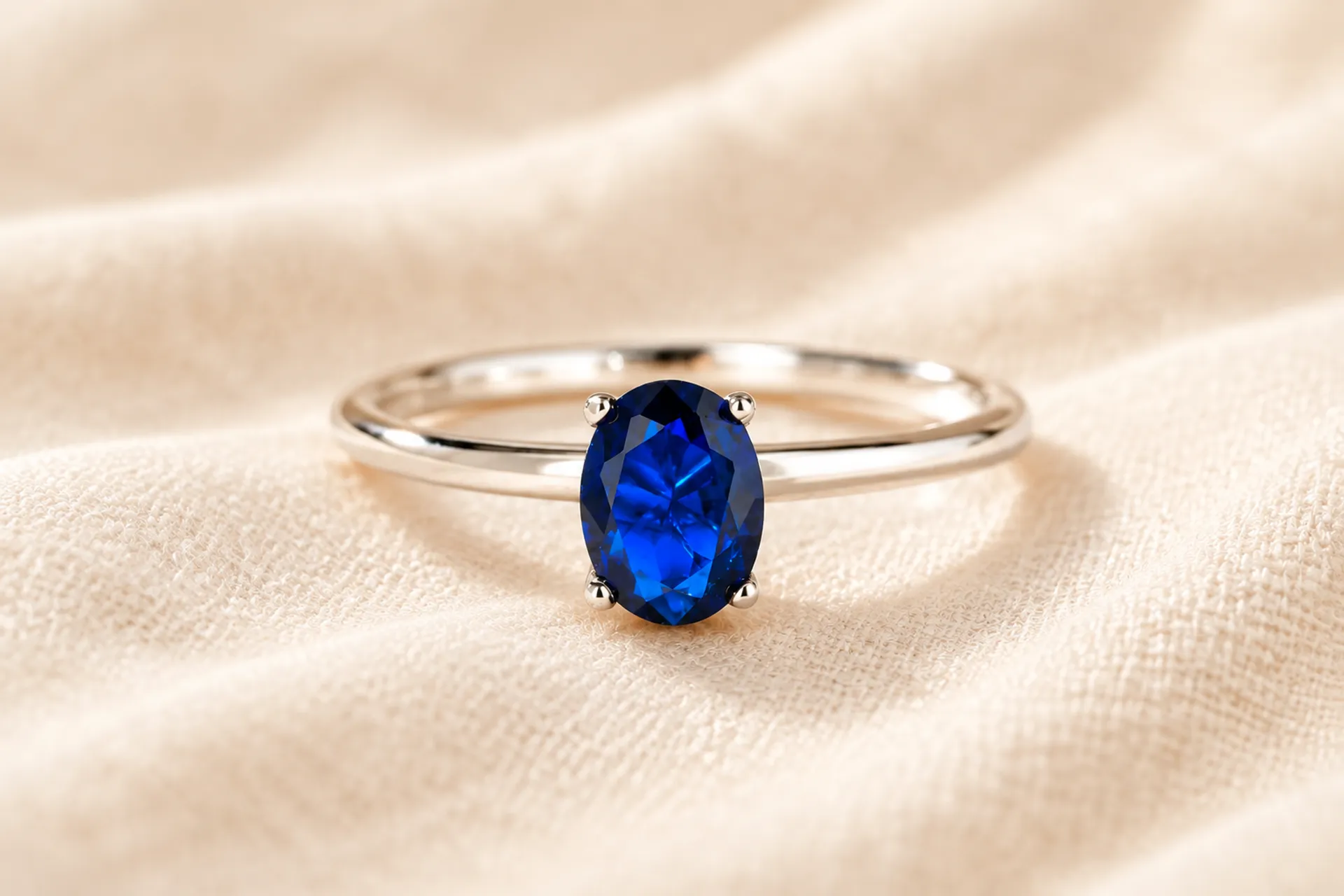
September birthstone jewelry features sapphire, a gemstone rated 9 on the Mohs scale—second only to diamond in hardness. Natural sapphire ranges widely in price: commercial-grade blue sapphire may run $50–$300 per carat, while fine fine untreated Ceylon material reaches the market's highest per-carat figures. Lab-grown sapphire, chemically identical to natural, costs a fraction of that. The two biggest buying decisions are color (deep royal blue vs. lighter cornflower blue) and origin disclosure (natural vs. lab-created, treated vs. untreated). This guide walks through both, with recipient-specific gift suggestions across budget tiers. GIA's guide to gem durability explains why hardness alone never tells the whole story
Quick Answer: September Sapphire at a Glance
| Question | Short Answer |
| --- | --- |
| What is September's birthstone? | Sapphire (blue is classic, but sapphire occurs in every color except red—that's ruby) |
| Natural vs. lab-grown sapphire? | Same mineral (corundum), same chemistry and hardness (9/10); lab-grown costs far less. US law requires disclosure |
| Which color is "best"? | No single answer—deep royal blue suits traditional tastes; cornflower/velvet blue from Sri Lanka is what top graders prize; both are legitimate choices |
| Typical budgets? | Sterling silver lab-sapphire pendants from ~$40–100; gold natural-sapphire rings commonly $300–2,000+ |
What Is Sapphire, Chemically?
Sapphire is the gem variety of corundum (aluminum oxide, Al₂O₃), scoring 9 on the Mohs hardness scale. But hardness is only one of three durability factors, and honest jewelry content should never treat "9/10" as the whole story: per-stone grading notes live in GIA's Gem Encyclopedia
- Hardness (9/10): Excellent scratch resistance. Everyday wear in a ring is realistic over decades. - Toughness: Corundum has no cleavage plane, giving it good (not exceptional) toughness—better than emerald, less tough than jadeite. Hard knocks can still chip a sapphire, especially at facet junctions or thin girdles. - Stability: Sapphire handles heat, light, and common chemicals very well. Ultrasonic cleaning is generally considered safe for untreated and heat-only stones; the Gemological Institute of America (GIA) cautions against ultrasonic cleaning for fracture-filled or dyed material.
Treatment disclosure matters. Most commercial blue sapphire on the market is heat-treated to improve color—a routine, accepted practice, but it should be disclosed. Bezel settings, popular in everyday sapphire rings, offer extra chip protection for active recipients—a genuinely practical choice for a September-born teacher, nurse, or new mom.
Natural or Lab-Grown Sapphire — Which Is Right?
Lab-grown sapphire (created via flame-fusion, Czochralski, or hydrothermal methods) is not an imitation. It is corundum—the same crystal structure, same hardness, same refractive index. The difference is origin and value retention.
| Factor | Natural Sapphire | Lab-Grown Sapphire |
| --- | --- | --- |
| Chemistry | Corundum | Corundum (identical) |
| Durability | Hardness 9, good toughness | Same |
| Price per carat | $50–$5,000+ depending on quality | Typically $10–$100 per carat for finished gems |
| Value retention | Better, especially for untreated fine material | Minimal resale value |
| Inclusions | Natural inclusions expected | Often cleaner; may show curved growth lines (flame-fusion) |
The Federal Trade Commission's Jewelry Guides require sellers to disclose lab-grown origin clearly—legitimate dealers label these as "lab-grown," "lab-created," or "synthetic." A phrase like "created sapphire" without clarification is a yellow flag.
Our editorial position: for sentimental gifts under ~$200, lab-grown sapphire is often the more rational choice—you get a larger, cleaner stone in real gold or quality silver for the same money. For milestone gifts intended as heirlooms, buy natural with documented treatment status. For a deeper dive into September's stone, see our September birthstone guide.
Royal Blue or Cornflower — Which Color to Choose?
Blue sapphire color is evaluated on hue, tone, and saturation—and the trade's preference has genuinely shifted.
Deep royal blue (often associated with basaltic sources like Thailand, Australia, and Madagascar): Dark, inky, saturated. Traditional American buyers, especially older recipients, often expect this look—it's the "sapphire" of 20th-century estate jewelry. The risk: stones cut too dark lose brilliance and can look nearly black in evening light. A well-cut dark sapphire should still flash blue in dim conditions—check the stone under a store's incandescent lighting, not just bright LEDs.
Cornflower / velvet blue (classic Ceylon, Sri Lanka): Lighter, brighter, with a soft velvety saturation. This is the color connoisseurs and major auction houses typically prize, and fine untreated Ceylon cornflower commands the market's premium per-carat prices. It also tends to look larger than its carat weight because light travels through it rather than being absorbed.
Practical guidance: dark tones photograph beautifully but underperform in daily wear; cornflower reads more "modern" and suits younger recipients and minimal settings. Neither is wrong—match the recipient's wardrobe and existing jewelry. Someone who wears charcoal and navy will love a royal blue; someone in pastels may find cornflower more flattering.
What Sapphire Gifts Fit Each Budget?
Under $100 — sterling silver + lab-grown or small natural sapphire. Silver halo pendants, stud earrings, and stackable birthstone rings. A well-made lab-sapphire silver piece in this range is honest, durable, and appropriate for teens, coworkers, or gift exchanges.
$100–$400 — gold vermeil or 10K/14K gold with lab-grown or commercial natural sapphire. This is the sweet spot for partner gifts and milestone birthdays. A 14K gold pendant with a 1–1.5 ct equivalent lab sapphire is realistic here.
$400–$1,500 — 14K/18K gold with certified natural heat-only sapphire. Engagement-adjacent territory. Sapphire is a historically popular non-diamond engagement stone (most famously, the sapphire engagement ring now worn by Catherine, Princess of Wales, originally given in 1981). Prioritize cut and color over carat weight: a vivid, well-cut 1.5 ct sapphire outperforms a dark, windowed 3 ct stone every time.
$1,500+ — fine Ceylon or Madagascar sapphire with origin/treatment documentation. Insist on a report from a reputable lab (GIA, Gübelin, or SSEF) stating treatment status. "No heat" or "unheated" on a lab report meaningfully increases value.
Sapphire also appears in anniversary traditions—it's the traditional gift for several milestone years, covered in our anniversary gemstone guides.
Five Buying Checks Before You Check Out
1. Ask for treatment status in writing. "Natural" and "untreated" are different claims. Heat-only is fine if disclosed; diffusion-treated and fracture-filled stones are worth significantly less. 2. View the stone in at least two lighting conditions if shopping in person; ask for daylight photos if buying online. 3. Check the cut for "windowing"—if you can read text through the center of the stone, light is leaking out the back and brilliance suffers. 4. Confirm metal purity (925 sterling, 10K, 14K, 18K) and, for lab stones, that "lab-grown" appears explicitly in the listing. 5. For rings sized over US 8, budget for resizing—sapphire settings in gold typically resize easily, but eternity bands cannot be sized at all.
Frequently asked.
Is sapphire a good everyday ring stone?
Yes—with caveats. Its Mohs hardness of 9 and good toughness make it one of the best everyday colored gems, far more durable than opal, emerald, or tanzanite. Bezel or semi-bezel settings add chip protection. Avoid ultrasonic cleaners if the stone is fracture-filled or dyed; heat-only and untreated sapphires clean safely.
How can I tell natural sapphire from lab-grown before buying?
You generally can't by eye—both are corundum with identical appearance. Look at the listing language and ask for certification. Reliable dealers state "lab-grown" or "synthetic" clearly per FTC guidance. Natural stones usually show inclusions under 10x magnification, while flame-fusion synthetics may display curved striae, but definitive separation requires a gemologist or lab report.
Which sapphire color holds value best?
Fine velvety cornflower to royal blue with strong saturation and no grayness—classically associated with Sri Lanka (Ceylon)—holds value best, especially when unheated with lab documentation. Overly dark stones and heavily included material appreciate little. Fancy colors like pink padparadscha can exceed blue sapphire in price but are a niche market.
What's a reasonable budget for a September birthstone gift?
It depends on the relationship. $40–$100 in sterling silver suits friends and teens; $150–$500 in gold marks partner or family milestones; $500+ justifies certified natural sapphire. Lab-grown sapphire lets you maximize visual size and gold quality at lower budgets—it's a legitimate, honest choice, not a compromise, unless heirloom value is the priority.
Related Articles
A Brief History of Birthstones
From the twelve tribes of Israel to the 1912 standard that rules the modern list — the 3,500-year origin story of why we wear our birth month.
Read MoreThe Ultimate Birthstone Cleaning Guide
Keep every piece in your collection gleaming. Step-by-step methods for gold, silver, and delicate birthstones — no harsh chemicals needed.
Read MoreBirthstone Energy: A Complete Crystal Healing Guide
From root chakra grounding to crown chakra clarity, discover how each birthstone carries healing energy. Learn to activate your crystal for meditation, sleep, and daily intention.
Read More