A Brief History of Birthstones
From the twelve tribes of Israel to the 1912 standard that rules the modern list — the 3,500-year origin story of why we wear our birth month.
Marcus Bellini
Creative Director
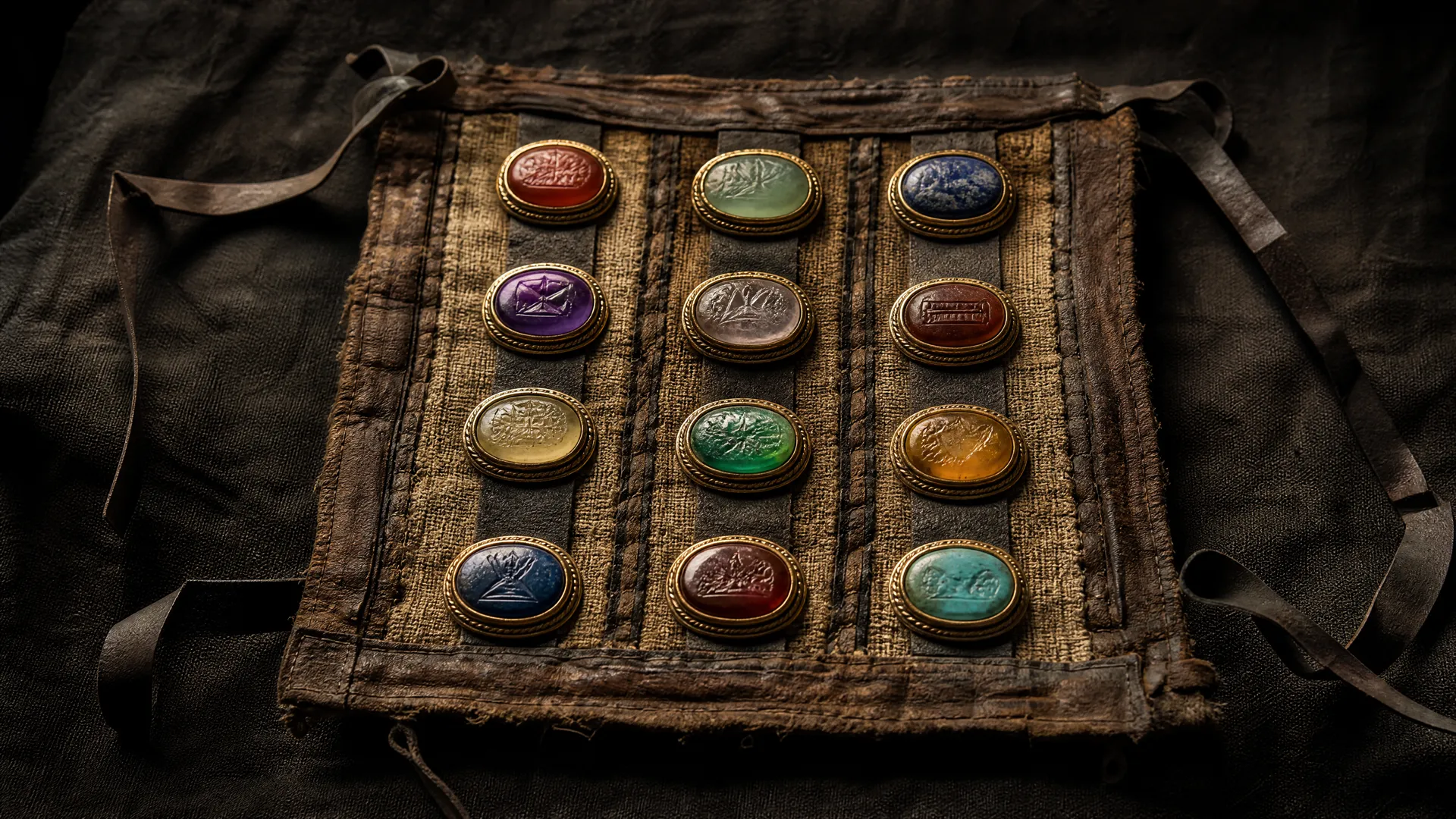
The birthstone tradition is roughly 3,500 years old: twelve stones on a priest breastplate became twelve months of the year, formalized into the modern twelve-stone list by American jewelers in 1912. Between those points sit the Bible, zodiac astrology, Polish gem merchants, and two industry votes — the complete origin story below.
The starting point: the Breastplate of Aaron. The Book of Exodus describes the high priest ceremonial breastplate set with twelve gemstones, one for each tribe of Israel — garnet-like carbuncle, jacinth, jasper, and stones whose exact identities are still debated by translators. The number twelve did the lasting work: twelve tribes, twelve months, twelve zodiac signs became a matched set in the ancient mind.
From tribes to zodiac. The first-century historians Josephus and St. Jerome both made the connection explicit: the twelve breastplate stones corresponded to the twelve months and the twelve signs. In that era a person did not wear one birth stone — they wore the stone of the month currently passing, rotating twelve stones across the year, a practice that persisted for over a millennium.
One stone per person: the 1700s shift. The custom of wearing only the stone of your own birth month — the actual birthstone idea — is usually credited to eighteenth-century Poland and Germany, where Jewish gem merchants in particular drove the fashion. By the Victorian era the idea had spread across Europe and America, and the Victorians loved it: sentimental jewelry was their native language.
The 1870 list and the 1912 standard. A widely published list in an 1870 Tiffany pamphlet fixed the month-stone pairings in the public mind. Then in 1912 the National Association of Jewelers met in Kansas and codified the modern list — not to override tradition but to standardize what jewelers stocked. Their updates modernized four months: March moved from bloodstone to aquamarine, August from sardonyx to peridot, October gained opal, December gained turquoise and zircon.
The two later votes. In 1952 the Jewelry Industry Council added alexandrite for June, citrine for November, and zircon for December as alternates. In 2002 tanzanite joined December — the only addition driven by a single mining region. This is why several months now list two or three official stones: every layer of history is still on the list.
| Era | What happened | Effect on the list |
| ~1500 BCE | Breastplate of Aaron, twelve stones | The number twelve anchors everything |
| 1st century | Josephus and Jerome tie stones to months/zodiac | Stones become calendar-linked |
| 1700s | Poland-Germany custom: wear YOUR month stone | The birthstone idea itself |
| 1870 | Tiffany pamphlet publishes a month list | Public standardization begins |
| 1912 | National Assoc. of Jewelers, Kansas | The modern list codified |
| 1952 | Jewelry Industry Council | Alexandrite, citrine, zircon added |
| 2002 | Tanzanite joins December | Latest addition |
What makes the tradition durable — the honest read. Birthstones survived every jewelry fashion cycle because they solve a permanent problem: how to give jewelry that cannot be wrong. Flowers wilt, sizes misfit, but everyone has a birth month. The 1912 jewelers understood they were not selling stones; they were standardizing sentiment — and a hundred-plus years later the list still runs the industry calendar every January.
The tradition today: modern vs traditional lists coexist (the older assignments survive as the traditional list), alternates let every month pick a color it loves, and the zodiac version persists for the astrology-minded. Where the tradition goes next is genuinely open — lab-grown stones, birth-flower pairings, and personalized engraving are all pushing the old twelve forward.
Frequently asked.
Who invented birthstones?
No single inventor — the tradition evolved: twelve stones on the biblical Breastplate of Aaron, tied to months and zodiac by the historians Josephus and St. Jerome, personal again in 1700s Poland, and codified into the modern list by the National Association of Jewelers in Kansas in 1912.
Why does each month have more than one birthstone?
History kept adding layers: the 1912 modern list, the 1952 alternates (alexandrite for June, citrine for November, zircon for December), and tanzanite for December in 2002. Every addition stayed on the list, so several months now carry two or three official stones.
What is the oldest birthstone tradition?
The Breastplate of Aaron described in Exodus — twelve gemstones for the twelve tribes of Israel, around 3,500 years ago. The stone-to-month link came later, via first-century historians who connected the twelve stones to the twelve months and zodiac signs.
Related Articles
The Ultimate Birthstone Cleaning Guide
Keep every piece in your collection gleaming. Step-by-step methods for gold, silver, and delicate birthstones — no harsh chemicals needed.
Read MoreBirthstone Energy: A Complete Crystal Healing Guide
From root chakra grounding to crown chakra clarity, discover how each birthstone carries healing energy. Learn to activate your crystal for meditation, sleep, and daily intention.
Read MoreThe Art of Handmade: How Birthstone Jewelry Is Crafted
From raw crystal to finished setting, follow the journey of a handcrafted birthstone ring. Learn why handmade jewelry carries a soul that mass production can never replicate.
Read More