High-End Birthstone Jewelry: What Actually Makes It "High End"
High-end birthstone jewelry is defined by three things beyond brand name: gemstone quality measurable in colored-stone terms, precious metal, and craftsmanship — the invisible 30% of the price.
Yueounb Editorial
Jewelry Expert
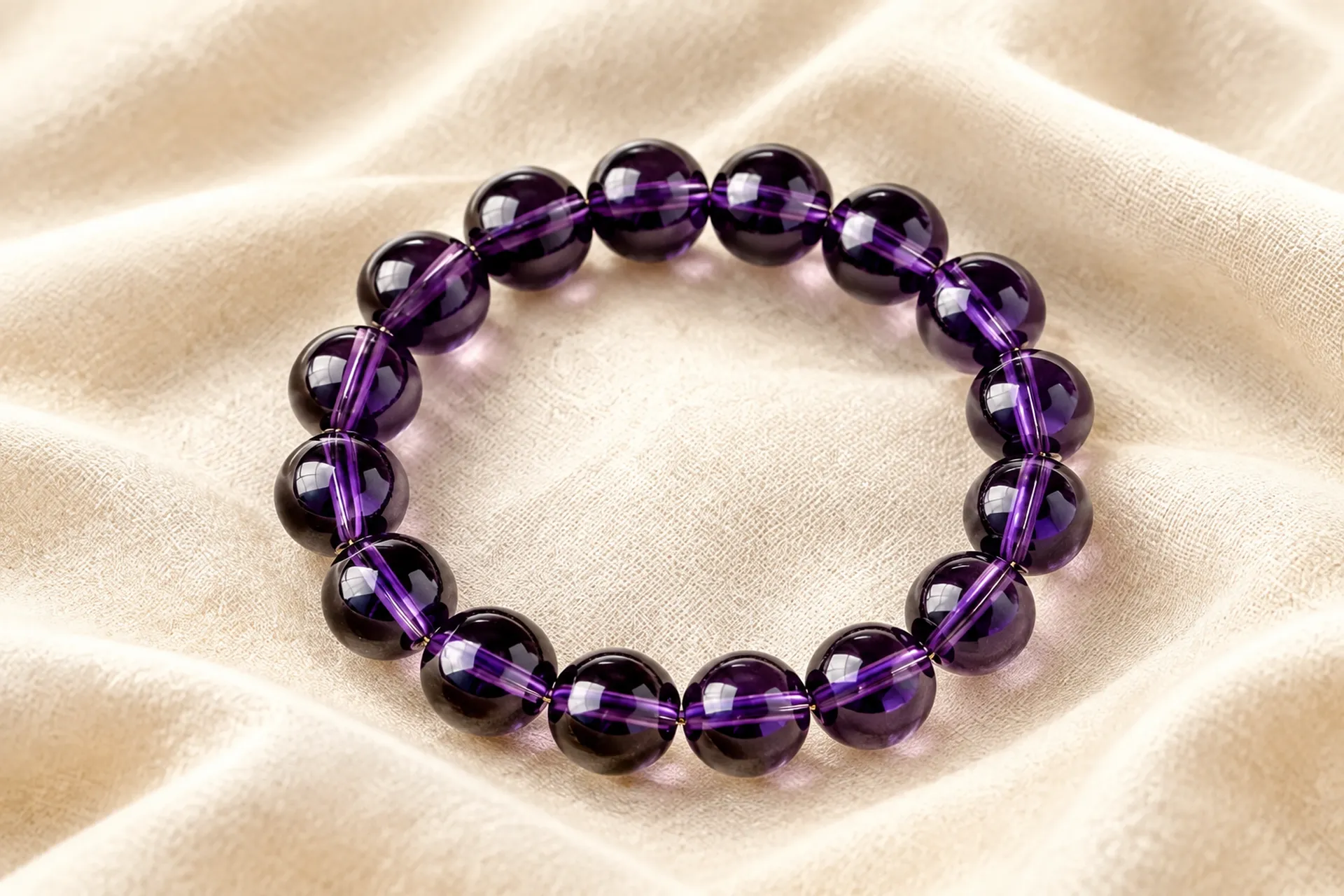
Quick Answer: High-end birthstone jewelry is defined by three things beyond brand name: gemstone quality measured on colored-stone criteria (color saturation, clarity relative to gem type, cut precision, and carat rarity), precious metal weight and purity (platinum, 18k gold rather than plated or hollow construction), and hand craftsmanship—custom personalized pieces stone setting, hand-finished polishing, and durable construction. Price alone doesn't signal quality; these verifiable factors do. Grading language here follows GIA's Gem Encyclopedia, GIA's per-stone reference.
How Is Fine Colored Gemstone Quality Graded?
Most consumers learn the 4Cs—cut, color, clarity, carat—from diamond shopping. Colored birthstones are judged differently, and knowing how is the single fastest way to evaluate whether a piece deserves a premium price.
Color is king. For colored gemstones, the GIA assigns 50%–60% of the overall grade weight to color—hue, tone, and saturation—versus far less for clarity. A deep, vivid, evenly saturated stone with visible inclusions will typically command a higher price than a cleaner but pale one. For emerald, for example, garden-like inclusions are so expected that a completely "clean" emerald should actually raise suspicion of synthetic origin or heavy treatment.
Clarity is judged by gem type, not one universal scale. The GIA classifies colored stones into Type I (almost always eye-clean, e.g., aquamarine, topaz), Type II (usually included, e.g., ruby, sapphire), and Type III (almost always included, e.g., emerald, tourmaline). A ruby with minor inclusions visible to the naked eye may be top-tier for a ruby, while the same inclusions in an aquamarine would be a quality deduction.
Treatment disclosure is non-negotiable at the high end. Heat treatment is standard and accepted for sapphire, tanzanite, and many tourmalines—but it must be disclosed and it affects value. Dyeing (common in low-grade emerald and "black onyx") and irradiation (used on some blue topaz) matter more, because they can compromise durability or fade over time. Fine jewelers will state treatment status in writing; "natural" alone tells you nothing about treatment. On durability as a quality factor: GIA's guide to gem durability.
Hardness ≠ durability. A stone's Mohs hardness resists scratches, but toughness (resistance to chipping and cracking) and stability (resistance to heat and chemicals) determine whether it survives daily wear. Tanzanite (Mohs 6.5–7) is hard but brittle and unsuitable for an everyday ring. Emerald is hard but typically fracture-filled and chemically sensitive. Topaz is hard but cleaves under impact. A knowledgeable high-end designer steers these stones into pendants and earrings rather than daily-wear rings—and tells you why.
Which Precious Metal Justifies the Price?
The metal is the easiest place to spot the difference between fine jewelry and costume-grade pieces dressed up as "fine."
- Platinum (95% Pt, marked 950) is denser, naturally white, hypoallergenic, and wears away slowly rather than thinning—ideal for heirloom pieces, at roughly 60% more weight than the same design in 14k gold. - 18k gold (75% pure) offers richer color and higher intrinsic value than 14k; 14k is more scratch-resistant and more affordable. Both are legitimate fine-jewelry choices—what's not is gold vermeil, gold plating, or hollow construction marketed as luxury. - Stamp check: look for "950 PLAT," "18K" or "750," "14K" or "585" stamped inside the band or on the clasp. No hallmark on a "gold" piece is a red flag regardless of price.
For birthstone jewelry meant to be worn daily—say, a mother's ring stacking multiple months—platinum or 18k yellow gold also reduces the risk of metal allergy and plating wear that ruins the look within a few years.
What Does Craftsmanship Actually Add?
At the high end, you're paying for labor that machine-made settings can't replicate:
Hand-set vs. cast-set stones. A bench jeweler setting each stone by hand—with prongs cut, fitted, and polished individually—produces more secure settings and cleaner stone alignment than mass casting, where stones sit in pre-formed seats.
Structural details. Check under a loupe (or a phone macro lens): prongs should be even and smooth with no rough casting marks; gallery rails should protect stone girdles; clasps should be solid, not stamped sheet metal. On eternity and stack bands, look for consistent stone spacing and matched color across every stone—matching a full band of, say,相同 rubies for saturation is genuinely difficult and priced accordingly.
Customization that's structural, not engraved. True custom work—rebuilding a setting around a specific stone's proportions, sizing a channel-set band without distorting it—requires skilled labor. Engraving and engrave-style "personalization" add sentiment but little cost. The personalized birthstone collection covers this distinction in depth for shoppers comparing made-to-order pieces.
What Does High-End Mean for Your Birth Month?
Some months make high-end treatment easier than others. April (diamond) and September (sapphire) have the most established fine-jewelry grading infrastructure. February's amethyst and March's aquamarine deliver fine-gem looks at accessible prices, so "high end" there means investing in metal and craftsmanship rather than stone rarity. June (pearl), July (ruby), and October (tourmaline) reward careful treatment disclosure and origin questions. Our month guides—starting with /birthstones/january through /birthstones/december—break down quality factors for each specific stone.
Frequently asked.
How much should I expect to spend on genuinely high-end birthstone jewelry?
There's no single threshold, but fine pieces with natural, well-cut center stones and platinum or 18k gold construction typically start in the low four figures; rare material like fine ruby or untreated emerald reaches far more. Under ~$300, prioritize metal quality and craftsmanship over stone claims.
Are treated birthstones still "high end"?
Yes, when treatment is standard, stable, and disclosed—heat-treated sapphire and tanzanite are mainstream in fine jewelry. Dyeing, fracture-filling with glass, and undisclosed irradiation are the treatments that disqualify a piece from the fine category. Always get treatment status in writing.
Is a birthstone ring durable enough for daily wear?
It depends on the stone. Corundum (sapphire, ruby, Mohs 9), diamond, and alexandrite hold up well in rings. Emerald, tanzanite, opal, and pearls are better reserved for pendants, earrings, or occasional-wear rings due to toughness and stability limits, regardless of price.
Related Articles
A Brief History of Birthstones
From the twelve tribes of Israel to the 1912 standard that rules the modern list — the 3,500-year origin story of why we wear our birth month.
Read MoreThe Ultimate Birthstone Cleaning Guide
Keep every piece in your collection gleaming. Step-by-step methods for gold, silver, and delicate birthstones — no harsh chemicals needed.
Read MoreBirthstone Energy: A Complete Crystal Healing Guide
From root chakra grounding to crown chakra clarity, discover how each birthstone carries healing energy. Learn to activate your crystal for meditation, sleep, and daily intention.
Read More