What Does My Birthstone Mean? The Real Answer, Month by Month
Your birthstone's meaning is the symbolism your month's stone carries — January garnet means constancy, April diamond strength, September sapphire wisdom — set by three thousand years of culture and fixed in verse in 1870. Twelve months with sources, the Tiffany poems, and the honest science.
Yueounb Editorial
Jewelry Expert
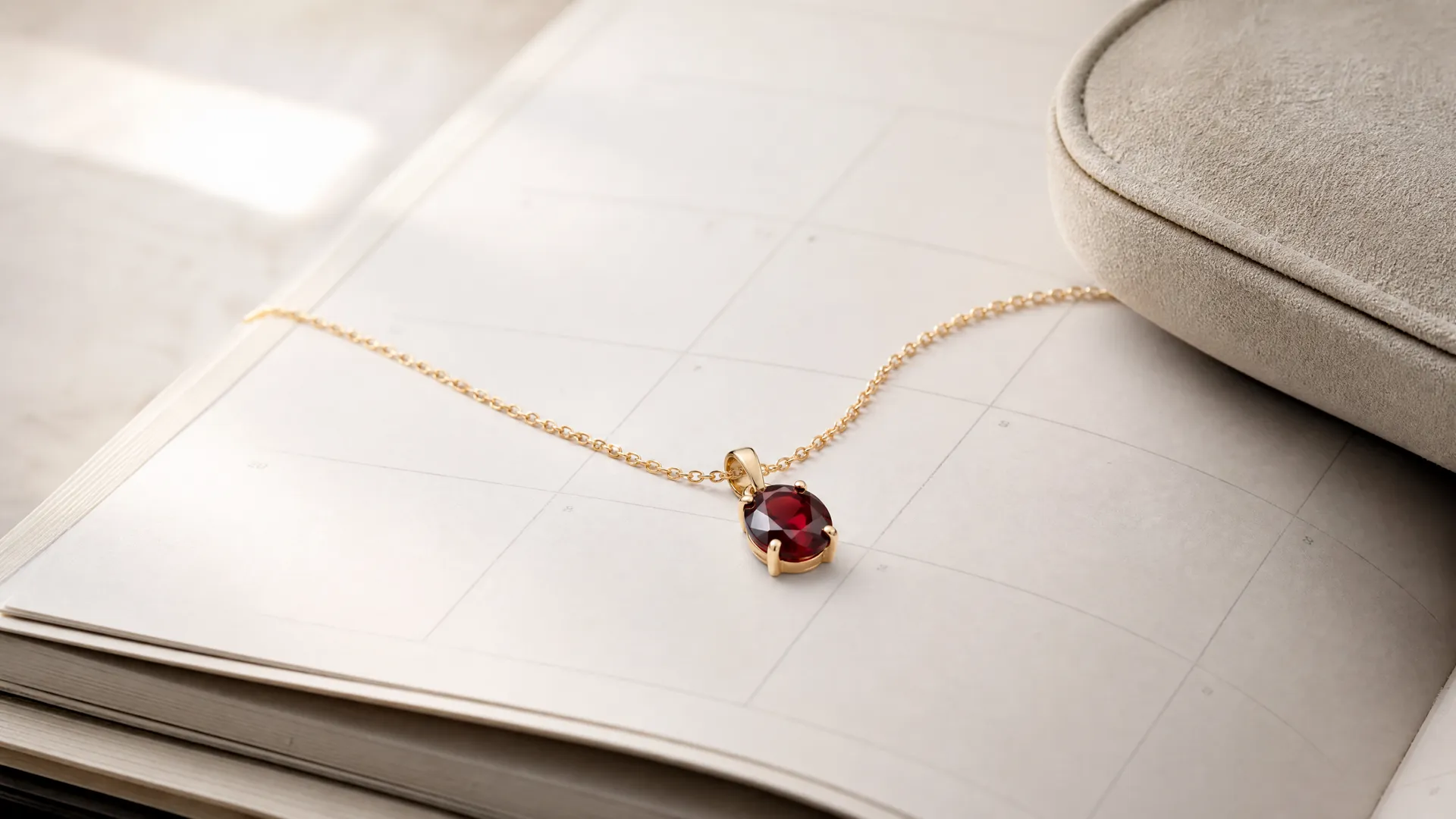
Your birthstone's meaning is set by your month: January's garnet means constancy and fidelity, April's diamond unconquerable strength, September's sapphire wisdom and truth — meanings first assigned in verse by Tiffany & Co.'s 1870 birthday poems and traceable another two thousand years before that. Those are the cultural layers. A birthstone also carries a personal meaning — the month of the person wearing it, or of the children set beside it — and a healing-tradition meaning that deserves both respect and honesty. This guide gives all three layers, month by month, with the sources named.
Quick Answer: A birthstone's meaning is the traditional symbolism assigned to your birth month — garnet = constancy, diamond = strength, sapphire = wisdom — fixed in verse in 1870. Yours, month by month — |Month|Stone|Its meaning|Source| |January|Garnet|Constancy, true friendship, fidelity|Tiffany 1870 poem| |February|Amethyst|Sober clarity and calm|Greek "not drunk"| |March|Aquamarine|Serene courage at sea|Sailors' talisman| |April|Diamond|Unconquerable strength|Greek adamas| |May|Emerald|Faithful, flourishing love|Rome's stone of Venus| |June|Pearl / Moonstone|Purity, new beginnings|Aphrodite's tears| |July|Ruby|Passion, courage in battle|Sanskrit "king of gems"| |August|Peridot|Protection, plenty|Egypt's "gem of the sun"| |September|Sapphire|Wisdom, loyalty, truth|The Persian sky-stone| |October|Opal|Hope, every color at once|Rome's stone of hope| |November|Citrine / Topaz|Abundance, joy|The Merchant's Stone| |December|Turquoise / Tanzanite / Zircon|Protection, good fortune|Egyptian tombs, 3000 BCE| The full chain behind each source — Exodus to 1870 — is below, month by month.
Where these meanings actually come from. The chain runs older than most guides admit. The Book of Exodus describes a priestly breastplate set with twelve gemstones for the twelve tribes of Israel; in the first century, the historian Flavius Josephus connected the twelve stones to the twelve months of the year, and in the fifth century St. Jerome took the next step, suggesting Christians wear the stones as personal talismans. For most of the centuries that followed, the custom was to own all twelve and rotate them monthly — one stone per month belonged to the calendar, not to your birthday. The single-stone-per-person custom is comparatively young: the GIA traces it to 1560s Germany and the mineralogist George Frederick Kunz to 1700s Poland, and it went mainstream in 1870, when Tiffany & Co. published a pamphlet of anonymous birthday poems — one gem per month, its meaning assigned in verse. When the American national jewelers' association sat down in Kansas City in 1912 to standardize the modern birthstone list, the meanings were already waiting in those poems.
So is it tradition or marketing? Honestly: both, and the record allows that. The 1912 list was written by a trade association, and critics have called it salesmanship ever since; a common modern suspicion holds that birthstones are a retail invention wearing an ancient costume. But the costume is real — the meanings in those verses were compiled from etymology and lore that genuinely predates the jewelers by two millennia. The fair summary: the calendar assignment is commercial history, and the meanings are cultural history, and a birthstone is one of the few objects you can wear where both are true at once. GIA's own framing is the model of honesty here: birthstones carry lore and legend unique to each gem — whether or not you believe the legends is yours to decide.
The 1870 poems are the closest thing your stone has to an original certificate of meaning, and they are worth reading in the original. January: By her who in this month is born, no gem save garnets should be worn; they will insure her constancy, true friendship, and fidelity. May: Who first beholds the light of day in spring's sweet flowery month of May, and wears an emerald all her life, shall be a loved and happy wife. December: If cold December gave you birth, the month of snow and ice and mirth, place on your hand a turquoise blue; Success will bless whate'er you do. Four lines each, doggerel by literary standards — and yet every modern chart that promises a January baby loyalty or a December wearer good fortune is quoting them, usually without knowing it. The other nine poems sit in the same pamphlet, one month apiece.
The personal layer: why the meaning lands when you wear it. This is the layer the antique poems cannot supply, and the one that matters most at a gift counter. A birthstone is one of very few objects that answers a question about identity — which month made you — without a word being spoken. That is why the configuration people actually buy is not one stone but a family of them: a mother's necklace holding one stone per child, a grandmother's pendant ringed with grandchildren's months, a couple's two stones set side by side. The meaning of such a piece is not garnet-equals-constancy; it is these-are-my-people, carried in twelve colors or two. If you are choosing one, our mother's birthstone necklace guide and family birthstone ideas cover the designs, and the custom engraving guide covers the words that pair with them.
The healing layer: what tradition says, and what the science actually found. In crystal tradition, each month's stone is credited with an effect — amethyst for calm, peridot against nightmares, aquamarine for courage — and this layer deserves the most careful honesty, because it is where meaning slides into claim. The best study on the question comes from Goldsmiths, University of London: psychologist Christopher French and colleagues, publishing in 2001, had roughly eighty volunteers hold genuine crystals or convincing plastic imitations while meditating, without knowing which they held — after first reading a pamphlet describing the sensations crystals are said to produce. Both groups reported the same feelings — energy, focus, spiritual wellbeing — with no significant difference between them, which is precisely the point: the expectation, planted in advance, did the work. The benefit, as the researchers summarized it, is in the user's mind, not the rock. That is not a dismissal; it is a more precise version of the truth. A birthstone does not medicate. It marks: a daily, wearable reminder of a meaning you have chosen to keep in view, and three thousand years of culture agreeing to notice the same thing. For the fuller properties by stone, our gemstone meanings guide carries the complete calendar with the same honesty — beliefs with histories, not medicine. One boundary worth drawing while we are here: meaning and luck are different questions — whether your stone brings good fortune, and which stone wins that contest, is settled in our luckiest birthstone guide.
How to wear a meaning. The tradition's answer was rotation — twelve stones, one per month — and the modern answer is customization. Wear your own month as a signature piece; stack the months of the people you carry; engrave the date the meaning refers to. A one-word intention on the back of a pendant — constancy, courage, plenty — turns the symbolism from trivia into something you consult. However you set it, start from the month: every stone page in our birthstones hub lists its stone's meaning, color, and hardness for daily wear. And if you are not sure which stone is yours, the companion question is answered next door in what stone is my birthstone — find the month there, come back here for what it means. June holds a third stone with a party trick — the color-change alexandrite, unpacked in our alexandrite guide.
Frequently asked.
What does my birthstone mean?
Culturally, your birthstone carries a recorded symbolism — January garnet means constancy and fidelity, February amethyst sober calm, September sapphire wisdom and truth — with sources running from Greek etymology to the 1870 Tiffany birthday poems. Personally, a birthstone means the identity it marks: your month, or your children's. In the healing tradition, stones are credited with effects, though the best study finds the benefit comes from belief rather than the stone.
Do birthstones really have healing powers?
No measurable effect, by the best evidence. In a 2001 double-blind study at Goldsmiths, University of London, roughly eighty volunteers held genuine crystals or plastic imitations without knowing which — after reading what sensations to expect — and both groups reported the same feelings of energy, focus, and wellbeing with no significant difference. The benefit is real to the wearer but comes from belief, not the mineral. Birthstones carry meaning and three thousand years of culture; they are not medicine.
Do birthstones have meanings, or is it marketing?
Both, and the record is honest about it. The meanings are genuine cultural history — etymology, Roman lore, biblical tradition — but the standardized twelve-month chart was set by an American jewelers' trade association in 1912, and critics have called it salesmanship since. The fair reading: the calendar is commercial history, the meanings are cultural history, and both are true.
Where do birthstone meanings come from?
From a chain that starts with the twelve-stone priestly breastplate described in Exodus, runs through the first-century historian Josephus (who tied the twelve stones to twelve months) and St. Jerome (who suggested wearing them), and arrives at one-stone-per-person in early modern Europe. Tiffany & Co.'s 1870 poem pamphlet assigned each month's stone its meaning in verse, and the 1912 Kansas City list standardized which stones those were.
Can I wear a birthstone that isn't my month? December babies have their own hard, icy stone, and the [topaz jewelry guide](/journal/topaz-jewelry-guide) unwinds its naming history and blue treatment truth.
Yes — the tradition's original form was wearing all twelve, rotating monthly, and the prohibition is a modern folk belief with no historical basis. People wear a partner's month, a child's month, or simply a stone whose meaning fits the season of life they are in. The charm you feel a connection to is the one that works.
Related Articles
A Brief History of Birthstones
From the twelve tribes of Israel to the 1912 standard that rules the modern list — the 3,500-year origin story of why we wear our birth month.
Read MoreThe Ultimate Birthstone Cleaning Guide
Keep every piece in your collection gleaming. Step-by-step methods for gold, silver, and delicate birthstones — no harsh chemicals needed.
Read MoreBirthstone Energy: A Complete Crystal Healing Guide
From root chakra grounding to crown chakra clarity, discover how each birthstone carries healing energy. Learn to activate your crystal for meditation, sleep, and daily intention.
Read More