Gemstone Meanings: The Complete Guide to Crystal Properties
Every gemstone carries a story. From amethyst calming energy to ruby passionate fire, explore the meaning and metaphysical properties of all 12 birthstones.
Yueounb Editorial
Jewelry Expert
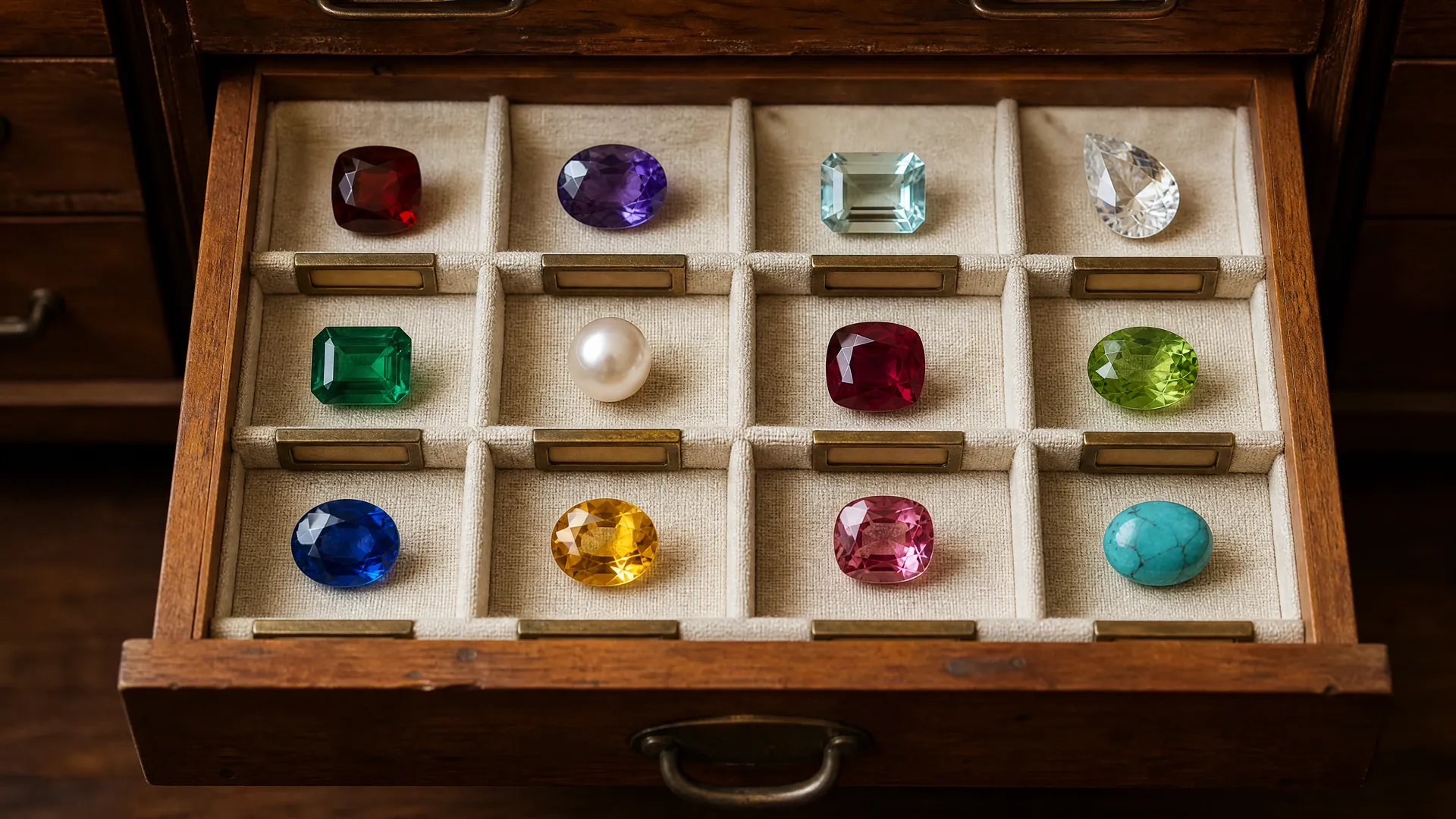
Gemstone meanings are the symbolic and metaphysical properties traditionally assigned to each stone: garnet for protection, amethyst for calm, aquamarine for courage, diamond for strength, emerald for love, moonstone for new beginnings, ruby for passion, peridot for prosperity, sapphire for wisdom, opal for creativity, citrine for abundance, and turquoise for healing. Each meaning maps to one birth month, which is why birthstone jewelry is worn as a personal talisman rather than plain decoration.
Where these meanings come from: three traditions converged. The oldest is the Breastplate of Aaron (twelve tribes, twelve stones) recorded in the Bible; the second is ancient lapidary medicine, where stones were prescribed by color and believed property; the third is the modern birthstone list, standardized by American jewelers in 1912 and lightly updated in 1952 and 2002. Crystal practitioners link each stone to the seven chakras; historians link them to trade routes — both stories are part of the meaning. The full calendar of stones by month — colors, hardness, and care — sits in our birthstones guide.
The 12 birthstone meanings, one by one. Garnet (January): the traveler protection stone — deep red, exchanged at partings since Roman times. Amethyst (February): calm and clarity — Greek amethystos means not drunk; it was the ancient sobriety stone. Aquamarine (March): courage by water — sailors carried it as a talisman against storms. Diamond (April): unbreakable strength — the hardest natural material, symbol of resilient love. Emerald (May): faithful love and rebirth — Cleopatra mined them personally. Pearl and moonstone (June): purity and new beginnings — the moon stone of tides, intuition, and feminine energy. Ruby (July): passion and vitality — red corundum, called the king of gems in Sanskrit. Peridot (August): prosperity and protection — formed in volcanoes, sometimes in meteorites. Sapphire (September): wisdom and focus — the scholar stone of royal blue. Opal (October): creativity and hope — the rainbow stone of imagination. Citrine (November): abundance and joy — the merchant stone, kept in cash boxes for luck. Turquoise (December): healing and protection — the oldest gem humans wore, 5,000 years old in Egyptian tombs.
How to choose a stone by intention, not just by month. For calm under stress, amethyst and moonstone are the classic pair. For a fresh start — new job, new city, new baby — moonstone leads. For love and anniversaries, emerald and ruby carry the strongest traditions. For focus in study or work, sapphire. For prosperity and business luck, citrine and peridot. The birth month is the default; the intention is the upgrade.
Properties beyond symbolism: the physical facts that matter to a buyer. Hardness (Mohs) decides daily-wearability — diamond 10, ruby and sapphire 9, amethyst 7, opal as soft as 5.5-6.5 and better in pendants than rings. Toughness is separate from hardness: jade is softer than diamond but tougher than most gems. Treatments are normal, not fraud: most amethyst, citrine, sapphire and tanzanite on the market is heat-treated; asking which treatment applies is a fair question any seller should answer. Choosing a stone specifically for daily wear? Our best stones for jewelry guide ranks the months by how their gems actually hold up.
A note on evidence, honestly stated. Crystal healing properties are traditional beliefs, not clinically proven medicine — no peer-reviewed study demonstrates that stones emit healing energy. What is documented is the placebo-adjacent benefit of ritual: a stone worn as a reminder of an intention (calm, courage, a new chapter) works the way any meaningful object works. We present meanings as tradition and symbolism, which is exactly how they have been worn for three thousand years.
Meanings in jewelry: how to wear them. A single birthstone pendant is the everyday signature. Stack two or three stones to combine intentions — moonstone with aquamarine is the classic new-beginning pair for mothers. Family pieces set one stone per child, which is why gemstone meaning is the engine of mother jewelry: the necklace says the family, each stone says a person. The full family-side selection — one-stone-per-child designs across budgets — is in our best family birthstone jewelry guide.
The fastest way to find your stone is the month list — every meaning above is tied to a month page on this site with its color, hardness, care guide, and the handcrafted pieces we set in it. One more thread runs through these meanings: stones anchor wedding milestones as well as birth months — the ruby of July marks the 40th anniversary and the June pearl the 30th.
Frequently asked.
What do gemstone meanings actually represent?
Gemstone meanings are traditional symbolic properties — garnet protection, amethyst calm, ruby passion — built from ancient lapidary lore, the twelve stones of the Breastplate of Aaron, and the 1912 standardized birthstone list. They are cultural symbolism worn intentionally, not medical claims.
Which gemstone means love?
Emerald is the classic love stone (faithful love, associated with Venus), followed by ruby (passionate love) and rose quartz (unconditional love). For anniversaries, emerald is the 20th-year stone and ruby the 15th and 40th.
Which gemstone is for protection?
Garnet (January) is the traveler protection stone, black obsidian and tourmaline are the shielding stones in crystal tradition, and turquoise has been worn for protection and healing since ancient Egypt — over 5,000 years of continuous use. If this is your first stone rather than your fiftieth, the [gemstone jewelry for beginners](/journal/gemstone-jewelry-for-beginners) primer covers the first piece and the first budget without the deep end.
Do crystal healing properties really work?
Crystal healing is traditional belief, not clinically proven medicine — no peer-reviewed study shows stones emitting healing energy. The documented benefit is the ritual itself: a stone worn as a daily reminder of an intention works like any meaningful object. Wear the symbolism; do not replace medical care with stones.
Related Articles
A Brief History of Birthstones
From the twelve tribes of Israel to the 1912 standard that rules the modern list — the 3,500-year origin story of why we wear our birth month.
Read MoreThe Ultimate Birthstone Cleaning Guide
Keep every piece in your collection gleaming. Step-by-step methods for gold, silver, and delicate birthstones — no harsh chemicals needed.
Read MoreBirthstone Energy: A Complete Crystal Healing Guide
From root chakra grounding to crown chakra clarity, discover how each birthstone carries healing energy. Learn to activate your crystal for meditation, sleep, and daily intention.
Read More