What Is the Best Stone for Jewelry? A Verdict by Scenario
None of the top-ranking results dares to name one winner — this does. Sapphire takes the overall crown on the GIA durability evidence, but the honest answer
Yueounb Editorial
Gemologist
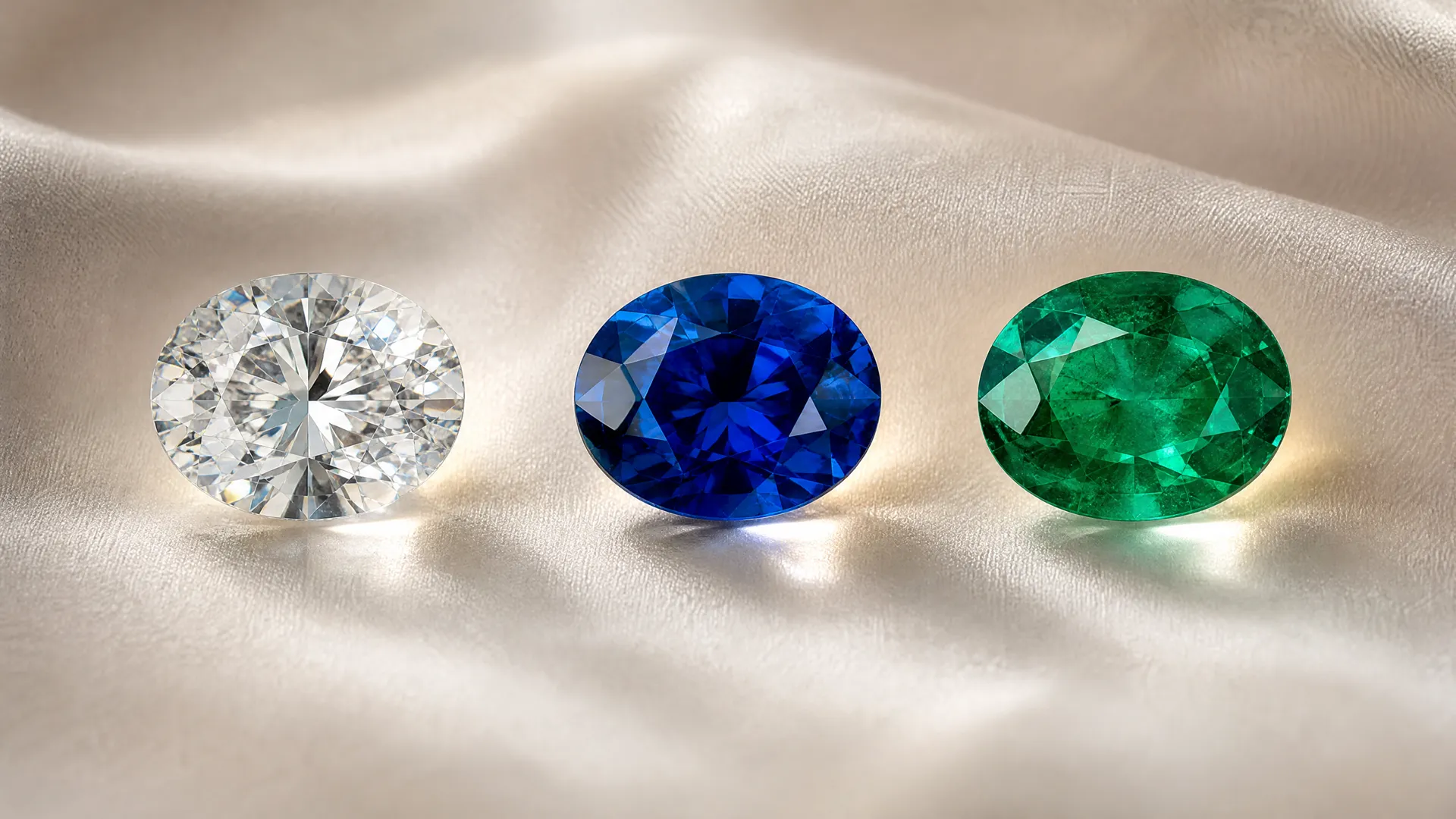
The honest answer to what is the best stone for jewelry is sapphire — and the honest version of that answer is that it depends on the scenario. Sapphire wins the overall case on the Gemological Institute of America's durability evidence: second-hardest natural gem at Mohs 9, top-tier toughness with no cleavage direction waiting to split, stable against household chemicals, and every color outside ruby red. But change the scenario and the winner changes: a pendant relaxes the rules, a gift rewards safe stones over exotic ones, and a fifty-dollar budget crowns a different stone entirely. Below, the verdict table first, then the five criteria behind it, then each scenario argued — including the one lesson every buyer should leave with: hardness and durability are not the same thing, and topaz teaches it.
Quick Answer: Sapphire — Mohs 9, excellent toughness, no cleavage, every color but ruby red — is the best stone for jewelry overall; overrule it by scenario — |Scenario|Winner|Runner-up|Avoid| |Overall|Sapphire|Spinel|Opal, turquoise, pearl for daily wear| |Everyday ring, worn hard|Sapphire (Mohs 9, excellent toughness)|Spinel (Mohs 8, good toughness)|Opal, turquoise, pearl — soft or porous for daily knocks| |Engagement ring|Sapphire (a fraction of diamond's price)|Diamond (if budget leads)|Emerald — oiled fissures and daily wear disagree| |Pendant or earrings|Emerald or opal — the gentle life makes them responsible|Moonstone, tanzanite|Nothing is disqualified; settings still matter| |A gift you can't miss|Garnet or amethyst — affordable, safe, meaningful|The recipient's own birthstone|Anything bought for resale value| Sapphire's crown rests on the GIA durability triple at a fraction of diamond's price.
What best actually means: five criteria, not one. Durability, which is three things the GIA keeps deliberately separate — hardness (resistance to scratching), toughness (resistance to breaking), and stability (resistance to chemicals, heat, and light). Value retention, which is what a stone fetches when sold, not what it costs when bought. Color versatility, meaning the range a species offers. Price accessibility at real market numbers. And meaning — the folklore and gift-safety layer where a birthstone outranks a stranger's gemstone. Most best-stone lists sort by Mohs and stop; a choice that ignores four of the five criteria is not a verdict, it is a sorting error.
Hardness is not durability — the lesson topaz teaches. Diamond is Mohs 10 and the hardest natural substance, yet it has perfect cleavage: a sharp blow along the right plane can chip a thin girdle or a pointed corner, which is why pear and marquise diamonds are set with V-prongs to protect their points. Corundum — sapphire and ruby — is one step down at Mohs 9 but carries excellent toughness with no cleavage, which on the GIA's reference chart makes it the most complete durability package in mainstream jewelry. Then comes the teaching case: topaz sits high at Mohs 8, yet its cleavage is so pronounced that one unlucky knock can split a stone whole — its toughness grades poor, while spinel, at the same Mohs 8, grades good. Jade is the mirror image: barely Mohs 6-7, yet its resistance to breaking is the highest of any natural gem — classic fracture studies compared it favorably to steel — and it barely registers on a scratch chart. And one threshold almost no list mentions: household dust contains quartz at Mohs 7, which means any stone softer than 7 slowly scuffs just from being wiped. Opal at 6, turquoise at 5-6, pearl at 2.5-4.5 — these are stones the environment itself polishes away.
Rings versus pendants: the same stone, a different grade. A ring lives on the hand, which touches the world a hundred times a day; a pendant rides at chest height and leads a sheltered life. That single difference rewrites the rankings. The GIA's own guidance is that low-toughness beauties — opal, tanzanite — are better choices in earrings and necklaces than in rings, and our working threshold agrees: for a daily-worn ring, Mohs 9 plus good toughness (sapphire, ruby, spinel, diamond) is the safe zone; for a pendant, emerald, opal, moonstone, and tanzanite all become responsible choices, with one honest caution — emerald's fissures and opal's water content still dislike ultrasonic machines and hot display cases no matter where they hang. Setting choice is the multiplier: a bezel wraps a vulnerable girdle in metal and moves a fragile stone one tier up the wearability ladder.
Best stone for everyday wear: sapphire, and it is not close. Mohs 9, excellent toughness, no cleavage, chemically indifferent to soap, heat, and ordinary life; every color from cornflower blue to padparadscha peach; and a price that undercuts diamond by multiples — the same budget that buys a modest diamond center buys a fine sapphire with presence. Spinel is the runner-up nearly no list mentions: Mohs 8, good toughness, no cleavage, no routine treatment, and a history of being mistaken for ruby at the highest level — the Black Prince's Ruby in the British Crown Jewels is a spinel. And the modern challenger deserves a straight answer: moissanite, at Mohs 9.25 with good toughness, is genuinely wearable — its case is price and fire, while sapphire answers with natural origin, a color range moissanite does not offer, and a resale market that recognizes it; lab-grown sapphire, for the record, matches the natural stone's durability exactly. For the engagement scenario the same verdict stands, and our alternative engagement rings guide argues that case in full. The one everyday-ring caution on the winner: about ninety-five percent of market sapphires are heat-treated by common trade estimates — a stable, accepted, disclosed treatment — so if untreated color matters to you, the certificate, not the price tag, is where it shows.
Best stone for a gift: garnet and amethyst — the safe stones — unless you know the month. A gift you cannot afford to miss rewards stones that are unbreakable in three senses: physically forgiving (amethyst, of the quartz family, and garnet are both everyday-wearable), budget-proof (whole-carat genuine gems at tens of dollars), and meaning-safe (no treatment scandals, no laboratory twins at the price point). But the gift that lands better than the best generic stone is the right birthstone: a January garnet for a January baby converts a nice object into a statement about when they arrived. That logic — and the configurations that carry a whole family in one piece — is laid out in our birthstone gifting guides.
Best stone by budget, at real market numbers |Budget|Buy|Why it wins| |Under $50|Amethyst, citrine, red garnet — $5-50 per carat, whole stones|Fine 1-5 ct gems of genuine mineral, no imitations needed| |$50-200|Large amethyst or citrine, moonstone, hessonite garnet|Carat size jumps before rarity does — the value sweet spot| |$200-500|Fine 1-3 ct aquamarine ($200-400/ct), rhodolite garnet, spinel entry level|Color and clarity of a lifetime stone at bracelet money| |$500+|Sapphire, ruby, tsavorite or demantoid garnet|Auction-grade durability; rare green garnets reach five figures per carat|
Which stones hold value — the uncomfortable table. The rule nobody prints on a receipt: nearly all jewelry resells for a fraction of retail, with fine pieces commonly reported to recover twenty to sixty percent across the market — certified natural diamonds included. Laboratory-grown stones fare worse: commonly reported at under a third of retail and falling, because production scales. Fashion crystal — the glass family, whatever the brand — resells near costume rates, with only discontinued collectibles escaping. The strongest holdout is untreated ruby: fine unheated Burmese material sets the auction records. The practical translation: buy to wear, not to flip, and treat resale value as a tiebreaker between two stones you love, never the reason to buy either.
The final verdict, and its three exceptions. Sapphire — durable in all three GIA senses, every color except ruby's red, priced in multiples below diamond, honest with heat treatment disclosure — is the best overall stone for jewelry, and the scenario table above tells you when to overrule it. Exception one: the piece is a pendant, and you love emerald's green or opal's fire — gentler wear makes the poetry affordable. Exception two: the budget is fifty dollars, and amethyst or garnet buys a genuine, generous stone where sapphire buys nothing. Exception three: the recipient has a birth month, and the right stone was decided the day they were born — start from the birthstones hub and let the calendar make the case.
Frequently asked.
What is the most durable stone for jewelry?
Sapphire and ruby (the corundum family) carry the most complete durability package: Mohs 9 — second only to diamond — plus excellent toughness and no cleavage plane, per the GIA's durability framework. Diamond is harder but has perfect cleavage that chips at thin corners; jade resists breaking better than any gem but is soft at Mohs 6-7. For a ring worn daily, corundum is the working answer.
Is diamond really the best stone?
Diamond is the hardest, not the unconditionally best. It out-scratches everything, but its cleavage means a sharp knock can chip a corner, and its price per carat dwarfs equally durable rivals — a fine sapphire at a fraction of the cost matches its everyday wearability with more color choice. Diamond wins when hardness and brilliance are the mission; it ties or loses on value and versatility.
What is the best stone for a ring if I'm hard on my hands?
Sapphire first, spinel second, ruby third — Mohs 8-9 with good-to-excellent toughness and no cleavage. Add a bezel setting to protect the girdle, take it off for the gym and the garden, and it will outlive the setting. Avoid opal, turquoise, emerald, and pearl in a daily ring: soft, porous, oiled, or all three.
What is the best affordable gemstone?
Amethyst, citrine, and red garnet at five to fifty dollars per carat — genuine gem minerals in generous sizes at pocket money prices. At the two-hundred-dollar tier, large amethyst, moonstone, and hessonite garnet are the value sweet spot; fine aquamarine arrives around five hundred. Affordability in gemstones is real, not a compromise.
Do gemstones hold their value?
Mostly no. Fine jewelry is commonly reported to resell at twenty to sixty percent of retail, certified diamonds included; laboratory-grown stones typically recover under a third of retail, and falling; fashion crystal resells near costume rates. Untreated ruby is the strongest exception at auction level. Buy to wear, not to flip — resale is a tiebreaker, not a strategy.
Related Articles
A Brief History of Birthstones
From the twelve tribes of Israel to the 1912 standard that rules the modern list — the 3,500-year origin story of why we wear our birth month.
Read MoreThe Ultimate Birthstone Cleaning Guide
Keep every piece in your collection gleaming. Step-by-step methods for gold, silver, and delicate birthstones — no harsh chemicals needed.
Read MoreBirthstone Energy: A Complete Crystal Healing Guide
From root chakra grounding to crown chakra clarity, discover how each birthstone carries healing energy. Learn to activate your crystal for meditation, sleep, and daily intention.
Read More