Why Does January Have Two Birthstones? Garnet & Rose Quartz
On the official chart January has exactly one birthstone: garnet, fixed there since 1912.
Yueounb Editorial
Jewelry Expert
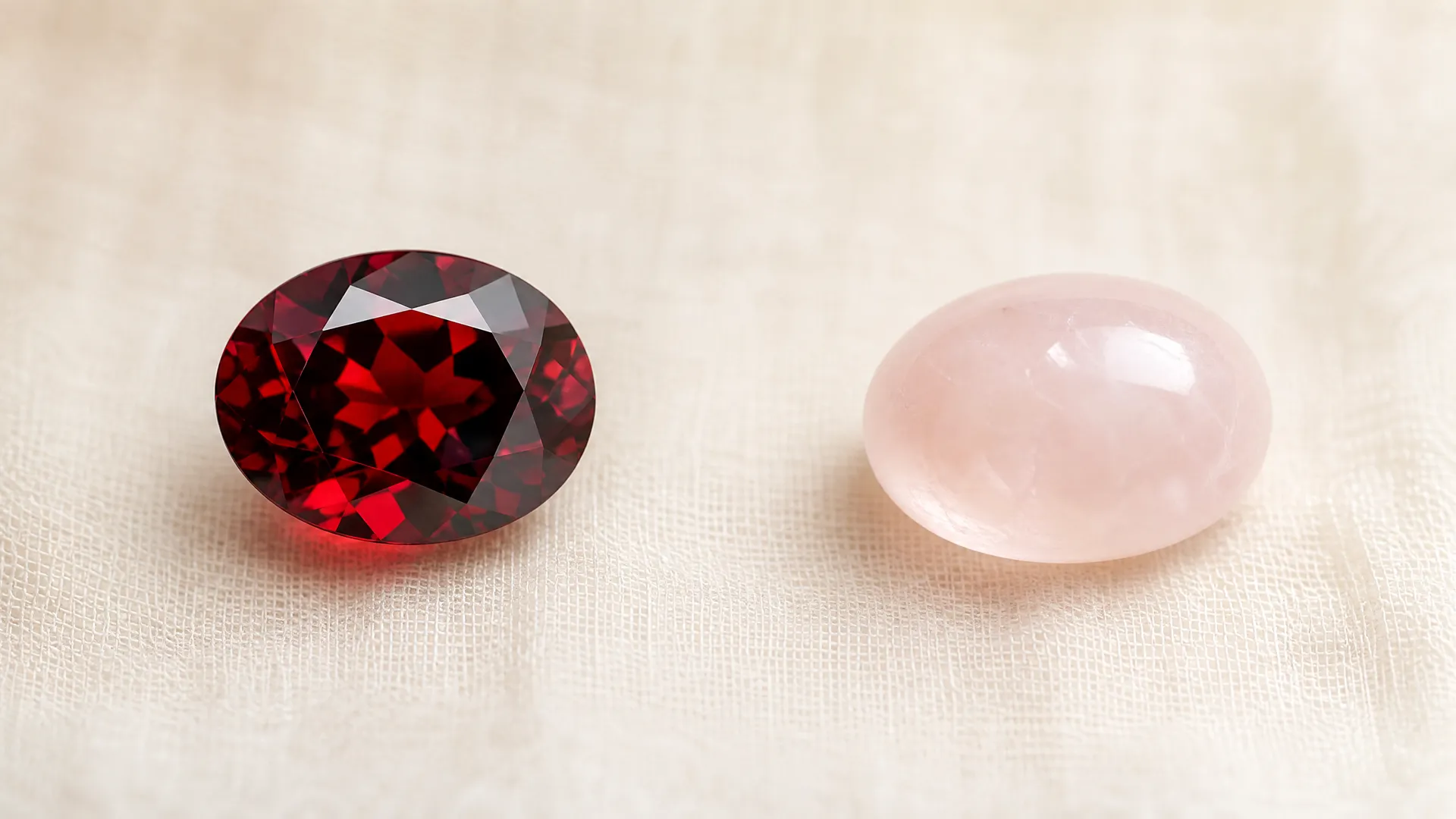
Type January birthstone into Google and it will ask you, helpfully, why January has two. The question is Google repeating what jewelers told it: a string of retail sites now list January as garnet and rose quartz, the colored-stone trade's own association page is literally titled January Birthstone: Garnet or Rose Quartz, and a perfectly reasonable person ends up unsure what to engrave on the pendant. The honest answer has a paper trail, and the paper trail is one-sided. Here it is.
Quick Answer: On the official birthstone chart, January has one stone: garnet, set there when American jewelers standardized the modern list in Kansas City in 1912 — and no official revision since (1952, 2002, 2016) ever added a second. Rose quartz is a modern jeweler's alternative with no documented official adoption. Garnet is the official answer; rose quartz is the popular add-on.
The official side: garnet, since 1912. The modern birthstone list was standardized in August 1912, when the American National Association of Jewelers — today's Jewelers of America — met in Kansas City and fixed the twelve months to twelve stones. January got garnet, and every official revision since has touched other months: 1952 added alexandrite to June, citrine to November, zircon to December; 2002 added tanzanite to December; 2016 added spinel to August. Rose quartz appears in none of them. The GIA's own January page does not mention it — January, in the official record, is a one-stone month.
So where does rose quartz come from? The trail runs through retail. The colored-gemstone trade's association lists January as garnet or rose quartz — but the page offers no date, no body, and no explanation for the rose quartz, and cites a 1913 gem-lore classic whose own January tables carry garnet, not rose quartz. From there the two-stone January spread across jeweler after jeweler: one brand calls garnet primary and rose quartz secondary and complimentary; another labels them traditional and modern — labels the official 1912 record does not support for January. No source anywhere supplies a date or an organization for the adoption of rose quartz, which is itself the finding: a birthstone title can spread without ever being granted. That matters for buyers — neither stone is wrong to wear in January; only one of them is what the chart actually says.
Garnet vs rose quartz for January | |Garnet (official)|Rose quartz (add-on)| |Status on the official chart|January's stone since 1912|Not on any official revision| |Color|Deep reds — wine, raspberry, cinnamon|Soft pale pink| |Hardness (Mohs)|6.5–7.5|7| |Typical price|Moderate — fine reds climb|Budget-friendly| |Character|Classic, formal, heirloom-leaning|Modern, gentle, self-gift-leaning| |Best for|A January gift meant to last|A January piece bought for the color|
Why so many months genuinely do have two or three stones — which is how the confusion started. The traditional and modern lists are two different documents, and months that gained stones in the official revisions really do carry multiples: June legitimately holds pearl, moonstone, and alexandrite; December holds turquoise, zircon, and tanzanite; August holds peridot, spinel, and sardonyx. Shoppers trained by those months naturally assume the two-birthstone question for January means the same thing officially happened. It did not. The full modern-vs-traditional story is in our birthstone chart comparison, and the month-by-month reference lives at the birthstones hub.
Which January stone should you choose? If the gift is a January birthday meant to mean something — the stone the calendar actually assigns — garnet is the answer, and it is a better stone than its price suggests: a mineral family rather than a single gem, running from the deep reds everyone pictures to rare greens, hard enough for daily wear, with travel-protection folklore going back to Roman parting gifts. If instead you are buying January-adjacent — a pink-loving recipient, a self-purchase, a palette match — rose quartz is a legitimate choice worn by plenty of January-born people; just know it is the folk addition, not the chart. For going deeper on the official stone: how to tell garnet from ruby and our real vs fake garnet guide cover the buying side, and the January birthstone page carries the full garnet story.
Garnet or rose quartz for a January gift — which one lands?
The two January stones split by relationship and by budget. Garnet is the traditional January gift: deep red, hardness 6.5-7.5, priced so that substantial pieces fit every budget — and it reads as the serious, classic pick. Rose quartz is the emotional pick: softer, paler, and carrying the love-stone tradition that makes it the default between partners and for new mothers. The buying shortcut: garnet for mothers, grandmothers, and milestone birthdays; rose quartz for partners, new babies, and the gift that says care rather than celebration.
Can you wear both January stones together?
Yes — garnet and rose quartz is the calendar's own two-stone pairing, and the contrast is the design: deep wine-red beside soft pink, hardness mates, and meaning stacked (garnet's protection with rose quartz's love). The buying rule is bead-matching across the strand, because the two stones' tones must agree or the bracelet reads patched rather than paired.
Frequently asked.
Is rose quartz really a January birthstone?
Not officially. The official modern list — standardized in 1912 and revised in 1952, 2002, and 2016 — has garnet alone for January. Rose quartz appears on many jewelers lists and in the colored-gemstone trade materials, but no documented official adoption exists. It is best described as a popular modern alternative.
Why do people say January has two birthstones?
Because many jewelry retailers list it that way — often labeling garnet primary and rose quartz secondary — and Google learned the question from those pages. Some months genuinely do have multiple official stones (June has three), which makes the claim sound plausible for January.
What color is January's birthstone?
Officially, red — garnet's signature runs from deep wine to bright raspberry, with rarer garnets in orange, green, and purple within the family. Rose quartz's pale pink belongs to the unofficial add-on, not the official chart.
Is onyx also a January birthstone?
Some lists mention it, but onyx has even less standing than rose quartz — it appears on no official revision and only sporadically in retail lists. January's documented official stone remains garnet alone.
Related Articles
A Brief History of Birthstones
From the twelve tribes of Israel to the 1912 standard that rules the modern list — the 3,500-year origin story of why we wear our birth month.
Read MoreThe Ultimate Birthstone Cleaning Guide
Keep every piece in your collection gleaming. Step-by-step methods for gold, silver, and delicate birthstones — no harsh chemicals needed.
Read MoreBirthstone Energy: A Complete Crystal Healing Guide
From root chakra grounding to crown chakra clarity, discover how each birthstone carries healing energy. Learn to activate your crystal for meditation, sleep, and daily intention.
Read More