Can You Shower With a Pearl Necklace? What Water Actually Does to Pearls
One splash of water won't hurt a pearl — but shower water is warm, chlorinated, and carries shampoo residue that eats into soft nacre and stretches the silk thread. The chemistry of pearl damage, a realistic timeline, and the ten-second habit that prevents it all.
Yueounb Editorial
Jewelry Expert
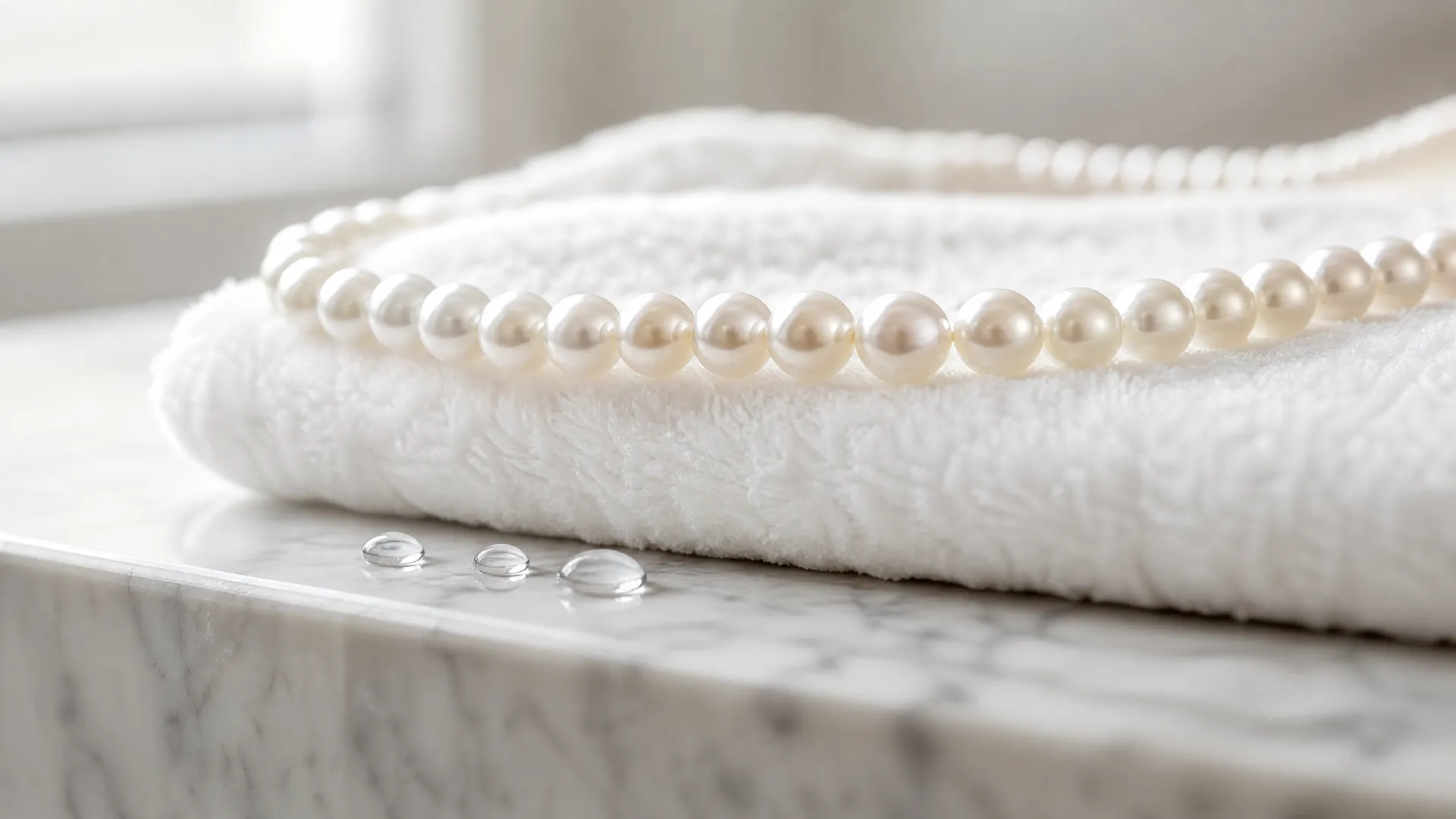
The question arrives with a pearl necklace already wet, more often than anyone admits. So let us start fair: one shower will not ruin your pearls. Pearl dealers are blunt about the timeline — a single exposure does no visible damage; it is the accumulation over weeks and months that quietly takes the glow off. What accumulates is specific, and once you know the three things in shower water that pearls object to, the whole care ritual stops sounding like superstition and starts sounding like chemistry, which it is.
Quick Answer: No — take pearls off before showering. Shower water is warm, often chlorinated, and carries shampoo and soap residue that dissolve into pearl's soft calcium-carbonate nacre and stretch the silk thread the pearls are strung on. One splash causes no visible harm; weeks of repeated showers dull the luster permanently. Rule of thumb: last on, first off — and wipe the strand after wear.
What a pearl actually is, and why it is the softest thing in your jewelry box. A pearl's surface is nacre: thousands of microscopic plates of aragonite — a crystalline form of calcium carbonate — cemented together by an organic protein called conchiolin, laid down layer over layer like brick and mortar. The brick-wall architecture is what produces the glow; it is also what makes the material vulnerable. On the Mohs scale pearl sits at 2.5, softer than almost anything else you own, and calcium carbonate has a chemistry problem: it reacts with acids. Mildly acidic products — and plenty of skincare and cleaners qualify — literally fizz the surface away, microscopically, each time they touch it.
So is water itself the enemy? No — and this is where most care guides overcorrect. Fresh water on a pearl is survivable; the GIA itself calls warm, soapy water safe for occasional thorough cleaning of pearls. The shower is a different cocktail. First, heat: hot water and steam dehydrate nacre, and the GIA's warning list includes splitting and cracking from high heat. Second, chlorine: pool and tap chlorine is a bleach, and it attacks both nacre and the silk. Third, and most underestimated, soap film: shampoo and body wash leave a residue film on each pearl that scatters light — a strand that went dull usually went coated. None of these kills a pearl in one pass; all of them compound.
The thread is the hidden casualty. A pearl necklace is strung on silk, and wet silk stretches permanently, holds moisture against every drill hole, and — as one major pearl house puts it — dries dirtier than it went in. This is why a necklace shows damage from showering faster than pearl earrings do: the earrings have no thread. It is also why the professional advice is not just keep them dry but keep the string dry, and why a strand that has been getting wet should be checked for a stretched, sagging line before it breaks at the worst possible moment.
What showering with pearls actually costs |Exposure|What you'll see|Reversible?| |One accidental shower|Nothing visible|Yes — nothing lost| |A few weeks of habit|Luster turning matte, faint residue film|Partly — professional cleaning helps| |A year of daily showers|Distinctly dull nacre, stretched thread|Mostly not| |Years of wear-and-wash|Worn nacre near the drill holes, misshapen pearls|No| Cared for properly, the same strand lasts generations — Tahitian and South Sea pearls worn with care routinely serve fifty years and more.
The golden rule and the ten-second routine. The rule is old and free: pearls go on last and come off first — after the perfume, the hairspray, and the lotion, and before the shower, the pool, or the gym. The routine that pairs with it takes ten seconds: after wearing, wipe the strand with a soft, clean cloth — the GIA's own routine-care instruction — and lay it flat to air before putting it away, never in a sealed plastic bag, which traps the moisture you just wiped off. Restring every one to two years, or yearly if the strand is worn weekly, with knots between pearls so one broken thread never becomes a scattered floor. For June birthdays and pearl gifts, our June birthstone page and the moonstone vs pearl comparison cover the choosing side; if your strand has already gone dull, a jeweler's pearl cleaning is worth trying before you assume the worst — coating cleans off, worn nacre does not.
Frequently asked.
Can pearls get wet at all?
Yes — fresh water in small amounts is safe, and the GIA even endorses warm, soapy water for occasional deep cleaning. The dangers are repeated exposure, heat, chlorine, and soap residue: those are what dull nacre and stretch the thread over weeks and months, not a single splash.
I showered once with my pearl necklace — is it ruined?
No. One exposure causes no visible damage; pearl professionals are consistent on this. Dry the strand with a soft cloth, let it air flat until fully dry, and treat it as a reminder rather than a loss. Damage comes from repetition.
What about swimming pools and the ocean?
Both are worse than a shower. Pool chlorine is a bleach that attacks nacre and silk directly; hot tubs add heat on top. Ocean swimming is gentler on the nacre itself but still soaks and weakens the thread. Take pearls off for all of it.
How often should a pearl necklace be restrung?
Every one to two years for occasional wear, or once a year if worn weekly. Ask for a knot between each pearl — it keeps the strand from shedding everything when the thread eventually breaks.
Related Articles
A Brief History of Birthstones
From the twelve tribes of Israel to the 1912 standard that rules the modern list — the 3,500-year origin story of why we wear our birth month.
Read MoreThe Ultimate Birthstone Cleaning Guide
Keep every piece in your collection gleaming. Step-by-step methods for gold, silver, and delicate birthstones — no harsh chemicals needed.
Read MoreBirthstone Energy: A Complete Crystal Healing Guide
From root chakra grounding to crown chakra clarity, discover how each birthstone carries healing energy. Learn to activate your crystal for meditation, sleep, and daily intention.
Read More