Garnet vs Ruby: How to Tell the Difference
Both are deep red and often confused. The five real differences — hue, hardness, fluorescence, price, and origin
Yueounb Editorial
Jewelry Expert
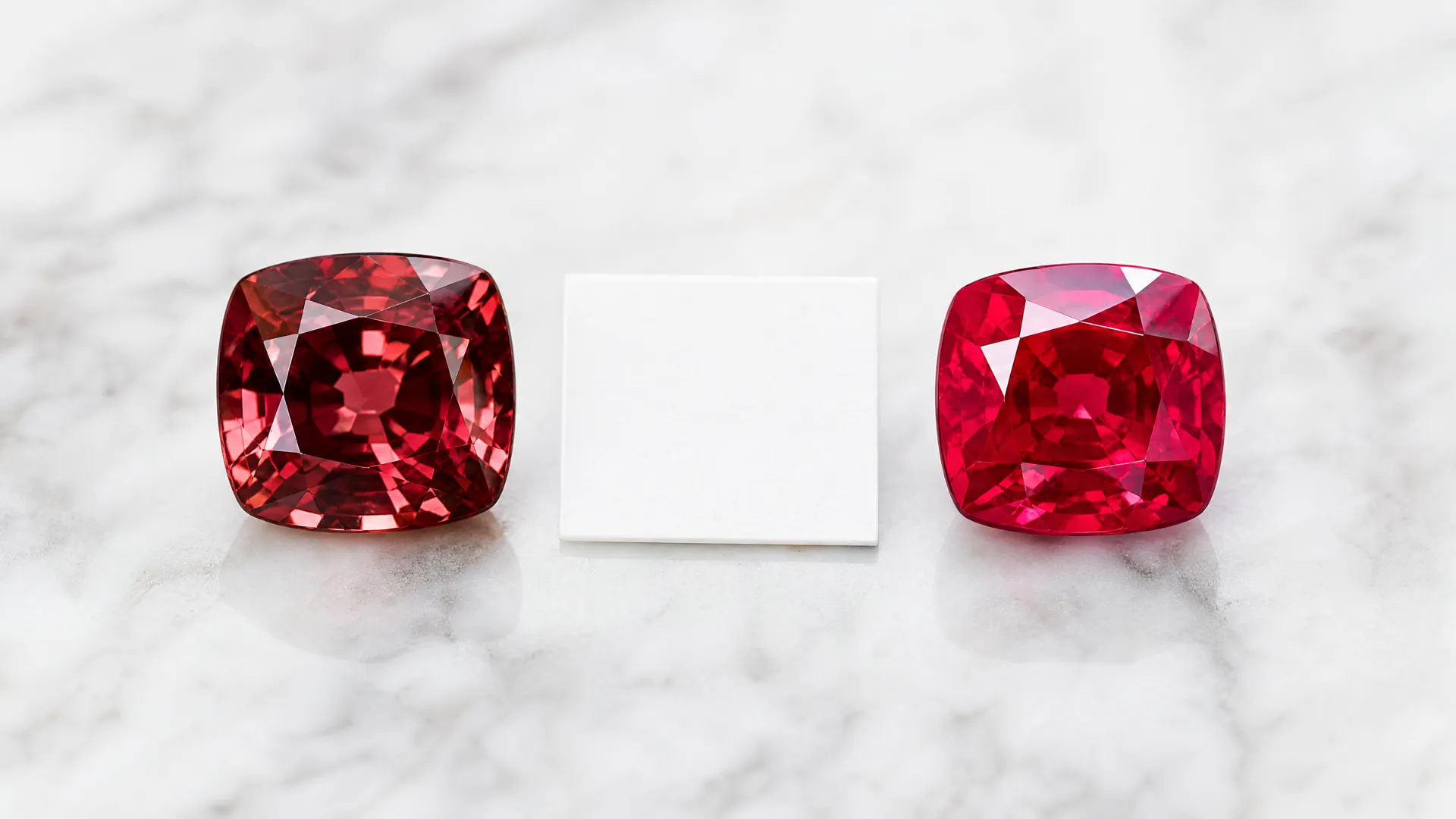
Garnet and ruby are separated by five facts: ruby is corundum at Mohs 9 while garnet is a softer silicate at 6.5-7.5; ruby glows red under UV light while garnet stays dark; ruby runs hundreds to thousands per carat while garnet runs tens; ruby is the July birthstone, garnet the January stone; and ruby red carries a blue undertone that garnet red never has.
| Property | Garnet | Ruby |
| Mineral family | Silicate group (many species) | Corundum |
| Mohs hardness | 6.5-7.5 | 9 |
| Red character | Warm brownish-red to raspberry | Pure red with blue undertone (pigeon blood is the top grade) |
| UV fluorescence | None — stays dark | Glows bright red under UV |
| Price per carat | $20-150 | $500-10,000+ |
| Birthstone | January | July |
| Common treatments | Rarely treated | Usually heat-treated |
The color test, done right. Hold both under white daylight. Ruby red is a stop-sign red with a cool blue cast; the finest grade is literally called pigeon blood. Garnet reds lean warm — brick, wine, raspberry — and the common red garnet (almandine-pyrope) reads noticeably browner side by side. A single stone alone is hard to judge; against a known ruby, the warmth gives garnet away.
The UV test — the strongest home test. A cheap longwave UV flashlight (the currency-checking kind) makes ruby fluoresce a vivid glowing red, because chromium in corundum does that. Garnet contains no chromium fluorescence and sits inert and dark. One caveat: glass-filled ruby fakes also glow, so fluorescence separates ruby from garnet, not from glass — pair it with the hardness streak test below.
The hardness streak test — ten seconds, mild risk. Drag the stone corner across a piece of quartz (hardness 7) or a ceramic tile. Ruby (9) scratches it cleanly; garnet (6.5-7.5) scratches quartz weakly or not at all and leaves a streak on ceramic. Use a discreet spot; this is a last-resort test on loose stones, never on a set heirloom.
The price tells the truth both ways. A rich red cabochon ring at $40 is garnet (or glass) — natural ruby at that size starts in the hundreds, and fine ruby is per-carat one of the four most expensive gems on Earth. The reverse trap: garnet at ruby prices happens in tourist markets; buy red stones from sellers who name the mineral in writing.
Why the confusion persists: they share the deep-red look, the birthstone calendar puts both in winter-summer red months, and antique jewelry mixed them freely — many heirloom rubies X-rayed in the modern era turned out to be garnets, pyrope garnet was literally marketed as Cape ruby in the 1800s. When an heirloom red stone matters, a gemologist appointment costs less than the difference in value.
Which to buy, honestly. For January and July birthdays the calendar decides. For red-on-a-budget, garnet delivers a dignified deep red at under $150 a piece and needs no apologies. For the stoplight red that glows at night — the one people remember — ruby, and the price is the price.
Frequently asked.
What is the fastest way to tell garnet from ruby?
Shine a longwave UV flashlight on it: ruby glows vivid red (chromium fluorescence), garnet stays dark. Follow with a hardness check — ruby at Mohs 9 scratches quartz cleanly, garnet at 6.5-7.5 barely marks it.
Is garnet more expensive than ruby?
No — ruby is dramatically more. Garnet runs $20-150 per carat; natural ruby $500-10,000-plus, with fine ruby among the four most expensive gems. A rich red ring at $40 is garnet or glass, never ruby.
Do garnet and ruby look different in daylight?
Yes. Ruby red is pure with a blue undertone — stop-sign to pigeon-blood. Garnet reds lean warm: brick, wine, raspberry, noticeably browner when placed beside a known ruby.
Related Articles
A Brief History of Birthstones
From the twelve tribes of Israel to the 1912 standard that rules the modern list — the 3,500-year origin story of why we wear our birth month.
Read MoreThe Ultimate Birthstone Cleaning Guide
Keep every piece in your collection gleaming. Step-by-step methods for gold, silver, and delicate birthstones — no harsh chemicals needed.
Read MoreBirthstone Energy: A Complete Crystal Healing Guide
From root chakra grounding to crown chakra clarity, discover how each birthstone carries healing energy. Learn to activate your crystal for meditation, sleep, and daily intention.
Read More