How to Clean Amethyst Jewelry: Safe Methods That Preserve Color
Amethyst can fade and fracture if cleaned wrong. Learn the safe methods to keep your purple quartz sparkling for decades.
Yueounb Editorial
Jewelry Expert
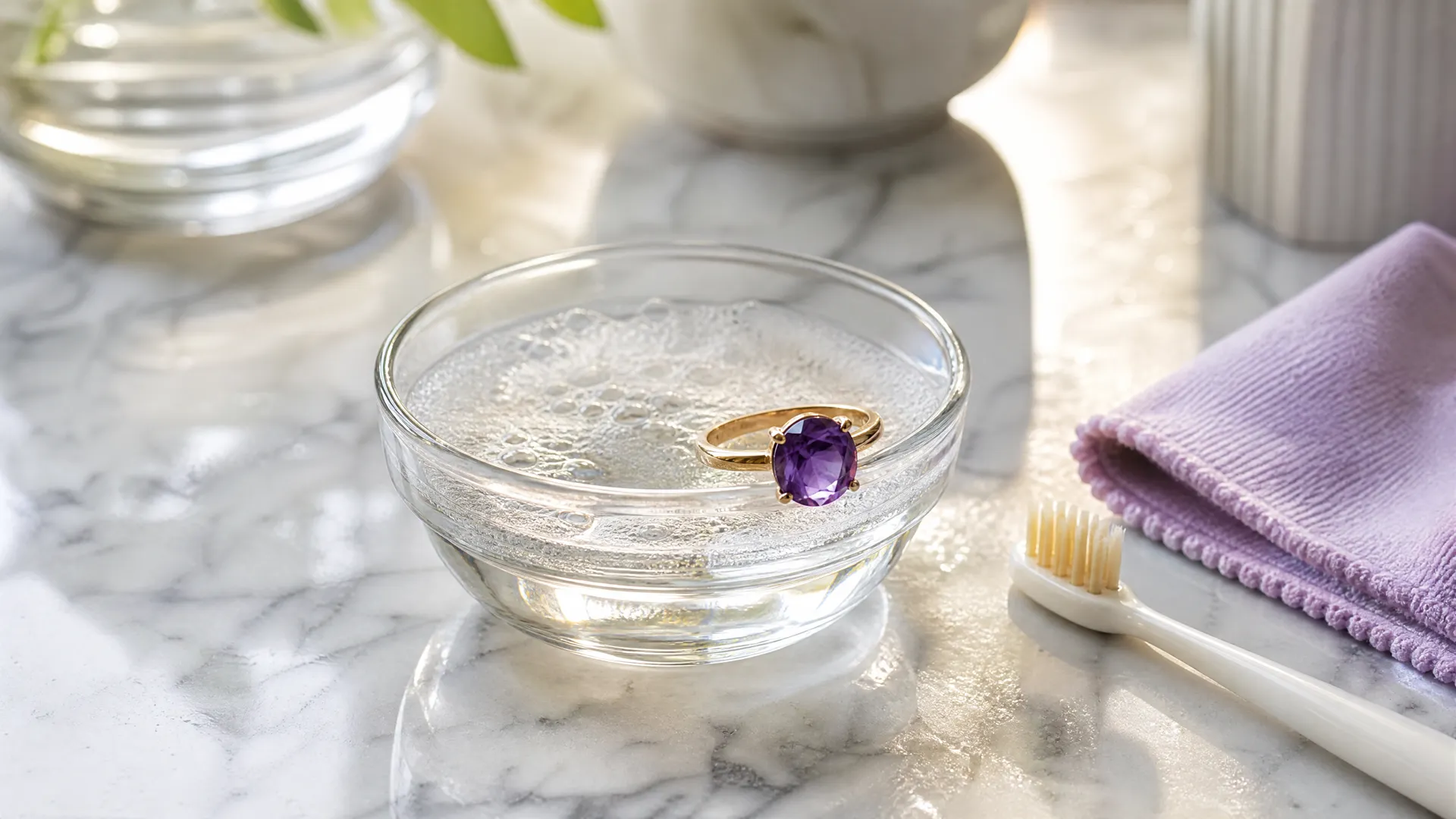
Amethyst can fade and fracture if cleaned wrong. Learn the safe methods to keep your purple quartz sparkling for decades. As the February birthstone and one of the most-worn colored gems, amethyst deserves a cleaning routine that protects both its royal purple color and its structure. New to the stone itself? Start with what the birthstone for February is — then keep it sparkling with the routine below.
The short answer: warm water, a drop of mild dish soap, and a soft-bristled toothbrush are all amethyst ever needs. Soak the piece for two to three minutes, brush gently around the stone and setting, rinse in lukewarm water, and pat dry with a microfiber cloth. This method is safe for every amethyst — natural, treated, set in silver, or set in gold.
What actually damages amethyst is rarely the cleaning itself — it is the method. Three things to avoid completely: ultrasonic cleaners (hidden inclusions can turn into cracks under vibration), steam cleaners (sudden heat causes thermal shock fractures), and harsh chemicals like bleach, ammonia, or acetone (they cloud the surface and attack the setting).
Sunlight is the silent one. Natural amethyst slowly fades from deep purple to pale lavender with prolonged UV exposure — a windowsill jewelry dish can dull a stone within a year. Store amethyst pieces in a closed box or pouch, and take them off for long sunbathing or tanning sessions.
Step-by-step deep clean: 1) Fill a bowl with lukewarm water and one drop of mild dish soap. 2) Soak the jewelry for 2-3 minutes to loosen skin oils and lotion residue. 3) Brush gently with a soft toothbrush — pay attention under the stone where grime collects in prongs and bezels. 4) Rinse in a second bowl of clean lukewarm water (never over an open drain). 5) Pat dry and let it air-dry fully on a soft cloth before storing.
For stubborn residue — hand cream, makeup, or hairspray buildup — extend the soak to ten minutes and repeat the brush pass. Never scrape with pins or sharp tools; amethyst is hard (Mohs 7) but brittle, and a point-loaded scratch is permanent.
Daily habits matter more than deep cleans. Follow the last-on, first-off rule: put amethyst on after applying perfume and hairspray, and remove it before showering, swimming, or washing dishes. Chlorine and salt water are especially hard on both the stone finish and silver settings.
Store amethyst separately from other jewelry. At Mohs 7 it will scratch every softer stone it touches — pearls, opal, turquoise, moonstone — while harder gems like diamond, sapphire, and topaz can scratch it back. A fabric-lined box with individual slots or small pouches solves this completely.
Once a year, have valuable pieces professionally checked: a jeweler will inspect prongs and settings for wear, polish away fine scratches, and confirm the stone is secure. Combined with gentle home cleaning, this keeps an amethyst piece vivid enough to hand down.
Clean amethyst jewelry every two to three weeks with regular wear, or whenever it looks dull under daylight. The purple should read deep and saturated — if it starts looking washed out, that is fading, not dirt, and it is time to review where the piece lives and how it is stored. For the full story of February' stone across grades and prices, see the amethyst jewelry guide.
Related Articles
A Brief History of Birthstones
From the twelve tribes of Israel to the 1912 standard that rules the modern list — the 3,500-year origin story of why we wear our birth month.
Read MoreThe Ultimate Birthstone Cleaning Guide
Keep every piece in your collection gleaming. Step-by-step methods for gold, silver, and delicate birthstones — no harsh chemicals needed.
Read MoreBirthstone Energy: A Complete Crystal Healing Guide
From root chakra grounding to crown chakra clarity, discover how each birthstone carries healing energy. Learn to activate your crystal for meditation, sleep, and daily intention.
Read More