What Is the Birthstone for February? Amethyst, Never Changed
February's birthstone is amethyst, and February is the only month on the chart that has never changed since 1912 — no second stone, no revision, ever. The color grades, the hyacinth it replaced, buying for a February birthday, and the Valentine's double-gift month.
Yueounb Editorial
Jewelry Expert
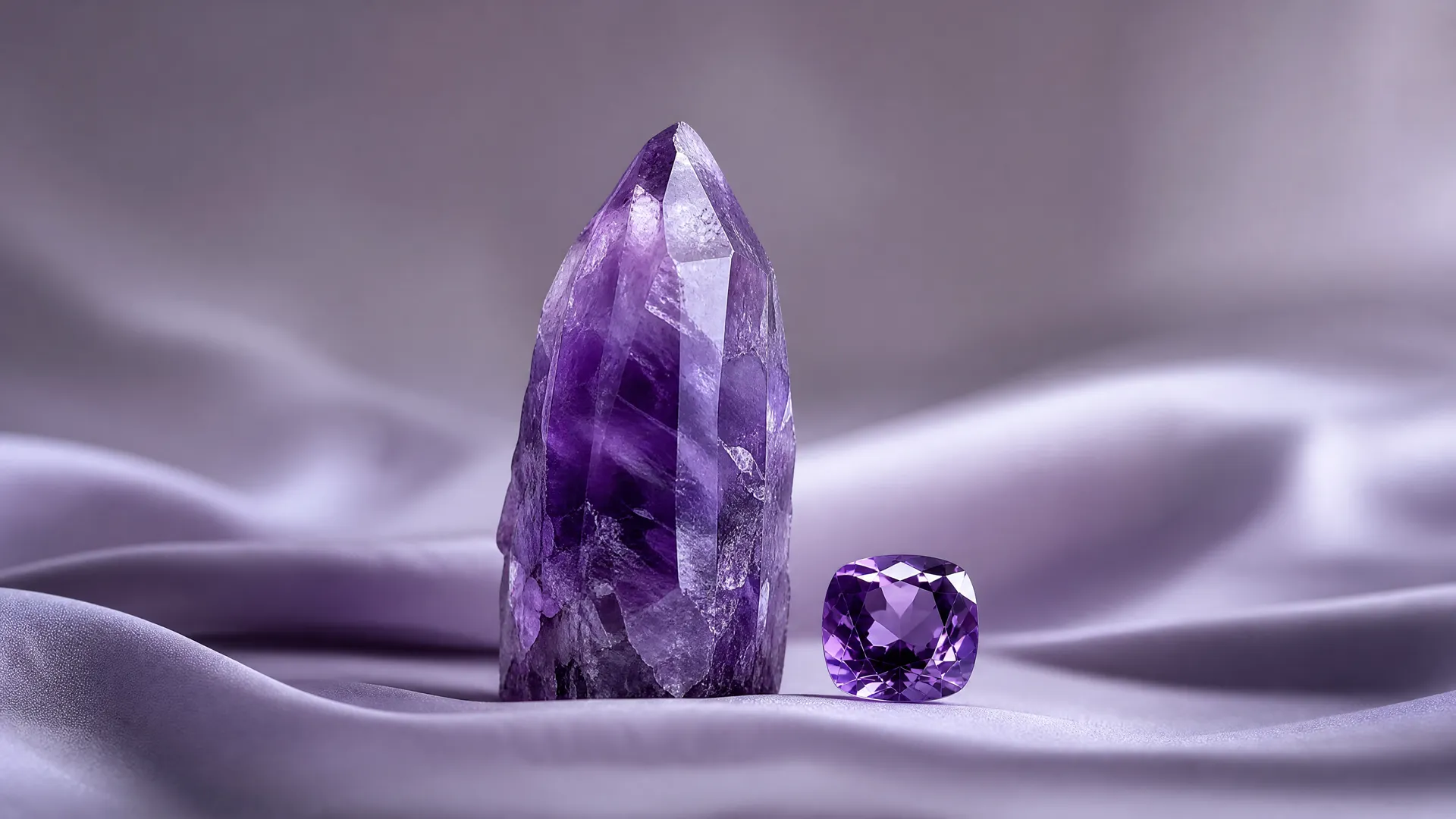
February's birthstone is amethyst — the purple variety of quartz, at Mohs 7, wearing a color that runs from misty lilac to the deep violet the trade calls Siberian. And February holds a distinction nobody markets enough: it is the only month on the modern chart that has never changed. The list standardized in 1912 gave February amethyst; the 1952 revision added stones to June, October, November, and December and left February alone; the 2002 and 2016 updates did the same. Every month around it accumulated alternatives; February kept its one stone through eleven decades — which makes the question of what to buy a February birthday unusually simple.
Quick Answer: February birthstone facts, directly — |Question|Answer| |What is February's birthstone?|Amethyst — purple quartz, official since 1912, never changed| |What color?|Lilac to deep "Siberian" violet; deeper = rarer = dearer| |What does it mean?|Clear-headedness — Greek amethystos, "not drunk"| |Hardness for daily wear?|Mohs 7 — daily-wear safe| |Traditional February stone before amethyst?|Hyacinth (jacinth) — red-orange zircon, on the old lists| |Cleaning?|Warm soapy water, soft brush; ultrasonic usually fine, steam not| |Anniversary?|The 6th|
The color question deserves its own paragraph, because amethyst pricing runs on it. Commercial amethyst wears light-to-medium purple; the collectors' names mark the top — Siberian, a saturated violet-blue with red flashes, and Rose de France, a deliberate pale lilac at the fashionable end. Heat is the one treatment to know: much of the market's evenly-deep purple is heated amethyst (heat lightens some material and adjusts the tone of others; it cannot make a pale stone Siberian), and a certificate noting unheated color commands the premium. February buyers get an honest market: even the finest amethyst remains an affordable stone, which is why whole-carat February gifts exist at every budget — the stone's history explains why.
That history includes the one fact February guides never mention: the traditional February stone was not amethyst at all. The old lists — from the fifteenth century onward — carried hyacinth or jacinth, names for the red-orange variety of zircon, with pearl appearing on a few tables. Amethyst had been pushing hyacinth out informally for centuries before 1912 made it official; today a traditionalist buying February their historical stone would be shopping orange zircon, a conversation piece no one at the party will have predicted. The modern alternative worth knowing instead is ametrine — the purple-and-gold two-color quartz that comes essentially from one Bolivian mine — a distinctive February-adjacent choice for someone whose purple should come with a twist.
Buying for a February birthday runs on two calendars. The birthday itself: amethyst suits every format — generous pendants because big clean stones are affordable, studs for daily wear, birthstone rings that survive real life at Mohs 7. The second calendar is Valentine's Day, which sits inside February and makes the month a double-gift month for couples: the classic move is amethyst paired with a partner stone — garnet for a January-February couple, or amethyst with ruby for a Valentine's statement — and our birthstone gifts by occasion guide maps the combinations. For the February baby who wants the full story of their stone — the Greek not-drunk legend, the bishops, the Russian royal collections — our amethyst meaning guide carries it; for telling a real one from glass, the identification guide; for keeping it purple, the cleaning guide — the short version being gentle soap, soft brush, and out of long sun.
Frequently asked.
What is the birthstone for February?
Amethyst — purple quartz, Mohs 7. It has been February's stone since the modern chart was standardized in 1912, and February is the only month that has never gained or changed a stone: the 1952, 2002, and 2016 revisions all left it untouched. Older traditional lists carried hyacinth (red-orange zircon) before amethyst took over.
What color is February's birthstone?
Purple, in a wide register: from pale lilac (sold as Rose de France) through rich grape to the saturated violet-blue top grade called Siberian. Depth of color drives price — deeper is rarer — and much evenly-dark commercial amethyst is heat-treated, a stable, accepted practice noted on certificates when unheated.
Is amethyst a good stone for everyday jewelry?
Yes — Mohs 7 hardness makes amethyst daily-wear safe in rings, and its affordability allows generous sizes. Two habits keep it at its best: avoid long sun exposure (prolonged light can fade the purple) and clean with warm soapy water and a soft brush. Ultrasonic cleaning is usually acceptable for untreated stones; steam is not.
What is the traditional February birthstone?
Hyacinth, also called jacinth — the old name for red-orange zircon — held February on the traditional lists from the fifteenth century until amethyst displaced it before the 1912 standardization. It remains a fascinating traditionalist's alternative: buying February their historical stone today means shopping orange zircon.
Related Articles
A Brief History of Birthstones
From the twelve tribes of Israel to the 1912 standard that rules the modern list — the 3,500-year origin story of why we wear our birth month.
Read MoreThe Ultimate Birthstone Cleaning Guide
Keep every piece in your collection gleaming. Step-by-step methods for gold, silver, and delicate birthstones — no harsh chemicals needed.
Read MoreBirthstone Energy: A Complete Crystal Healing Guide
From root chakra grounding to crown chakra clarity, discover how each birthstone carries healing energy. Learn to activate your crystal for meditation, sleep, and daily intention.
Read More