Amethyst Meaning: Calm, Clarity, and the Stone of Sobriety
The February birthstone meant not drunk to the Greeks, calmed bishops and poets for centuries, and anchors modern crystal practice.
Yueounb Editorial
Jewelry Expert
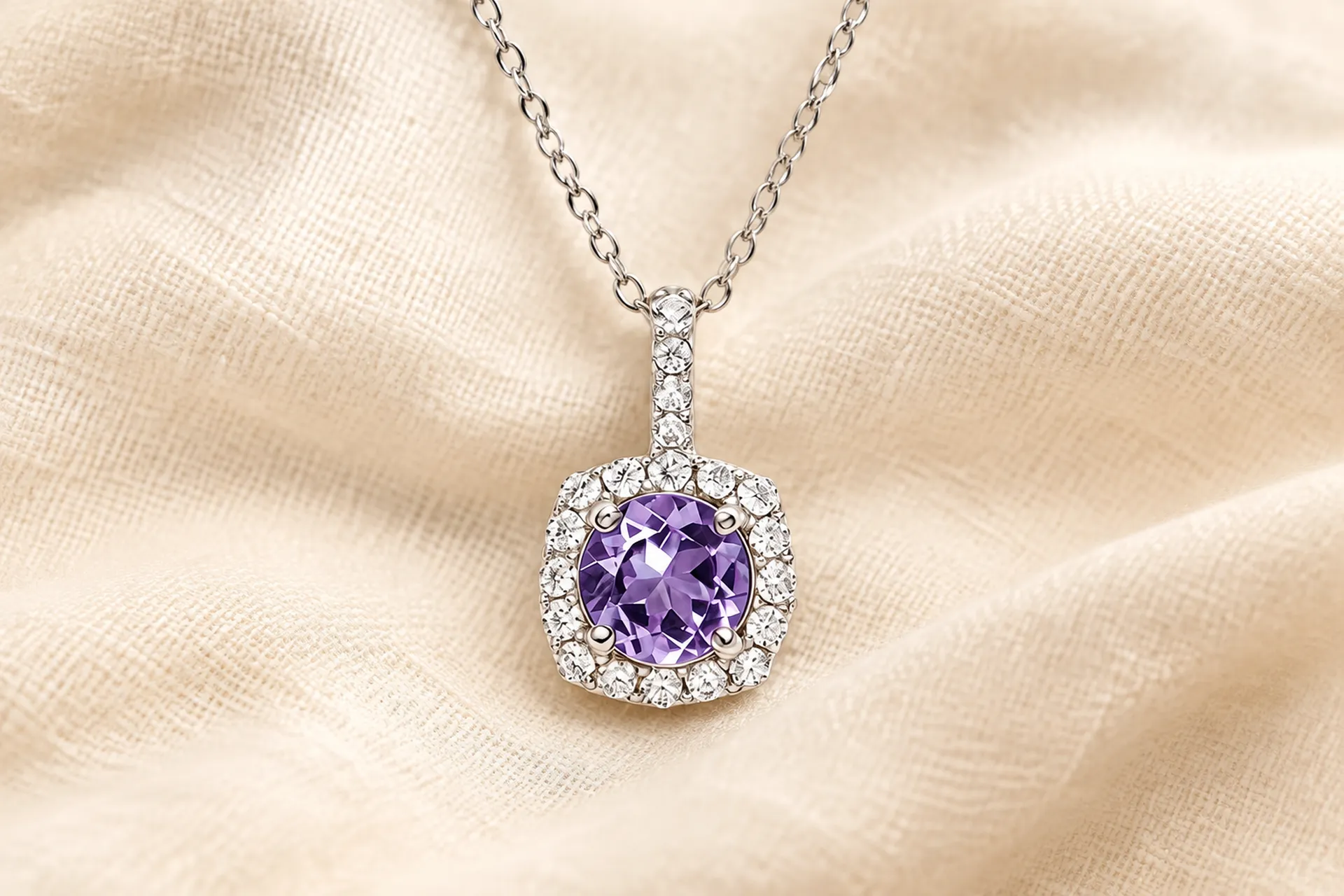
Amethyst is the February birthstone, and its meaning has been remarkably stable for two thousand years: calm, clarity, and protection from overindulgence — the Greek amethystos literally means not drunk. Worn by bishops, poets, and modern meditators for the same purpose, it is the violet quartz that people reach for when life gets loud.
| Fact | Value |
| Mineral | Purple quartz (silicon dioxide, color from iron + irradiation) |
| Mohs hardness | 7 — daily wear safe |
| Color range | Pale lilac to deep Siberian violet |
| Top sources | Brazil (volume), Uruguay (saturation), Zambia, Siberia (historic name-grade) |
| Fading | Yes — prolonged direct sun lightens it |
| Price | Affordable: $5-40 per carat for fine saturated material |
Where the meaning comes from, in three traditions. Greek: wine-goblets carved from amethyst to stay sober through the feast; the myth has Dionysus weeping wine over a white crystal, turning it violet. Christian: bishop rings carry amethyst — clarity of thought and resistance to intoxication of spirit; it lines the walls of medieval church crowns for the same reason. Chinese and European feng-shui traditions: the scholar stone, placed on desks for clarity in study.
What crystal practitioners use it for today — the consistent list. Sleep: the classic under-pillow or bedside stone, for quiet minds at 2 a.m. Meditation: held at the third eye as the focus object. Workspace calm: the desk stone for high-noise offices. Transition support: gifted at sobriety milestones, exams, and grief — moments where calm matters more than sparkle. The honest framing stays: tradition and ritual-object psychology, not clinical medicine, and wearing it that way delivers exactly what it always promised.
Uses in jewelry, ranked by lifestyle. The everyday pendant is the volume answer — Mohs 7 survives sleep, showers, and sweaters. Studs for minimalists; the 6-8mm violet reads professional. Rings work with one caveat: amethyst survives daily wear but loses polish-freshness to years of keyboard contact — the honest care note is a re-polish every few years. Bracelets and beads carry the meaning-market strand. February birthdays have the easiest stone decision in the calendar: affordable at fine quality, hard enough for anything, and purple at a depth that photographs honestly.
Buying quality, in one paragraph: saturation over size — a deep Uruguay violet at 4mm beats a washed 10mm stone; check for zoning (color bands) under daylight, which fine cutting hides; and expect to pay $5-40 per carat, because amethyst abundance keeps it honest. The famous exception is Siberian-grade material with red flashes, collectible at premiums. Treatments are rare — what you see is the stone.
Care, the two rules that matter: sunlight fades it (months on a windowsill lighten violet to gray-lilac — store boxed), and ultrasonic cleaners are safe but steam is not. A monthly wash in warm soapy water with a soft brush keeps the polish honest. For the full cleaning method and what to avoid, our amethyst cleaning guide covers it step by step.
Frequently asked.
What does amethyst symbolize?
Calm, clarity, and protection from overindulgence — stable for two millennia. The Greek amethystos means not drunk; bishops wore it for clear-headedness, and modern practice keeps it as the stone for sleep, meditation, and noisy times.
Who should wear amethyst?
February birthdays first — it is their birthstone. Beyond the calendar, it is the traditional gift for sobriety milestones, exams, and grief, and the default desk or bedside stone for people who want calm without clinical claims.
Does amethyst fade in sunlight?
Yes — prolonged direct sun lightens violet toward gray-lilac over months. Store it boxed away from windowsills. Ultrasonic cleaning is safe, steam is not, and warm soapy water with a soft brush handles the rest.
Related Articles
A Brief History of Birthstones
From the twelve tribes of Israel to the 1912 standard that rules the modern list — the 3,500-year origin story of why we wear our birth month.
Read MoreThe Ultimate Birthstone Cleaning Guide
Keep every piece in your collection gleaming. Step-by-step methods for gold, silver, and delicate birthstones — no harsh chemicals needed.
Read MoreBirthstone Energy: A Complete Crystal Healing Guide
From root chakra grounding to crown chakra clarity, discover how each birthstone carries healing energy. Learn to activate your crystal for meditation, sleep, and daily intention.
Read More