How to Clean Opal: The Delicate Stone Care Guide
Opal contains up to 20 percent water and can crack if dried. Learn the exact method to clean opal jewelry safely and prevent crazing.
Yueounb Editorial
Jewelry Expert
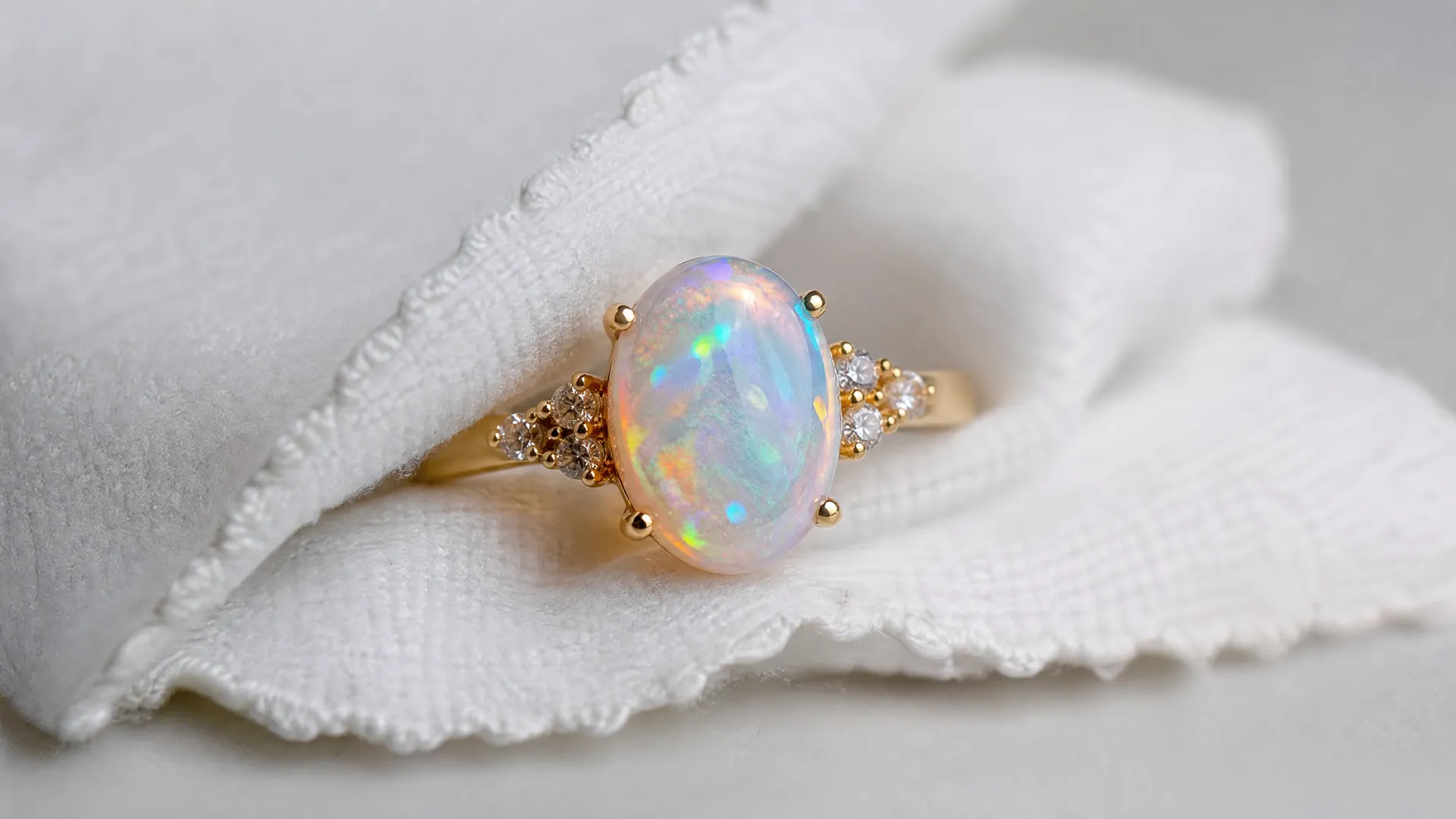
Opal is one of the few gemstones that contains water — up to 20% by weight — which makes it the most delicate common birthstone to clean. Clean it wrong and you risk crazing: tiny surface cracks that spread like a spiderweb and permanently cloud the stone. This guide covers the safe methods and the mistakes that ruin opals.
The short answer: wipe opal with a soft, slightly damp cloth after wear — and nothing else. Never soak it, never use ultrasonic cleaners, never use steam, and never leave it in direct sunlight or a hot car. Opal scores 5.5-6.5 on the Mohs scale and is sensitive to both heat and sudden dryness, so the gentlest possible approach is the only correct one. Choosing a stone that must survive daily wear instead? The best stones for jewelry guide ranks the months by toughness and hardness.
Why water is the enemy of a water stone: paradoxically, soaking can dehydrate opal. Prolonged immersion draws out internal moisture when the stone dries, and the contraction causes crazing. Solid opals, doublets, and triplets each react differently — triplets (a thin opal layer glued to a backing) are especially vulnerable because water dissolves the adhesive, causing the layers to separate and the opal to turn gray or cloudy.
Safe weekly routine: 1) Wipe the stone with a dry microfiber cloth to remove skin oils. 2) For grime, dampen the corner of the cloth with lukewarm water only — no soap, which can leave residue in microscopic pores. 3) Wipe again with the dry end. 4) Let it air-dry completely before storing. The whole process takes under a minute.
For set jewelry (opal rings, pendants): clean around the setting gently with a damp cotton swab. Take extra care with prong-set opals — the stone sits exposed, and pressure from a brush can chip the edge. Bezel-set opals tolerate cleaning better because the metal rim protects the girdle.
Three absolute never-list items account for almost all opal damage: ultrasonic cleaners (vibration fractures the stone), heat (ovens, hot water, radiators, summer dashboards — anything above about 40°C accelerates water loss), and harsh chemicals including bleach, ammonia, and even strong perfume near the stone.
Storage matters as much as cleaning. Opal is best stored at moderate humidity — not a sealed dry safe, not a damp bathroom. In very dry climates or heated winter homes, some jewelers recommend storing opal jewelry with a small piece of damp cotton in a separate compartment of the box (never touching the stone) to keep the air from pulling moisture out.
If your opal has already crazed or a triplet has gone cloudy, the damage is permanent — but the stone can often be repolished by a lapidary to remove surface-level crazing, or reset to hide the affected area. Prevention costs one minute a week; repair costs a lapidary fee or a lost stone.
Clean opal jewelry after each wear (a ten-second wipe), store it away from heat and dryness, and have prongs checked once a year. That is the entire maintenance contract for keeping an opal glowing for a lifetime — October babies deserve nothing less.
Related Articles
A Brief History of Birthstones
From the twelve tribes of Israel to the 1912 standard that rules the modern list — the 3,500-year origin story of why we wear our birth month.
Read MoreThe Ultimate Birthstone Cleaning Guide
Keep every piece in your collection gleaming. Step-by-step methods for gold, silver, and delicate birthstones — no harsh chemicals needed.
Read MoreBirthstone Energy: A Complete Crystal Healing Guide
From root chakra grounding to crown chakra clarity, discover how each birthstone carries healing energy. Learn to activate your crystal for meditation, sleep, and daily intention.
Read More