Sapphire vs Tanzanite: Blue Gemstone Comparison (Price, Durability, Color)
Both are coveted blue gems — but sapphire and tanzanite differ sharply in hardness, price, and color range.
Yueounb Editorial
Jewelry Expert
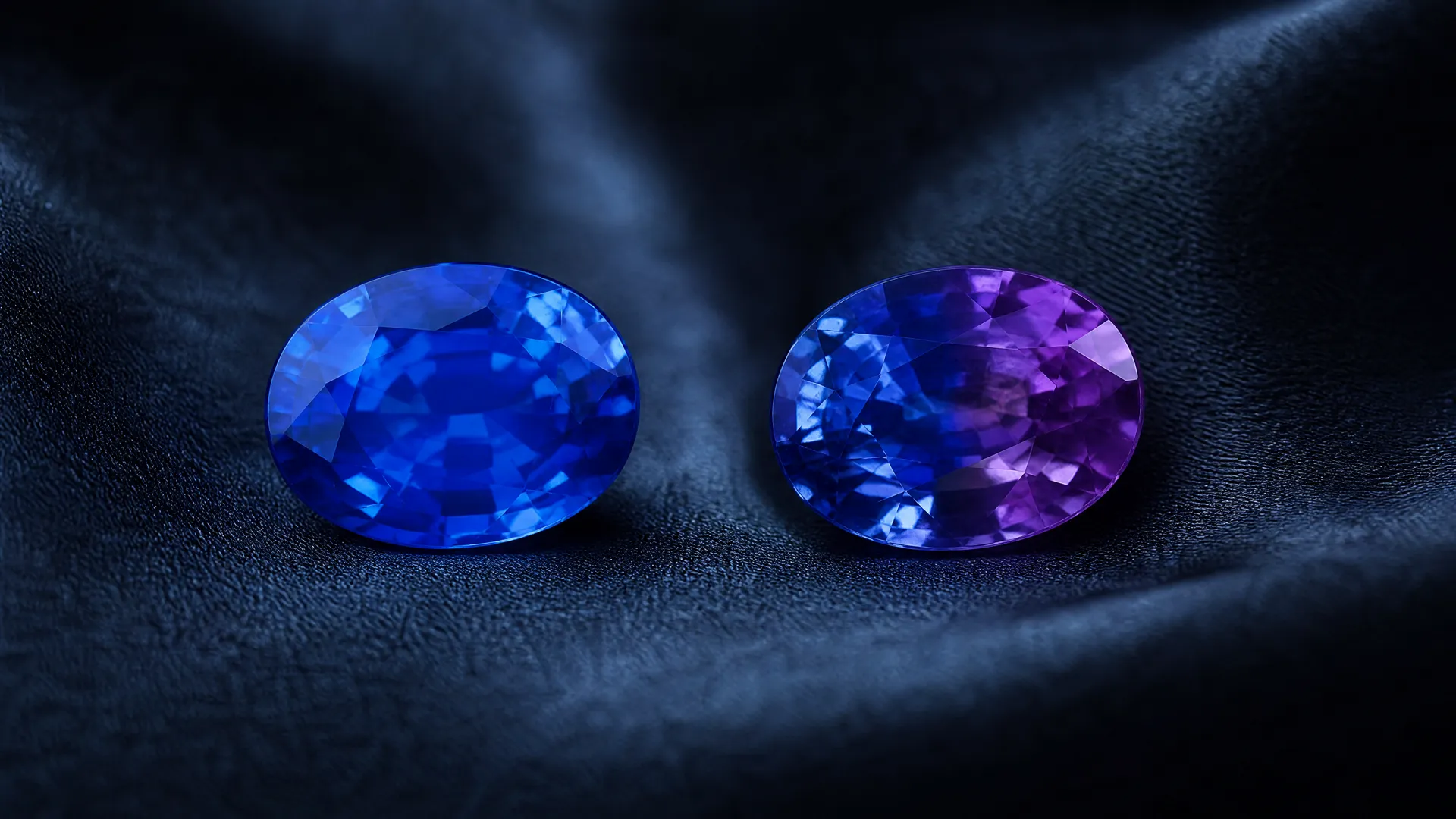
Sapphire and tanzanite are the two most coveted blue gemstones, and the confusion is routine. The short answer: sapphire is the harder, heirloom-grade choice (Mohs 9, safe for daily rings), while tanzanite is the vivid-budget alternative (Mohs 6.5-7, better for occasional-wear pieces) with a purpler, more electric blue at a quarter of the price.
Hardness and everyday wear — the biggest practical difference. Sapphire is corundum: Mohs 9, second only to diamond, tolerating daily wear, hand-washing, and decades of use. Tanzanite is zoisite: Mohs 6.5-7, soft enough that a tanzanite engagement ring shows scratches within months of daily wear. Rule of thumb: sapphire for rings worn daily, tanzanite for earrings, pendants, and occasional rings.
| Property | Sapphire | Tanzanite |
| Mineral | Corundum | Zoisite |
| Mohs hardness | 9 | 6.5-7 |
| Color | Royal blue, stays blue in all light | Pleochroic: blue-violet shifts with angle and light |
| Origin | Sri Lanka, Madagascar, Kashmir | One place on Earth: Merelani, Tanzania |
| Price per carat (fine) | $500-5,000+ | $100-500 |
| Daily ring | Yes | Occasional wear |
| Treatments | Usually heat-treated | Nearly always heat-treated |
Color — different blues entirely. Sapphire is a deep, saturated royal blue (Kashmir cornflower is the benchmark) that stays blue under every light. Tanzanite is pleochroic: blue from one angle, violet-purple from another, shifting noticeably between daylight and lamplight — the violet flash is its signature and the reason it reads more exotic.
Rarity cuts the other way. Sapphire is found on every continent. Tanzanite comes from one 4-kilometer strip at the foot of Mount Kilimanjaro — geologists estimate tanzanite is roughly 1,000x rarer than diamond by known deposits, which has not translated into diamond prices only because supply is well-managed.
Birthstone roles: sapphire is the September birthstone; tanzanite is a modern December option (added 2002, alongside turquoise and zircon) — the December choice for people who prefer vivid blue over earthy green-blue.
Which should you buy? Engagement or daily ring: sapphire, no contest. Statement earrings or a pendant maximizing color per dollar: tanzanite. A September birthday: sapphire honors the month. A December birthday who loves blue: tanzanite out-sparkles turquoise in evening light. An heirloom for a granddaughter: sapphire will still look new in 2080.
Frequently asked.
Which is better for an engagement ring, sapphire or tanzanite?
Sapphire. At Mohs 9 it tolerates daily wear for decades; tanzanite (Mohs 6.5-7) scratches within months of daily ring wear. Tanzanite belongs in earrings, pendants, and occasional rings.
Why is tanzanite cheaper than sapphire?
Demand, not rarity — tanzanite is actually about 1,000x rarer by deposits, but it all comes from one mine in Tanzania with managed supply, and it lacks sapphire centuries of royal heritage. Fine tanzanite runs $100-500 per carat vs $500-5,000+ for fine sapphire.
Do sapphire and tanzanite look the same?
No. Sapphire is a stable royal blue in every light. Tanzanite is pleochroic — blue from one angle, violet from another, and it shifts between daylight and lamplight. If the stone flashes purple, it is tanzanite.
Related Articles
A Brief History of Birthstones
From the twelve tribes of Israel to the 1912 standard that rules the modern list — the 3,500-year origin story of why we wear our birth month.
Read MoreThe Ultimate Birthstone Cleaning Guide
Keep every piece in your collection gleaming. Step-by-step methods for gold, silver, and delicate birthstones — no harsh chemicals needed.
Read MoreBirthstone Energy: A Complete Crystal Healing Guide
From root chakra grounding to crown chakra clarity, discover how each birthstone carries healing energy. Learn to activate your crystal for meditation, sleep, and daily intention.
Read More