How to Clean Turquoise: Care Guide for Soft Porous Stones
Turquoise is soft, porous, and easily damaged. Learn the only safe cleaning method that preserves color and prevents discoloration.
Yueounb Editorial
Jewelry Expert
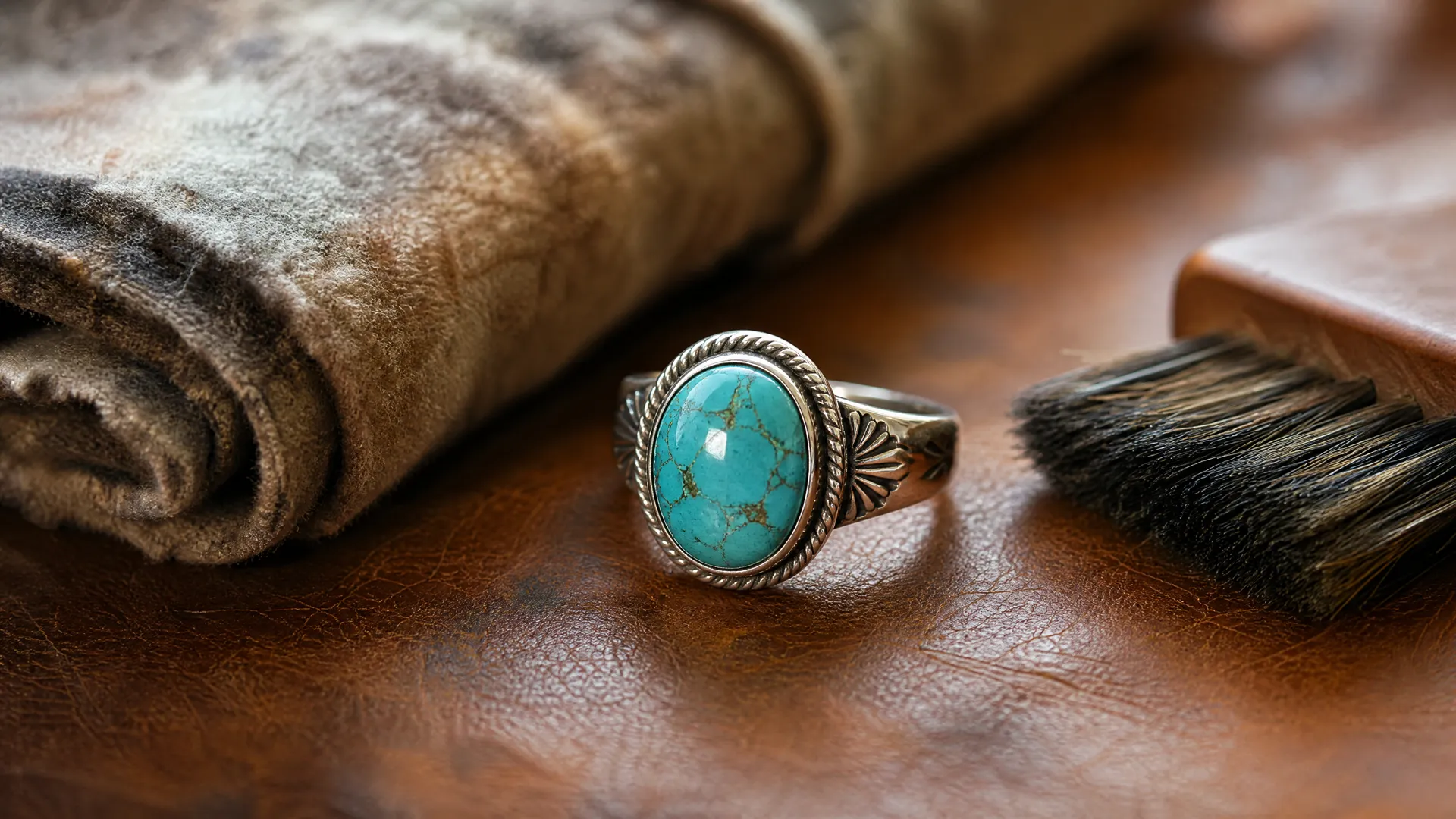
Turquoise is a porous phosphate mineral — it absorbs water, oils, and chemicals like a sponge, which is why the wrong cleaning method can permanently change its color. Cleaned wrong, sky-blue turquoise turns green or dull; cleaned right, it stays the color of a December sky for generations.
Quick Answer: Clean turquoise with a soft dry cloth after every wear; for visible grime, barely dampen the cloth with lukewarm water, then dry the stone immediately. Brief contact with water — rain, washing hands — is fine; soaking, swimming, and showering are not. Never use soap, oils, ultrasonic, or steam on turquoise: the stone is porous (Mohs 5-6) and absorbs liquids, which can permanently darken it. On a tarnished silver setting, polish the metal only — never dip the whole piece.
Why porosity is the whole story: turquoise rates only 5-6 on the Mohs scale and its structure is full of microscopic pores. Oils from your skin slowly absorb into the stone — this is natural and causes the gradual patina many collectors love — but commercial oils, lotions, and perfumes absorb unevenly and leave permanent dark blotches. Water itself is less harmful than oils, but repeated soaking can destabilize treated stones.
Safe cleaning routine: 1) Wipe with a dry microfiber cloth after every wear to remove skin oils before they absorb. 2) For visible grime, dampen a cloth corner with plain lukewarm water and wipe the stone briefly. 3) Dry immediately and completely with the dry end of the cloth. Total time: thirty seconds.
The never-list: ultrasonic cleaners drive fluid into the pores and can fracture the stone; steam heats and dries turquoise unevenly causing cracks; soap leaves residue in pores that attracts more grime; bleach and ammonia chemically attack the copper that gives turquoise its blue. Also remove turquoise jewelry before swimming (chlorine), bathing (hot soapy water), and applying lotion or sunscreen.
Can turquoise get wet at all? Graded honestly: rain, hand-washing, and a quick rinse are survivable — dry the stone right away with a soft cloth and let it air fully before storing. Swimming pools, hot tubs, and long showers are not survivable habits, because chlorine and prolonged soaking reach deep into the pores. One nuance deserves honesty: the GIA lists brief warm soapy water as safe for turquoise, and it is — for stabilized stones, whose resin treatment blocks absorption. For natural or unknown-treatment turquoise, a barely damp cloth is the better standard: untreated turquoise is far more porous, and soap residue that lodges in the pores cannot be washed back out.
What about the silver around the stone? The most common real-world turquoise problem is a blackened sterling setting, and the fix is mechanical patience: rub only the metal with a silver polishing cloth, keeping the cloth off the stone entirely. Chemical silver dips are the danger — they reach behind the setting and permanently discolor porous turquoise — and the popular foil-and-baking-soda bath is a full immersion, which makes it wrong for any set stone. For intricate or valuable pieces, a jeweler can polish the setting with the stone protected; that is the one shortcut that is actually safe.
Treated vs natural turquoise matters for cleaning decisions. Natural, untreated turquoise is the most porous and the most fragile. Stabilized turquoise (impregnated with resin) resists oils and water far better and tolerates gentle wiping worry-free. Reconstituted or dyed turquoise may bleed color when wet — if a cloth comes away blue, stop and dry the stone immediately.
Storage: keep turquoise in a soft pouch away from other jewelry — it scratches easily (Mohs 5-6) and is scratched by everything harder. Store it dry. Unlike opal, turquoise wants no humidity; a sealed dry box is ideal. Softness is a placement question more than a verdict — turquoise thrives in pendants and earrings, and the best stones for jewelry guide maps which gems belong in daily-wear rings.
Can discolored turquoise be restored? Light surface oil film can sometimes be lifted by a professional, but absorbed oils and green discoloration are permanent. This is why the thirty-second wipe-after-wear habit is the single highest-value turquoise care practice — it prevents the problem that cannot be fixed.
December babies: pair this routine with the December birthstone guide for the full turquoise story — meaning, sources, and why this 5,000-year-old stone still crowns the modern December list.
Frequently asked.
Can turquoise get wet?
Brief contact is fine — rain, washing hands, a quick rinse — but dry the stone immediately with a soft cloth and let it air-dry fully before storing. Never swim, shower, or soak turquoise: it is porous (Mohs 5-6), and prolonged water or chlorine exposure can destabilize the stone and darken its color, especially natural untreated material.
How do I clean tarnished silver around a turquoise stone?
Rub only the silver with a silver polishing cloth, keeping the cloth off the stone. Skip chemical dips, toothpaste, and foil-and-baking-soda soaks — turquoise absorbs those chemicals and discolors permanently. For intricate or valuable pieces, a jeweler can polish the setting with the stone protected.
Can I clean turquoise with soap and water?
GIA calls brief warm soapy water safe for sturdy turquoise, and it is — for stabilized stones, whose resin treatment resists absorption. For natural or unknown-treatment turquoise we recommend a barely damp cloth instead: untreated turquoise is more porous, and soap residue that lodges in the pores cannot be washed back out.
Related Articles
A Brief History of Birthstones
From the twelve tribes of Israel to the 1912 standard that rules the modern list — the 3,500-year origin story of why we wear our birth month.
Read MoreThe Ultimate Birthstone Cleaning Guide
Keep every piece in your collection gleaming. Step-by-step methods for gold, silver, and delicate birthstones — no harsh chemicals needed.
Read MoreBirthstone Energy: A Complete Crystal Healing Guide
From root chakra grounding to crown chakra clarity, discover how each birthstone carries healing energy. Learn to activate your crystal for meditation, sleep, and daily intention.
Read More