Real vs Fake Garnet: 5 Tests to Identify Authentic Stones
Garnet is one of the most faked gemstones. Five practical tests — hardness, color, inclusions, weight, and price logic
Yueounb Editorial
Jewelry Expert
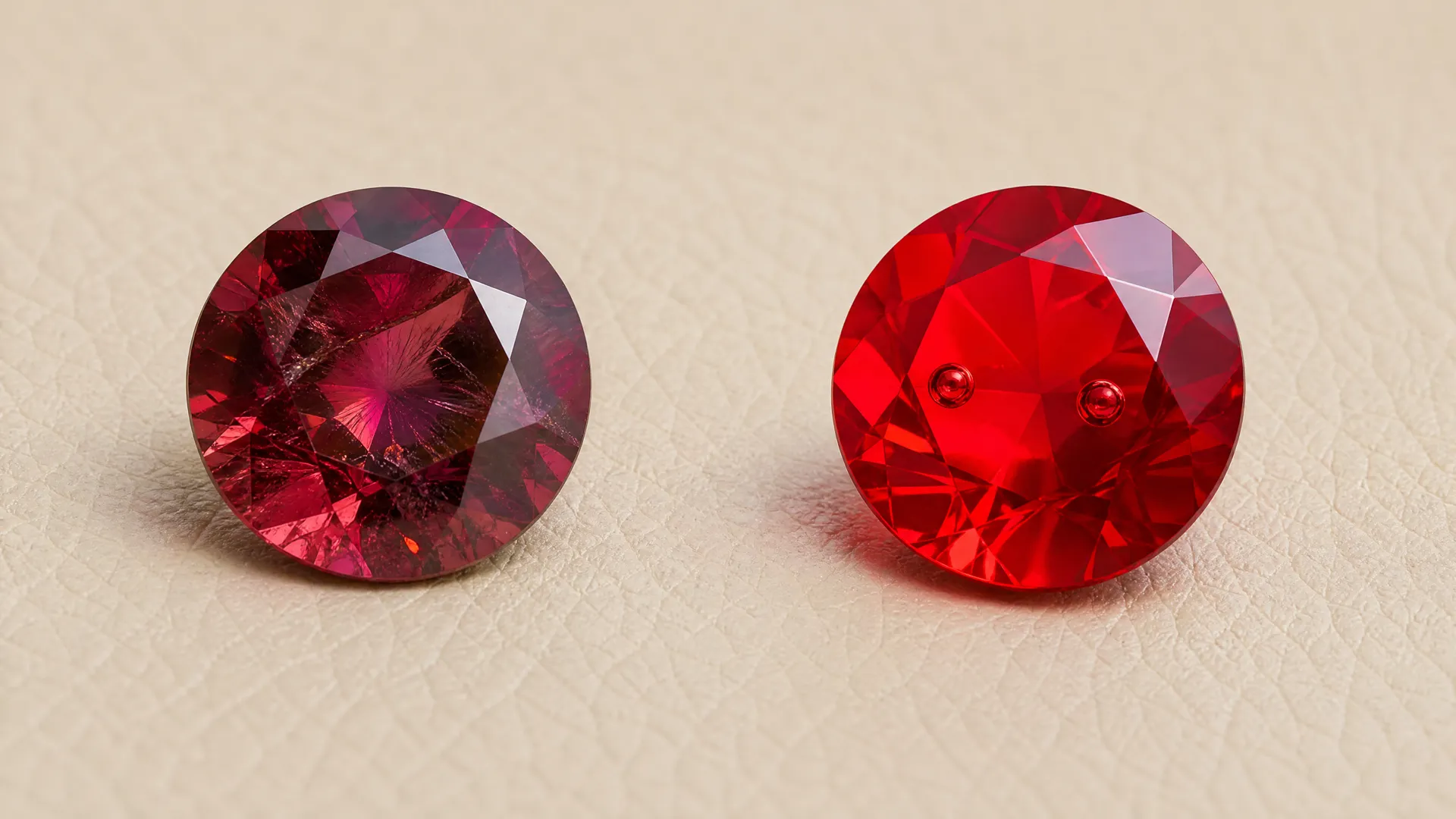
Real garnet is told from fake by five tests: it scratches window glass (Mohs 6.5-7.5 vs glass 5.5), shows natural color zoning and inclusions under a loupe, feels denser than glass, never glows under UV, and costs real money — deep red garnet under fifteen dollars is glass until proven otherwise. Each test below takes under a minute.
Quick Answer: Is Your Garnet Real? |Test|Real garnet|Fake (glass/dyed)| |Glass scratch|Scratches cleanly|Fails, leaves powder| |Color under daylight|Zoned — raspberry, wine, brownish-red shifts|Uniform flat red| |Inclusions (10x loupe)|Natural crystals, veils, growth zoning|Bubbles, swirl lines, or flawless| |UV flashlight|Dark, inert|Glows or stays suspiciously bright| |Weight in hand|Dense — 3.5-4.3 specific gravity|Light — glass is 2.5| |Price logic|$20-150 per carat|Under $15 for large stones| One-sentence rule: If a deep red "garnet" costs under $15 and looks flawless, it is glass.
Test one: the hardness streak. Drag a stone corner across scrap window glass. Real garnet (Mohs 6.5-7.5) cuts a clean line; glass imitations (5.5) slide or powder. On a ceramic tile, garnet leaves a faint streak of its own color — glass leaves none. Use a discreet corner, never a polished face.
Test two: color honesty. Natural garnet red zones — raspberry shifting to wine, brownish-red at crystal edges — and the common red garnet (almandine-pyrope) reads warm beside anything. Dyed glass red is uniform under the loupe and too bright in daylight; dye also pools in surface cracks. One honest caveat: garnet comes in real greens (demantoid), oranges (spessartine), and purples (rhodolite) — color variety is not a fake sign, flatness is.
Test three: the loupe. Under 10x magnification, real garnet shows fingerprints of growth: tiny crystal inclusions, veils, angular zoning. Glass shows bubbles, swirls from molding, or suspicious perfection. This single test catches most market fakes, and phone macro cameras are 80 percent as good as a loupe.
Test four and five: weight and UV. Garnet specific gravity runs 3.5-4.3 against glass 2.5 — same-size stones, the garnet conspicuously heavier in the palm. Under a longwave UV flashlight garnet stays dark and inert (no chromium fluorescence, unlike ruby); many glass fakes glow oddly or contain brighteners. Price completes the logic: genuine garnet runs $20-150 per carat — the under-$15 large red stone is the single most common fake on the market.
Where fakes actually come from: molded red glass sold as vintage garnet at estate sales, dyed glass beads in bracelet lots, and composite stones (garnet-and-glass doublets, a real garnet crown glued to a glass pavilion — caught by the glue line visible from the side under immersion or strong light). Buying from sellers who name the variety (almandine, pyrope, rhodolite) and disclose treatments in writing eliminates 95 percent of the risk.
The January birthstone angle: garnet protects travelers, symbolizes commitment, and — at genuine quality — costs a fraction of what its richness suggests. Testing a stone before trusting it is not paranoia; it is the thirty-second ritual that keeps a nice stone honest. Every Yueounb garnet piece is named by variety and tested before setting. See also our full garnet vs ruby comparison for the sister confusion. To wear the stone daily, our four-leaf clover garnet necklace sets a deep red garnet at the heart of a gold lucky clover. For January coverage on the wrist, the garnet tennis bracelet carries 13-17 hand-set almandine garnets, each piece shipped with its stone certificate — the paper version of the tests above. For gifting the January-born, the January birthstone gift guide matches the stone to the person and the occasion. The full family across all six colors is mapped in our garnet jewelry guide.
Frequently asked.
How can I tell if a garnet is real at home?
Five one-minute tests: scratch window glass (real garnet cuts a clean line), check for color zoning under daylight, look for natural inclusions with a 10x loupe or phone macro (glass shows bubbles or flawlessness), feel the weight (garnet is much denser), and check price logic — real garnet costs $20-150 per carat.
Do real garnets have bubbles in them?
No — bubbles are the glass signature. Real garnet shows natural inclusions: tiny crystals, veils, and angular growth zoning. Round bubbles or swirl lines under a loupe mean molded glass.
What fake garnet details give it away at a glance?
Three quick details: flat candy-apple red with no zoning (real garnet shifts raspberry-to-wine under daylight), a price under fifteen dollars for a large stone (genuine garnet runs $20-150 per carat), and a surface that never warms to the hand as slowly as dense garnet does — glass imitations are conspicuously lighter at the same size. Any one of these fake garnet details is grounds for the five-test check above.
What does natural garnet look like?
A zoned, warm red — raspberry to wine with brownish edges — with natural internal features under magnification. Garnet also legitimately comes in green (demantoid), orange (spessartine), and purple-red (rhodolite); flat uniform color is the fake tell, not variety.
Related Articles
A Brief History of Birthstones
From the twelve tribes of Israel to the 1912 standard that rules the modern list — the 3,500-year origin story of why we wear our birth month.
Read MoreThe Ultimate Birthstone Cleaning Guide
Keep every piece in your collection gleaming. Step-by-step methods for gold, silver, and delicate birthstones — no harsh chemicals needed.
Read MoreBirthstone Energy: A Complete Crystal Healing Guide
From root chakra grounding to crown chakra clarity, discover how each birthstone carries healing energy. Learn to activate your crystal for meditation, sleep, and daily intention.
Read More