Garnet Jewelry Guide: One Family, Six Red-to-Green Gemstones
Garnet is not one stone but a family of six — wine-red almandine, tsavorite green, orange spessartine. How the family works, what to buy, and how January's stone wears.
Yueounb Editorial
Gemology Researcher
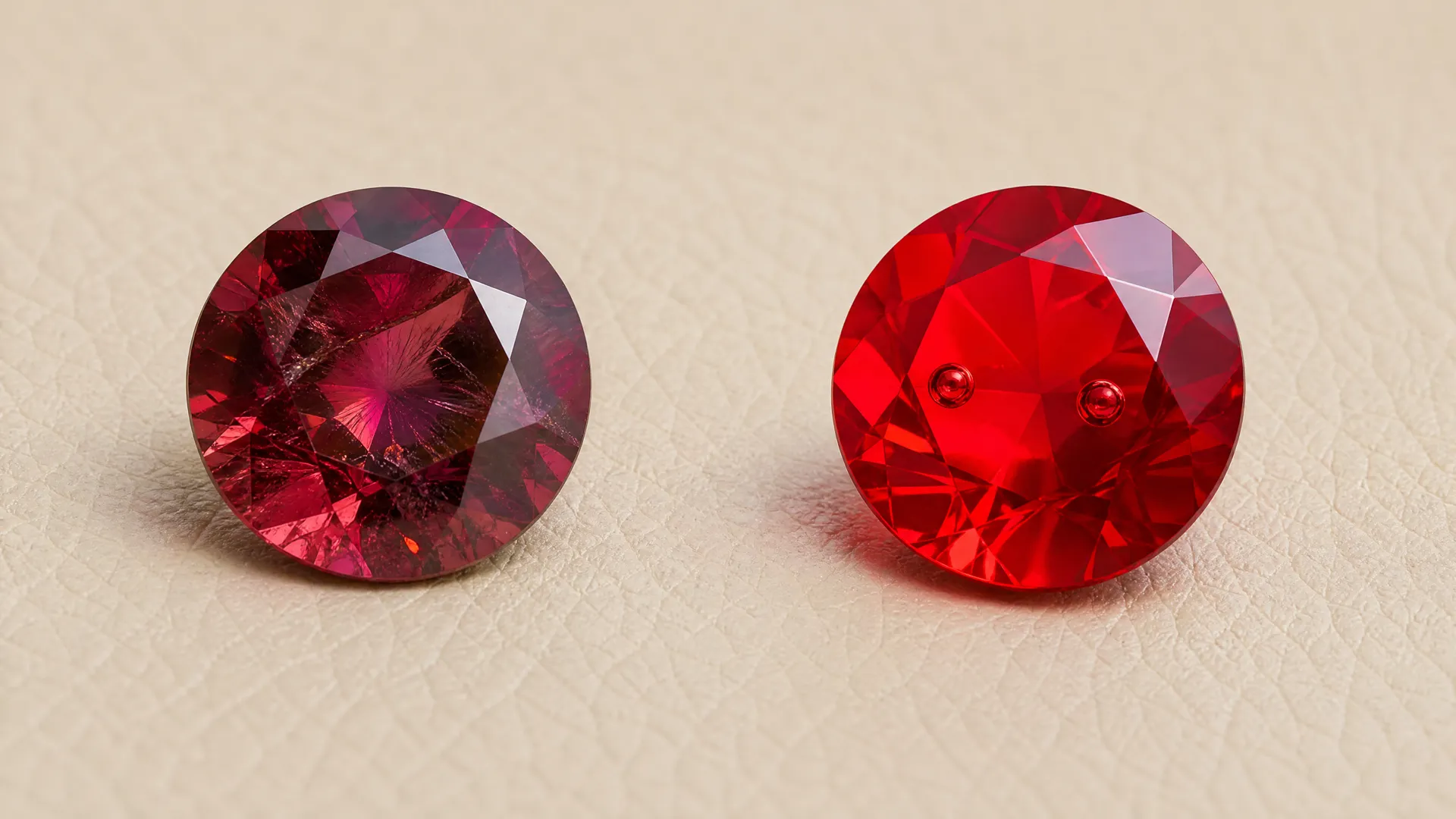
Ask for garnet and a jeweler will ask which one — because garnet is a family of related minerals, not a single stone. The six classic members run the full color wheel: **almandine** (deep wine red, the January standard), **pyrope** (pure blood red), **spessartine** (mandarin orange), **grossular** (colorless to honey to the electric green tsavorite), **andradite** (including demantoid, a green with more fire than diamond), and **uvarovite** (rare emerald-green crystals). Red dominates the market; green garnets are the collector's gate.
Quick Answer: Buying Across the Family
- **Classic January gift:** almandine or pyrope, 4-8mm, deep even red — the honest entry point - **Maximum sparkle per dollar:** spessartite orange in a pendant (color carries the piece) - **Investment corner:** tsavorite (green grossular from Kenya/Tanzania) and demantoid — top greens outperform reds at auction - **Wrist or daily ring:** red garnets at Mohs 6.5-7.5 handle it; keep greens in protected settings
Garnet's history is a traveler's story — Roman signet rings, medieval amulets carried for protection on the road, the Victorian era's favorite deep red. The name itself comes from *granatum*, pomegranate, for the seed-like clusters the rough forms in. That protective-traveler meaning is why January's stone is one of the few birthstones whose folklore is still quoted verbatim in product copy a thousand years later.
Honest buying notes: garnet is one of the few fine gemstones never routinely heat-treated — what you see formed in the earth, which makes its color trustworthy in a way treated stones require paperwork to match. Imitations are almost always glass, and the tell is physical: garnet is notably denser (heavier in hand), shows natural zoning and inclusions under a loupe, and never contains round bubbles. The complete at-home test kit — flashlight, UV, the doublet check — is documented in our real vs fake garnet identification guide.
For wearing, the family's workhorse is the garnet tennis bracelet: 13-17 almandines in a flexible line, each piece with its stone certificate. Rings run from the January hub through the full month's story, and greens-worth-the-splurge (tsavorite, demantoid) deserve bezel settings where knocks can't reach the girdle. Whatever the shade, garnet jewelry's value proposition is stable: fine-gem looks at honest prices, with no treatment asterisk to negotiate.
Frequently asked.
Is garnet always red?,
No — red is just the most common member of a six-mineral family. Garnet runs from almandine wine-red through pyrope blood-red, spessartine orange, grossular honey-to-green (including tsavorite green), andradite green (including demantoid), and rare uvarovite emerald. If a jeweler says garnet only comes in red, they mean the January commercial standard.
Can garnet be worn every day?,
Red garnets at Mohs 6.5-7.5 are fully daily-wear — the classic January ring and bracelet proof. The greens (tsavorite, demantoid) are similar in hardness but valuable enough that protected settings (bezel, pendant, earrings) are the wiser home; repair cost scales with stone price.
Is garnet ever treated or enhanced?,
Rarely — garnet is one of the few gemstones not routinely heat-treated or irradiated. Its color is almost always natural as mined, which is why garnet listings rarely carry the treatment disclosures sapphire or emerald require. Dye and glass imitations exist, but the tests are simple and documented.
What is the most valuable garnet color?,
The vivid greens: tsavorite (grossular family, Kenya/Tanzania) and demantoid (andradite family, historically Russia) trade at the top of the garnet sheet — fine demantoid has more dispersion (fire) than diamond. Among reds, a pure, bright pyrope or rhodolite raspberry commands the premium over muddy almandine.
Why is garnet January's birthstone?,
The modern 1912 list assigned garnet to January, but the association is far older — Roman signet rings, medieval traveler amulets, and Victorian sentimental jewelry all leaned on garnet as the protective, devoted red. January's mid-winter birthday gifts have effectively always been red garnets.
Related Articles
A Brief History of Birthstones
From the twelve tribes of Israel to the 1912 standard that rules the modern list — the 3,500-year origin story of why we wear our birth month.
Read MoreThe Ultimate Birthstone Cleaning Guide
Keep every piece in your collection gleaming. Step-by-step methods for gold, silver, and delicate birthstones — no harsh chemicals needed.
Read MoreBirthstone Energy: A Complete Crystal Healing Guide
From root chakra grounding to crown chakra clarity, discover how each birthstone carries healing energy. Learn to activate your crystal for meditation, sleep, and daily intention.
Read More