Amethyst Jewelry Guide: The Royal Purple That Became Everyone's
Amethyst once sat beside ruby and sapphire in price — until Brazilian mines democratized it. What that history means for buyers, and how to wear February's purple right.
Yueounb Editorial
Gemology Researcher
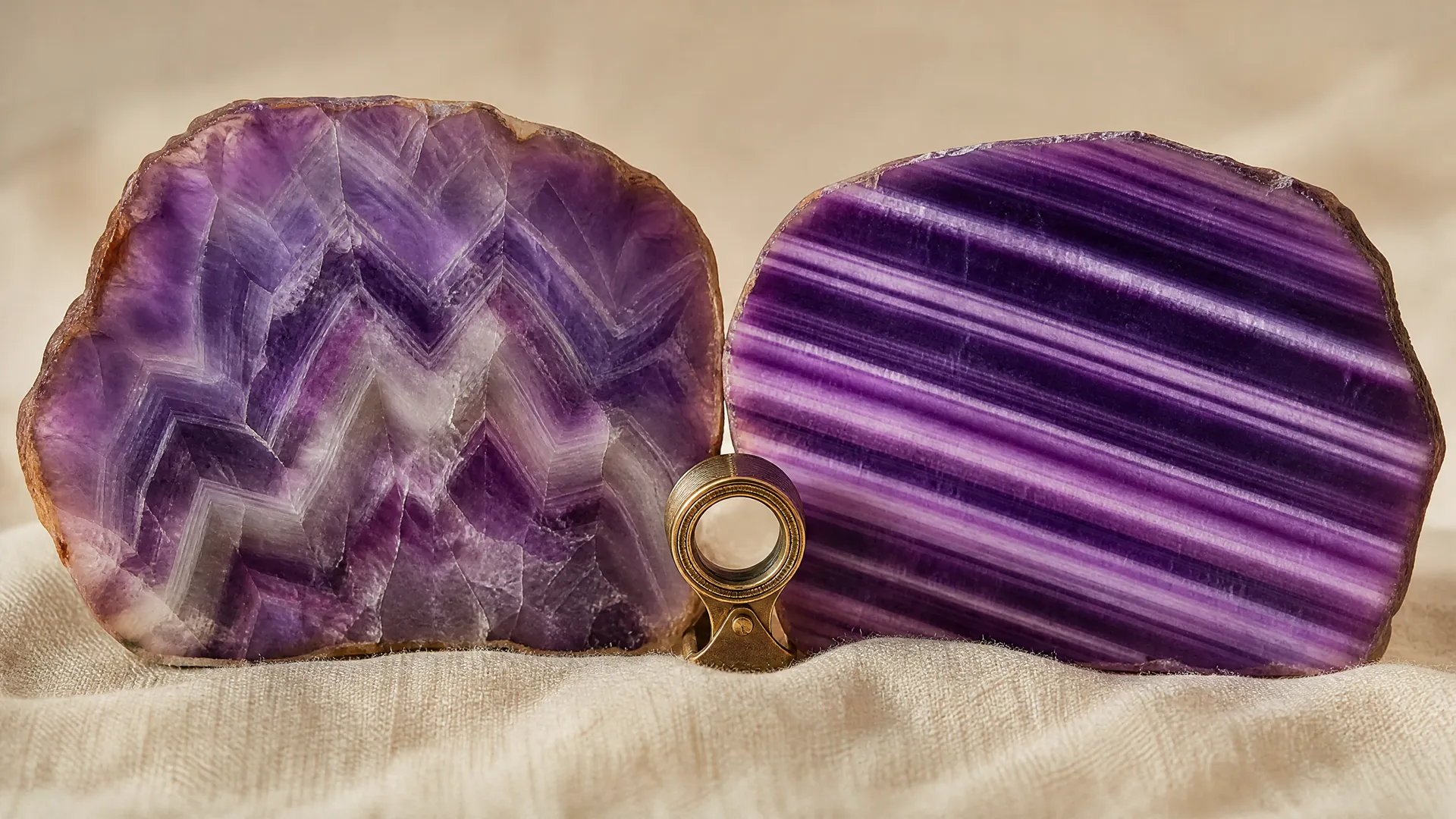
Amethyst is jewelry's great equalizer. Until the 1800s, deep purple quartz was genuinely rare — European monarchs set it beside rubies and sapphires, amethystos is Greek for not drunk (the stone was believed to keep the wearer level at banquets), and bishop's rings still carry the purple to this day. Then Brazil's enormous deposits came online, supply exploded, and a former royal became the people's purple. Nothing about the stone changed — only who could own it.
Quick Answer: Buying Amethyst Today - **Color is the entire grade:** deep royal purple with red-blue flashes (Siberian-grade naming, wherever mined) tops the sheet; pale lilac bottoms it - **Forms:** beads, cabochons, and faceted stones all read well — amethyst is one of few gems that performs at every price tier - **Price reality:** quality amethyst costs tens of dollars per carat, not hundreds — overpaying happens mostly in mall settings - **Daily wear:** Mohs 7 quartz — rings and bracelets fully wearable
The one treatment note worth knowing: much commercial amethyst is heat-treated — sometimes to lighten, more often heated citrine's purple cousin into citrine entirely. The stone you buy as amethyst is typically untreated or lightly heated; either way the color is stable and the price honest. Synthetic amethyst exists (lab quartz is chemically identical and cheap to grow), which is why provenance from a named source — like Uruguay's volcanic deposits, famous for saturated deep violet — carries real meaning at the top of the grade sheet.
Wearing purple is easier than its reputation: deep amethyst pairs with gray, navy, cream, and denim as a neutral-plus; it clashes only with warm reds. At the wrist, round bead bracelets in deep Uruguayan violet are the unisex standard — the Uruguay 7A amethyst bracelet is our reference version, graded for exactly that saturated collector color. The full February story (meaning, care, and what Siberian grade means today) lives on the February birthstone page, and the deep-clean routine for quartz is in how to clean amethyst jewelry.
The gift logic is February's secret weapon: birthday stone and Valentine's stone in the same fortnight, at a price that lets you give size and saturation instead of apologizing for carats. An 8mm+ bead or a 2-carat pendant delivers visual weight that would bankrupt the same gesture in most gem families — the democratization, still paying out.
Frequently asked.
Why is amethyst so much cheaper than it used to be?,
History, not quality. Until the 19th century amethyst was scarce enough to trade beside ruby and sapphire; then enormous Brazilian deposits (and later Uruguayan and African ones) multiplied world supply. The stone itself is unchanged — buyers simply get royal color at quartz prices.
What is Siberian amethyst?,
Originally, deeply saturated purple amethyst with red and blue flashes from Russia's Ural mines — the historic top grade. The mines are largely gone, so Siberian grade now describes that color quality from anywhere. If a listing means geography, it should say so; if it means grade, deep violet with flashing overtones is what to expect.
Is amethyst durable enough for a ring?,
Yes — it is quartz at Mohs 7, the reference hardness for everyday gems. Rings and bracelets are fine with normal care; the two real risks are hard knocks (tile, dumbbells) and prolonged strong sunlight, which can slowly fade the purple. Storage in a box rather than a sunny windowsill preserves color indefinitely.
Can amethyst and citrine be the same stone?,
Chemically yes — both are colored quartz, and much commercial citrine is actually heat-treated amethyst (or smoky quartz). Natural citrine exists but is rarer; the treated version is legitimate and stable, just worth knowing which one you are buying.
Is amethyst a good Valentine's Day gift?,
It is February's double play — the February birthstone arriving a fortnight before Valentine's Day, in a romantic purple that reads deliberately rather than generically. For February-born partners it does double duty; for anyone else it is the thoughtful alternative to red-box clichés at quartz prices.
Related Articles
A Brief History of Birthstones
From the twelve tribes of Israel to the 1912 standard that rules the modern list — the 3,500-year origin story of why we wear our birth month.
Read MoreThe Ultimate Birthstone Cleaning Guide
Keep every piece in your collection gleaming. Step-by-step methods for gold, silver, and delicate birthstones — no harsh chemicals needed.
Read MoreBirthstone Energy: A Complete Crystal Healing Guide
From root chakra grounding to crown chakra clarity, discover how each birthstone carries healing energy. Learn to activate your crystal for meditation, sleep, and daily intention.
Read More