Turquoise Jewelry Guide: Three Ancient Traditions and One Modern Rule
Egyptian tombs, Persian crowns, and the American Southwest — turquoise is humanity's oldest gem. What to know about grades, stabilization, and December's blue.
Yueounb Editorial
Gemology Researcher
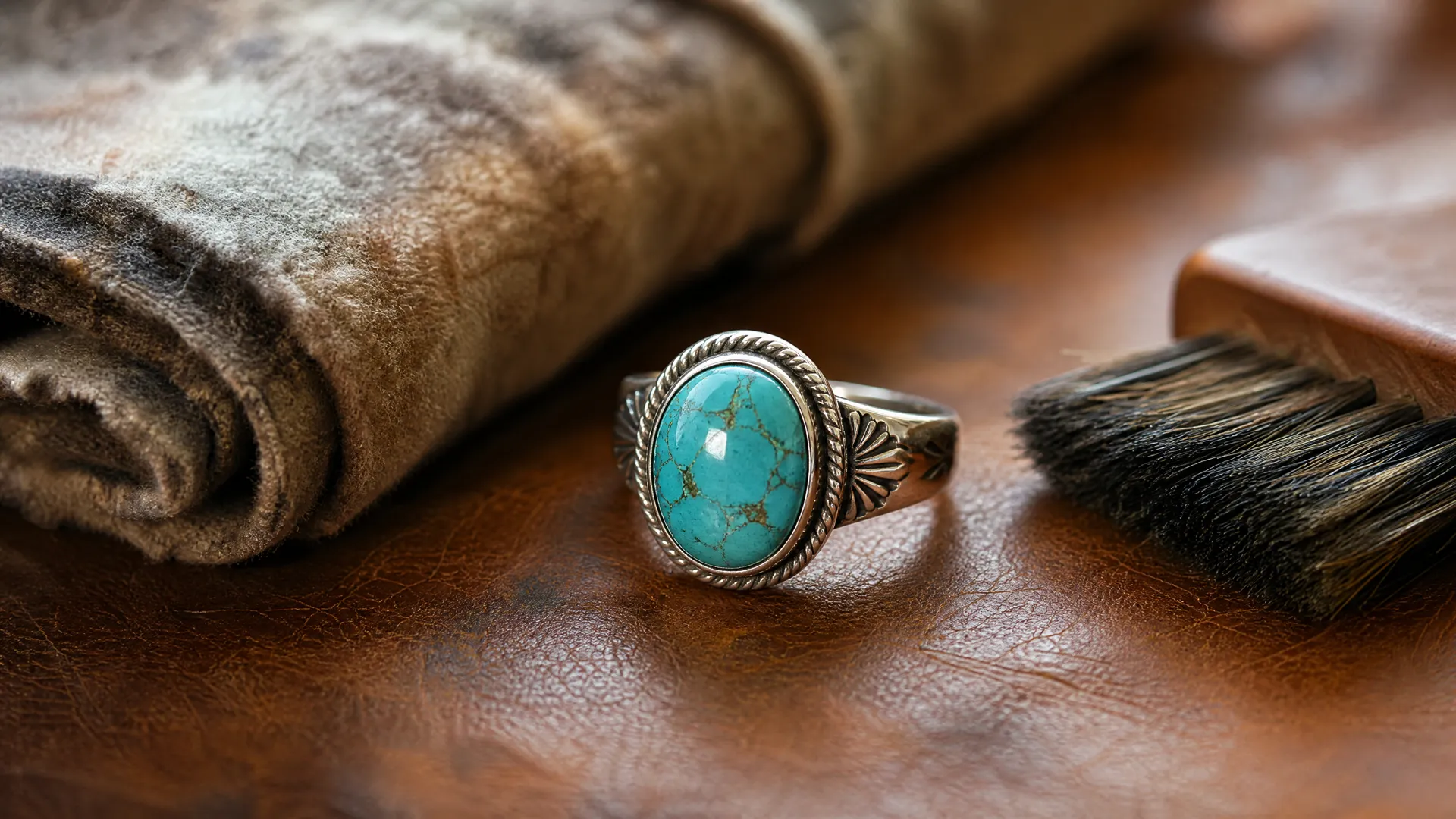
Turquoise may be the first gemstone humans ever wore: Egyptian graves from around 4000 BC hold turquoise beads, Tutankhamun's burial mask is inlaid with it, Persian kings called it the heaven-stone, and in the American Southwest, Zuni and Navajo silversmiths built an entire jewelry tradition around it — the stone arrived before the silver did. Three unconnected civilizations reached the same conclusion: this blue-green protects the person wearing it.
Quick Answer: Grades and What to Pay For - **Color:** robin's-egg blue (copper-dominant) is the premium; apple green (iron-dominant) is the budget side; both are real turquoise - **Matrix:** the brown/black web of host rock — clean sky-blue commands the collector premium, tight spiderweb matrix is its own cult - **The treatment question:** most jewelry turquoise is **stabilized** (resin-hardened — honest and standard); ask, and a good seller says so per stone - **Softness:** Mohs 5-6 — pendants and earrings are its natural home
The buying rule that matters most: stabilization. Natural turquoise is slightly porous, so the trade hardens most of it with clear resin — this is standard, disclosed practice, and it makes the stone wearable. What to avoid are the two steps further down: reconstituted (ground turquoise glued back together) and dyed howlite passed off as turquoise. The honest middle is stabilized natural turquoise, and the disclosure card in the box is exactly what separates the two worlds.
Color science is worth one minute: blue comes from copper, green from iron, and most of the world's turquoise is iron-heavy — which is why sky-blue grades from copper-rich deposits trade at the top. December claims turquoise on the modern birthstone list (with tanzanite and zircon as alternates — turquoise is the original), and its blue pairs with winter wardrobes the way summer stones can't. The December birthstone page carries the full month story, the turquoise pendant shows the stone in our setting style, and the care routine (gentle: no ultrasonic, no chemicals) is in how to clean turquoise jewelry.
One wear-honesty note to close: turquoise is the softest stone in a typical collection, and it slowly absorbs skin oils and waxes into a deeper patina over years. Some owners love the change — collectors call it the stone remembering you; others want museum blue forever, in which case occasional-wear pendants beat daily-wear rings. Either way, five-thousand-year-old Egyptian pieces are still blue: worn with ordinary sense, turquoise outlives its owner.
Frequently asked.
Is stabilized turquoise real turquoise?,
Yes — stabilization impregnates natural turquoise with clear resin to harden it, and it is the standard, disclosed treatment for most jewelry-grade turquoise. It differs from reconstituted turquoise (crushed stone glued together) and from dyed howlite (a different mineral entirely), both of which should be labeled as what they are.
Why is some turquoise green and some blue?,
Chemistry: copper leans turquoise blue, iron leans it green. Sky-blue, copper-dominant grades are the classic premium; apple-green iron-rich turquoise is equally genuine and friendlier priced. Both occur in the same mines — the ratio is per-stone geology.
Can I shower with turquoise jewelry?,
No. Turquoise is porous — soap, hot water, and steam accelerate color change and degrade stabilizing resin. Last on, first off: after lotions and sunscreen, before the shower. A dry soft cloth is the only cleaning it ever needs.
Which countries produce the best turquoise?,
Historic names are Persia (Iran, Nishapur — the heaven-blue standard), the American Southwest (Arizona and Nevada — matrix-heavy collector stones), and Egypt (the ancient mines). Today the market is global and grade matters more than geography: color, hardness, and matrix character define the stone, not the passport.
Why does turquoise turn green or darken over years?,
Absorption. Skin oils, waxes, and cosmetics slowly fill the stone's pores and deepen its color toward green. Kept away from chemicals, the change is glacial; worn daily against skin, it becomes a personal patina. Neither is damage — it is the documented behavior of a porous stone, and part of turquoise's biography.
Related Articles
A Brief History of Birthstones
From the twelve tribes of Israel to the 1912 standard that rules the modern list — the 3,500-year origin story of why we wear our birth month.
Read MoreThe Ultimate Birthstone Cleaning Guide
Keep every piece in your collection gleaming. Step-by-step methods for gold, silver, and delicate birthstones — no harsh chemicals needed.
Read MoreBirthstone Energy: A Complete Crystal Healing Guide
From root chakra grounding to crown chakra clarity, discover how each birthstone carries healing energy. Learn to activate your crystal for meditation, sleep, and daily intention.
Read More