Traditional & Modern Birthstone Chart by Month
Did you know each month has both a modern and a traditional birthstone? Compare the two lists and discover which stone resonates with you.
Yueounb Editorial
Jewelry Expert
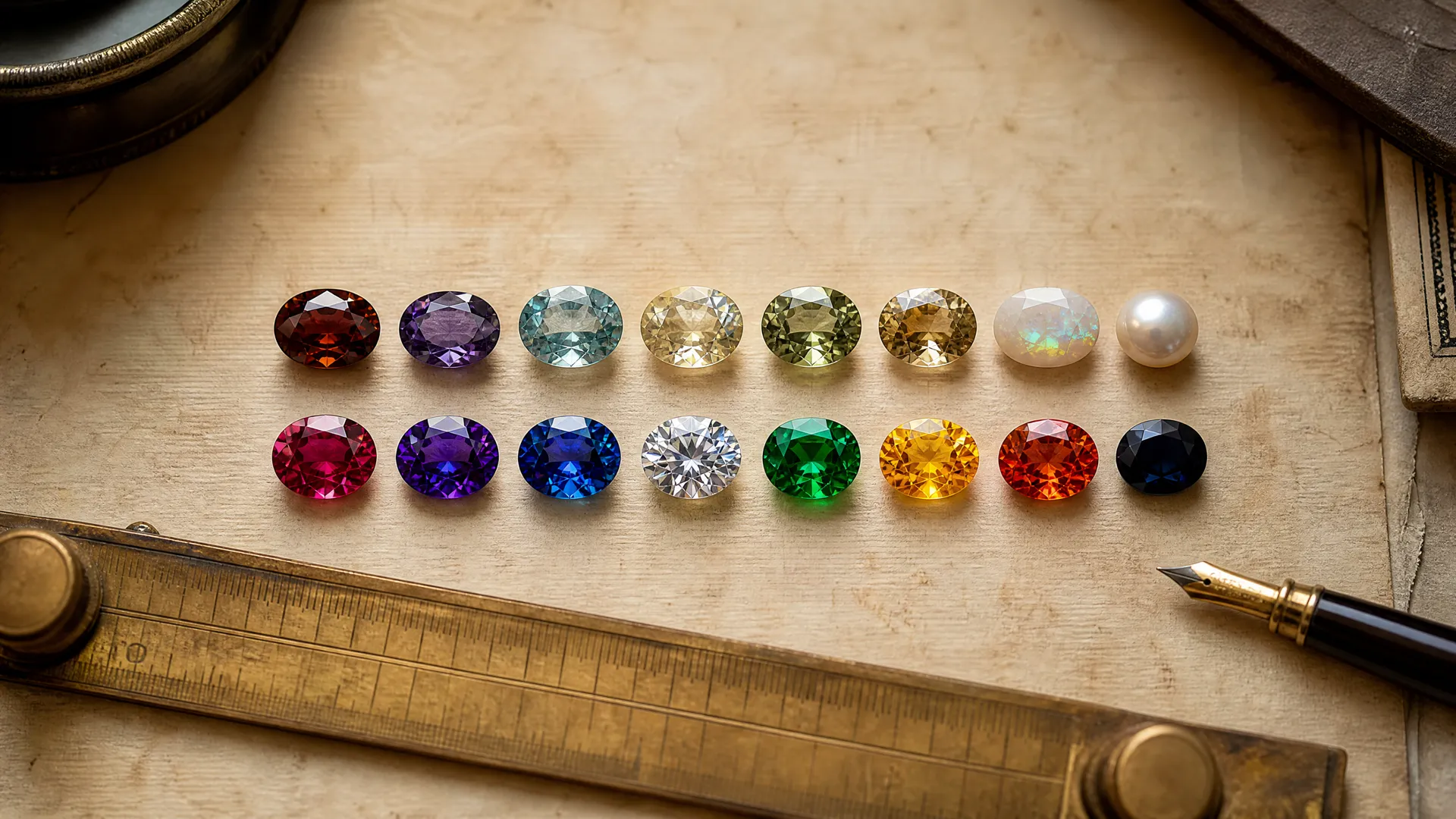
The modern birthstone chart, standardized by American jewelers in 1912, assigns January garnet, February amethyst, March aquamarine, April diamond, May emerald, June pearl or moonstone, July ruby, August peridot, September sapphire, October opal, November citrine, and December turquoise. The traditional chart keeps older assignments — March bloodstone, August sardonyx, October tourmaline, December zircon — and both lists are officially correct.
| Month | Modern (1912 list) | Traditional (older) | Color |
| January | Garnet | Garnet | Deep red |
| February | Amethyst | Amethyst | Purple |
| March | Aquamarine | Bloodstone | Pale blue / dark green |
| April | Diamond | Diamond | White |
| May | Emerald | Emerald | Green |
| June | Pearl, Moonstone | Alexandrite | White / color-change |
| July | Ruby | Ruby | Red |
| August | Peridot, Spinel | Sardonyx | Yellow-green |
| September | Sapphire | Sapphire | Royal blue |
| October | Opal, Tourmaline | Tourmaline | Multicolor / pink |
| November | Citrine, Topaz | Citrine | Golden |
| December | Turquoise, Zircon, Tanzanite | Zircon, Lapis | Sky blue |
Why two charts exist. The traditional assignments descend from the Breastplate of Aaron through centuries of European custom — bloodstone for March, sardonyx for August. In 1912 the National Association of Jewelers met in Kansas and published the modern list to standardize what stores stocked, swapping in brighter, more available stones: aquamarine replaced bloodstone, peridot replaced sardonyx, opal joined October. Neither list overruled the other; the industry simply sells both. Both charts, month by month, are laid out side by side in the birthstones master guide.
The updates that made some months three-stone months. In 1952 the Jewelry Industry Council added alexandrite as a June alternate, citrine for November, and zircon for December. In 2002 tanzanite joined December — the newest stone on any list, named for the only place it is mined. That is why December now offers turquoise, zircon, and tanzanite: every era of the tradition is still on the chart.
Which chart should you use? Three honest answers. For gifts and everyday wear, the modern chart is the default — it is what stores stock and what recipients expect. If you want the older, lore-heavy stone — March bloodstone for the warrior, August sardonyx for the Victorians — the traditional chart is fully legitimate. And if you simply dislike your month color, the alternates exist precisely for you: June alexandrite, October tourmaline, December tanzanite.
How to read a birthstone chart quickly: month first, then check both columns before shopping. A modern-list March gift is aquamarine; a traditional-list March gift is bloodstone — green with red flecks, dramatically different jewelry. When a listing says just March birthstone, it means the modern stone nine times out of ten.
The full month-by-month guides (color, meaning, hardness, care, and the jewelry we set in each) live on our birthstones hub — one page per month, modern and alternates included.
Frequently asked.
What is the difference between modern and traditional birthstones?
The modern list was standardized by the National Association of Jewelers in 1912 and uses brighter, widely available stones (aquamarine for March, peridot for August). The traditional list keeps the older assignments (bloodstone for March, sardonyx for August). Both are officially correct.
What is the modern birthstone chart?
January garnet, February amethyst, March aquamarine, April diamond, May emerald, June pearl or moonstone, July ruby, August peridot, September sapphire, October opal, November citrine, December turquoise — the 1912 standard with 1952 and 2002 additions.
Can I use the traditional birthstone chart instead of the modern one?
Yes — both lists are legitimate. Use traditional stones for their older lore and rarer look (bloodstone, sardonyx, zircon), and the modern chart for gifts, since it matches what stores stock and recipients expect.
Related Articles
A Brief History of Birthstones
From the twelve tribes of Israel to the 1912 standard that rules the modern list — the 3,500-year origin story of why we wear our birth month.
Read MoreThe Ultimate Birthstone Cleaning Guide
Keep every piece in your collection gleaming. Step-by-step methods for gold, silver, and delicate birthstones — no harsh chemicals needed.
Read MoreBirthstone Energy: A Complete Crystal Healing Guide
From root chakra grounding to crown chakra clarity, discover how each birthstone carries healing energy. Learn to activate your crystal for meditation, sleep, and daily intention.
Read More