Birthstone Colors: The Complete Rainbow Guide
From January deep red garnet to December sky-blue turquoise, explore the full spectrum of birthstone colors and what each hue symbolizes.
Yueounb Editorial
Jewelry Expert
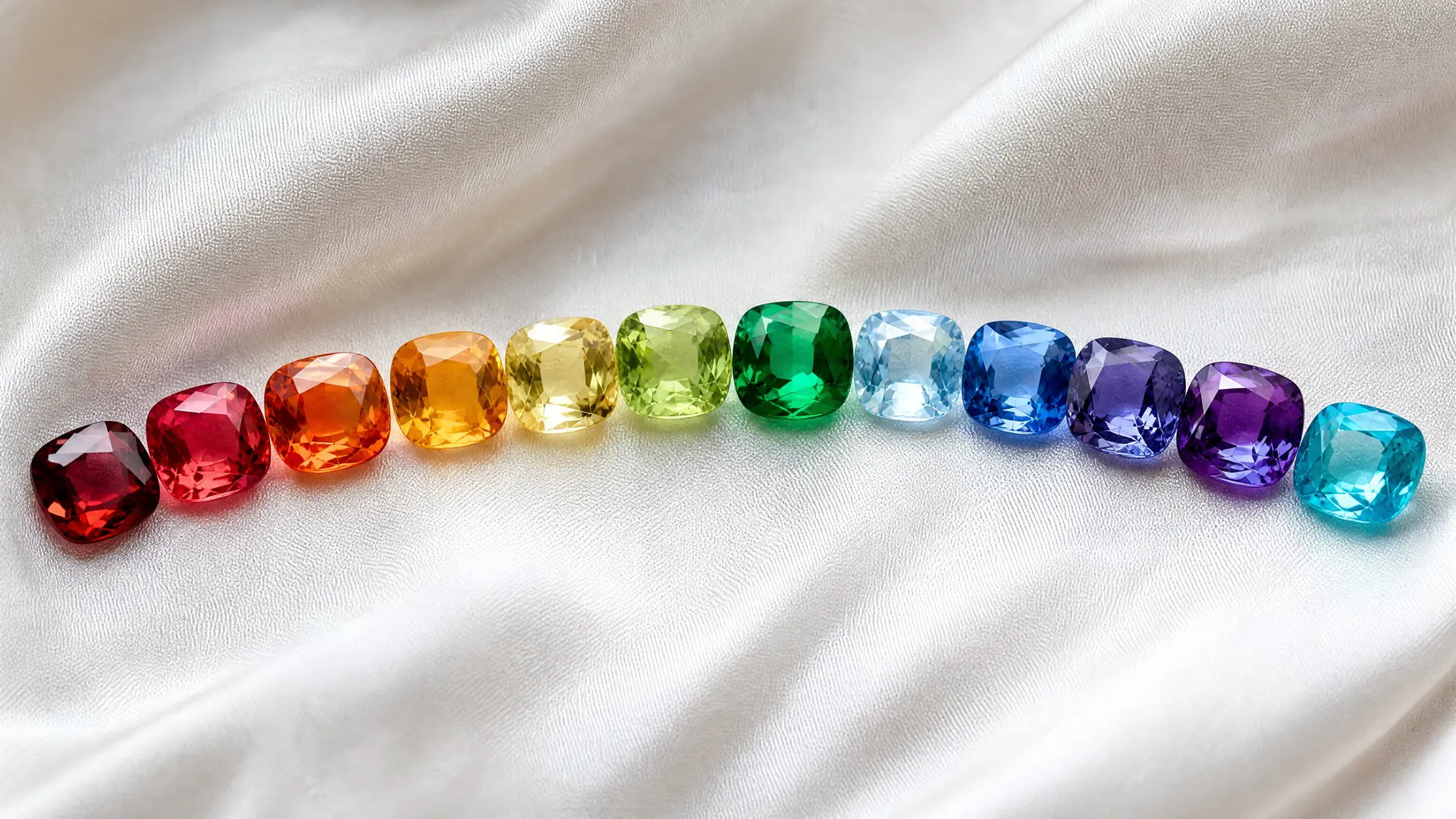
Birthstone colors run the full calendar: January deep red garnet, February purple amethyst, March sea-blue aquamarine, April white diamond, May green emerald, June moonlight pearl, July red ruby, August lime peridot, September blue sapphire, October opal fire, November gold citrine, December sky-blue turquoise. If you want every month’s stone on one page, the birthstones by month guide is the master list. This guide walks the complete rainbow — what each color means, how it got assigned, and which shade suits you. And if choosing one shade feels like loss, the rainbow crystal bracelet settles it — all seven colors, one wrist.
The modern list was standardized in 1912 by the American National Association of Jewelers, but the color assignments trace back much further — to the Breastplate of Aaron described in the Bible, which held twelve stones representing the twelve tribes of Israel. Over centuries those stones were matched to the twelve months of the year and the twelve zodiac signs, and the colors we wear today are the survivors of that long tradition.
January — deep red garnet. The color of commitment and safe travel. Garnet red runs from wine-dark pyrope to bright raspberry almandine; the deepest tones read almost black in low light and glow red in the sun.
February — purple amethyst. Once the most expensive color in the ancient world, reserved for royalty and clergy. Amethyst ranges from pale lilac to deep Siberian violet; the richest saturated purple comes from Uruguay and Brazil.
March — pale blue aquamarine. Named from the Latin for seawater, its color runs from nearly colorless ice-blue to a saturated Santa Maria blue. The gem is a variety of beryl — the same mineral family as emerald — but colored by iron instead of chromium.
April — colorless diamond. The only white month on the calendar. April color is about light rather than hue: refraction and fire. Clear quartz and white topaz carry the same icy look at a fraction of the price.
May — green emerald. The most famous green in gemstones, colored by chromium and vanadium. Fine emerald green is a deep, slightly bluish grass tone; Colombian stones from Muzo set the benchmark. Peridot, August stone, is its yellow-green cousin. For wearing the month rather than reading about it, our emerald clover ring sets a cabochon emerald at the heart of a four-leaf clover in S925 silver — the May green, sized for every day.
June — pearl white and moonstone blue. June is the only month with two official whites: pearl, the organic gem, and moonstone with its floating blue adularescence. Alexandrite, the modern alternative, adds a color-change trick — green in daylight, red under lamp light.
July — red ruby. The red of passion and the hardest colored stone on earth after diamond. Fine ruby red is called pigeon blood: a pure red with a hint of blue, found in Myanmar. Like sapphire, ruby is corundum — pure red corundum is ruby, every other color is sapphire.
August — lime-green peridot. Formed deep in the earth mantle and sometimes delivered to the surface by volcanoes — and even by meteorites. August color is a warm yellow-green unlike any other month; spinel, the modern alternative, adds a red-pink option. Choosing between peridot and spinel for an August birthday is easier side by side on the August birthstone page.
September — royal blue sapphire. The archetypal blue gemstone, though sapphire actually occurs in every color except red. Kashmir sapphires produced the velvety cornflower blue every other deposit is measured against.
October — multicolor opal. The only month without a single fixed color: precious opal plays flashes of green, blue, orange and red across a white or black body. Pink tourmaline, the alternative, gives October babies who prefer a solid hue a rose-pink choice.
November — golden citrine. The color of sunshine and abundance, from lemon yellow to Madeira orange. November is one of two months with interchangeable stones — citrine and yellow topaz look nearly identical and share the golden slot.
December — sky-blue turquoise. The oldest known gem color worn by humans — Egyptian tombs hold turquoise over 5,000 years old. December blue is soft and robin-egg, quite different from September sapphire blue; blue topaz and tanzanite offer deeper alternatives.
How to use this guide when choosing a gift: match the month first — the color carries the meaning. If the exact stone is out of budget, every month has an alternative in the same color family: garnet red in rhodolite, diamond white in quartz, emerald green in peridot. The color is the message; the stone is the messenger. Shopping for a wedding anniversary instead? The year sets the stone, not the month — the 40th, 50th and 60th year guides name each one. And when it is time to buy rather than browse, our best gemstone jewelry brands roundup names who does each stone well.
One question we hear often: which two months share the closest colors? July ruby and January garnet are both red, but ruby red is brighter and cleaner, while garnet red is deeper and warmer. Under warm indoor light they can look almost identical — check for the blue undertone that separates fine ruby.
Related Articles
A Brief History of Birthstones
From the twelve tribes of Israel to the 1912 standard that rules the modern list — the 3,500-year origin story of why we wear our birth month.
Read MoreThe Ultimate Birthstone Cleaning Guide
Keep every piece in your collection gleaming. Step-by-step methods for gold, silver, and delicate birthstones — no harsh chemicals needed.
Read MoreBirthstone Energy: A Complete Crystal Healing Guide
From root chakra grounding to crown chakra clarity, discover how each birthstone carries healing energy. Learn to activate your crystal for meditation, sleep, and daily intention.
Read More