How to Clean an Alexandrite Ring: Care for the Color-Change Stone
Alexandrite is one of the toughest stones in the birthstone calendar — Mohs 8.5, excellent toughness, no cleavage
Yueounb Editorial
Jewelry Expert
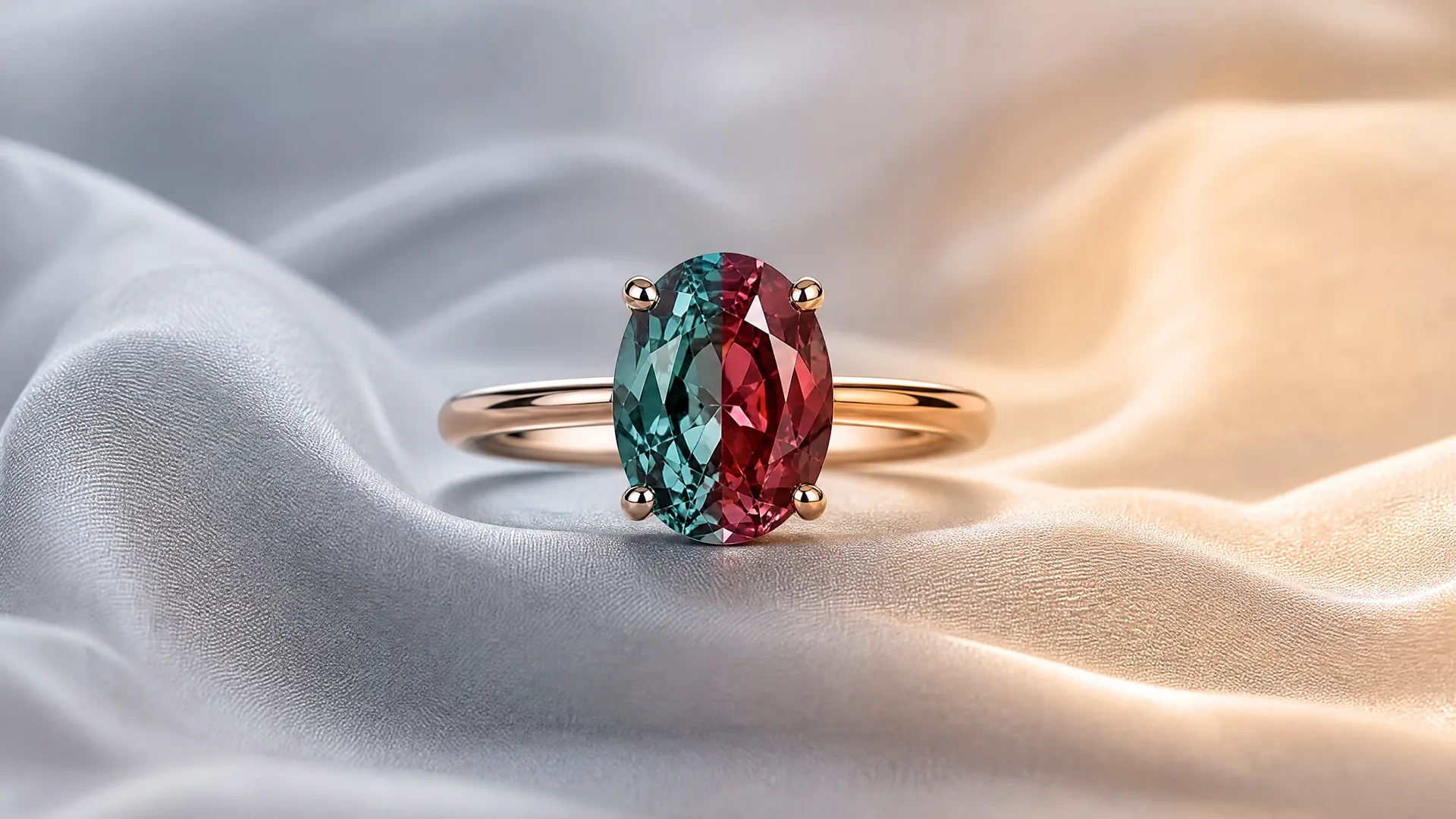
Most birthstone care guides are exercises in caution. This one is not, because alexandrite does not need it: at 8.5 on the Mohs scale, with excellent toughness and no cleavage plane waiting to split, June's rare stone is one of the most durable gems ever assigned to a month — the GIA calls it a good choice for rings subject to daily wear. If you own an alexandrite ring, your cleaning questions have short answers, and the biggest risk to the stone was decided at the jeweler's bench, not at your sink.
Quick Answer: Clean an alexandrite ring with warm water, a drop of mild dish soap, and a soft brush — two minutes, then rinse and pat dry. That method is always safe. Ultrasonic and steam cleaners are usually safe for alexandrite too (it is untreated in most cases), with one exception: if the stone is fracture-filled, warm soapy water only. Color change comes from the light source and cannot be washed out.
Step by step. Fill a bowl with warm — not hot — water and a drop of mild dish soap; let the ring sit for a few minutes to loosen skin oil beneath the stone. Brush gently around the setting with a soft toothbrush, working the bristles under the gallery where dust packs. Rinse in a second bowl of clean water — over a towel, not a drain — and pat dry with a lint-free cloth. That is the entire routine, and per the GIA it is the one that is always safe. Once a year, add the inspection: check that the stone does not rattle and the prong tips still hold; on any ring worn daily, the setting ages faster than the stone.
The ultrasonic question — the one honest guides have to take seriously, because the trade itself disagrees. The GIA's position is that ultrasonic and steam cleaners are usually safe for alexandrite; a widely used bench reference goes further and lists alexandrite among the few stones it fully trusts in the tank, alongside diamond, ruby, and sapphire. Meanwhile some alexandrite specialists advise clients to skip home machines entirely and stay with soap and brush — partly out of general conservatism, partly because a valuable stone deserves professional hands. The reconciliation is simpler than the argument: alexandrite the mineral takes the machine fine; what sometimes cannot is a treated stone or a tired setting. If your stone is untreated and your setting is sound, the cautious green light is real. If either fact is unknown, the two-minute bowl method loses nothing.
The one exception worth knowing: fracture-filled alexandrite. Most alexandrite reaches the market untreated — its color change is natural chemistry, chromium doing the work — but stones with visible surface fractures are sometimes filled to improve clarity, and filling changes every care rule: heat and vibration can degrade the filler, so filled stones get warm soapy water and nothing else. If your documentation mentions clarity enhancement, or the stone was sold at a price that suggests it, treat it gently and say so at any jeweler's counter.
What cleaning cannot touch: the color change itself. Alexandrite's famous trick — emerald by day, ruby by night — is written into the crystal: chromium lets the stone transmit red and green light in near-equal measure, so daylight reads green and incandescent light reads raspberry. It is a property of the light source, not a coating or a dye, and no amount of washing, wearing, or time removes it. What actually threatens an alexandrite ring is mundane: a hard knock on a doorframe (no cleavage, but no gem is a hammer), chlorine over years, and loose prongs. Wear it, clean it in the bowl, and it will outlive the setting it came in — see our type-by-type cleaning guide for the full routine by jewelry type, and the June birthstone page for alexandrite's place in the calendar alongside pearl and moonstone.
Frequently asked.
Can alexandrite go in an ultrasonic cleaner?
Usually, yes — the GIA lists ultrasonic cleaning as usually safe for alexandrite, and it is one of the few stones bench references fully trust. The exceptions: a fracture-filled stone (warm soapy water only) or a setting you are unsure about. When in doubt, hand-washing cleans almost as well with zero risk.
Does cleaning affect alexandrite's color change?
No. The color change comes from chromium inside the crystal structure and depends only on the light source — daylight reads green, incandescent light reads red. It is not a coating or treatment and cannot be washed or worn out.
Can I wear an alexandrite ring every day?
Yes — with 8.5 hardness, excellent toughness, and no cleavage, alexandrite is one of the most durable colored stones for daily wear. The practical limits are hard knocks and household chlorine, which threaten the metal and setting more than the stone.
Related Articles
A Brief History of Birthstones
From the twelve tribes of Israel to the 1912 standard that rules the modern list — the 3,500-year origin story of why we wear our birth month.
Read MoreThe Ultimate Birthstone Cleaning Guide
Keep every piece in your collection gleaming. Step-by-step methods for gold, silver, and delicate birthstones — no harsh chemicals needed.
Read MoreBirthstone Energy: A Complete Crystal Healing Guide
From root chakra grounding to crown chakra clarity, discover how each birthstone carries healing energy. Learn to activate your crystal for meditation, sleep, and daily intention.
Read More