How to Wear a Birthstone Ring: Hand, Finger, Stacking, and Living In It
There is no ancient rule for wearing a birthstone ring — which means the choices are yours to make well. If your ring carries three stones, the [three stone ring guide](/journal/three-stone-ring-guide) unpacks what the geometry itself is saying For rings that name their stone outright, our [genuine birthstone rings](/birthstone-rings) collection lists the exact material of every piece
Yueounb Editorial
Jewelry Expert
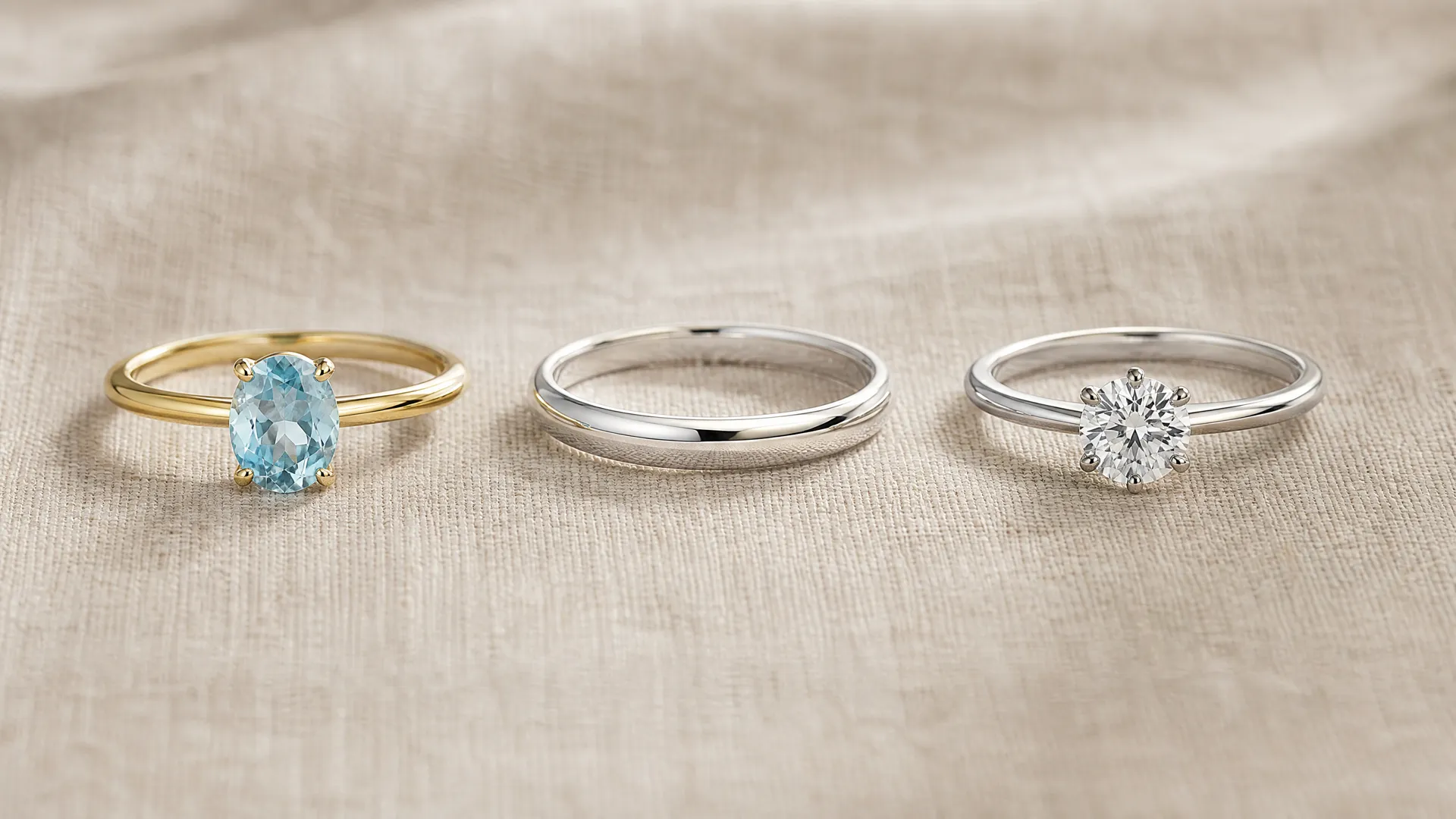
Wear it however you like — that is the honest first rule, because birthstone rings carry no ancient wearing tradition the way wedding bands do. But no-rule does not mean no-craft: some hands and fingers flatter a statement stone, some orders of stacking survive daily life, and some habits add years to a soft stone. This guide covers the four decisions — hand, finger, company (how it sits beside a wedding set or in a stack), and lifestyle (daily wear versus occasions) — plus the care habits that happen while you wear it, which is where most stones actually live or die.
Quick Answer: How to wear a birthstone ring — the four decisions — |Decision|The working answer| |Which hand|Either; right hand is the modern convention (avoids the wedding-set finger), left is tradition in much of Eastern Europe — pick by comfort and clarity| |Which finger|Middle = comfort and balance; index = statement; pinky = low-maintenance; avoid the fourth-left if you do not mean wedding| |Next to a wedding set|Move it to another finger or the other hand; or stack it outside the engagement ring — band closest to the heart, engagement outside, birthstone last| |Stacking|Straight bands at the base, chevrons on top, softest metal outermost; spacers between soft and hard metals| |Daily wear|Hard stones (sapphire, ruby, diamond) live in; soft stones (opal, pearl, emerald, turquoise) come out for gym, dishes, garden|
Which hand: the honest history. The oft-repeated advice that birthstone rings belong on the right hand is modern etiquette, not ancient tradition — and knowing why makes the rule easy to apply or ignore. The left hand's fourth finger is the Western wedding position (the vena amoris legend ran a vein of love directly to the heart), so fashion rings drifted right to avoid announcing engagements by accident. Meanwhile, much of Eastern Europe, Scandinavia, and the Orthodox world wears its wedding rings on the right hand to begin with, which dissolves the rule entirely. The working answer: choose by clarity first (which hand says what you mean it to say), comfort second (dominant hands bang into things), and convention last.
Which finger, and how to seat it beside a wedding set. Fingers carry loose meanings — index for confidence and statement, middle for balance (and the best fit for wider bands), pinky for the low-maintenance position — but none of it is enforced anywhere. The one placement that deserves real thought is next to a wedding set, because order is a language there: the wedding band sits closest to the heart (put on first), the engagement ring stacks outside it, and a birthstone ring joins either as a further layer on the same finger or — the cleaner etiquette — on another finger or the other hand entirely, where it reads as itself rather than as a proxy. Our what is a birthstone ring guide covers whose stone and the buying side of the same decision.
Stacking and metal mixing. Multiple birthstone rings — a child's stone, a partner's, your own — stack beautifully, and mixed metals are now a mainstream look rather than a violation: yellow with rose gold alternating stones, white metal framing a colored center, a two-tone bridge ring easing the transition. Three practical rules keep the look alive: mix with intention (a theme, a gradient, a story), vary the shapes (straight bands with chevrons and curves), and protect soft metals from hard ones — gold against platinum will lose — with spacer bands or thoughtful ordering. The working order when you stack: straight bands at the base where they anchor the finger, shaped and chevron rings on top where their geometry needs room, and the softest metal outermost where it meets nothing harder. The complete stacking rulebook is our birthstone stacking guide; this page's summary is: anything goes if it is deliberate and nothing rubs.
Living in it: daily wear and the habits that matter. A hard stone — sapphire, ruby, diamond, alexandrite — can genuinely live on the hand, coming off only for the gym and the grit. A soft stone — opal, pearl, turquoise, emerald — wants the remove-first habit for dishes, cleaning, swimming, and sleep, and a bezel setting to forgive what it does meet. Two wearing habits do more than any cleaning routine: take rings off over a soft surface (the sink drain is where birthstones go to disappear), and give the piece a weekly rinse-and-brush before film becomes setting. The full cleaning routines live in our care guides, and the stone-by-stone durability verdicts in the best stone guide; worn with those two habits, a birthstone ring outlasts the decade it was bought for.
Which finger and which hand: tradition says the ring finger for stones worn as identity (your own birthstone) and the index for stones worn as statement (a gift or a motif). The modern rule is simpler — wear it where you will see it, because the stone you glance at during the day is the one doing its job. Stacking note: birthstone rings stack with plain bands in the same metal family; the full finger geometry is in our stackable rings guide.
Frequently asked.
How do you wear a birthstone ring?
With freedom and a little craft: either hand works (the right-hand habit is modern convention, not tradition), the middle finger is the comfort pick, and the only placement to think through is next to a wedding set — where the band goes closest to the heart and the birthstone ring reads cleanest on another finger. Beyond that, stack deliberately and match the wearing habits to the stone's hardness.
Which hand should a birthstone ring go on?
Either. The common right-hand advice exists to avoid confusion with a wedding set on the left fourth finger — useful Western etiquette, not lore. In right-hand-wedding-ring cultures (much of Eastern Europe, Scandinavia, Orthodox tradition), the logic inverts. Choose by what you want the ring to say and which hand it fits.
Can I wear a birthstone ring with my wedding set?
Yes, cleanly: move it to another finger or the other hand, where it reads as itself rather than as a proxy — or stack it outside the engagement ring if you want one full set. Order matters when they share a finger: the wedding band goes closest to the heart (on first), the engagement ring stacks outside it, and the birthstone ring joins last.
What finger does a birthstone ring go on?
Any finger — there is no traditional rule. The middle finger is the comfort pick for wider bands, the index finger the statement position, and the only finger to think twice about is the left fourth if you do not want it read as a wedding or engagement ring.
Can you stack birthstone rings?
Yes — stacking several months (your own, a child's, a partner's) is one of the category's best looks. The working order: straight bands at the base, chevrons and shaped rings on top, softest metal outermost. Mix metals deliberately, vary band shapes, and protect softer metals from harder ones with spacers. The full rules live in our stacking guide.
Should I take my birthstone ring off to sleep?
For hard stones, optional. For opal, pearl, turquoise, or emerald, yes — bedding drags prongs and soft stones slowly scuff, and nighttime is eight unattended hours. Sleep is also the easiest habit anchor: ring dish by the bed, on in the morning, off at night, and the remove-first routine for gym and dishes follows naturally.
Related Articles
A Brief History of Birthstones
From the twelve tribes of Israel to the 1912 standard that rules the modern list — the 3,500-year origin story of why we wear our birth month.
Read MoreThe Ultimate Birthstone Cleaning Guide
Keep every piece in your collection gleaming. Step-by-step methods for gold, silver, and delicate birthstones — no harsh chemicals needed.
Read MoreBirthstone Energy: A Complete Crystal Healing Guide
From root chakra grounding to crown chakra clarity, discover how each birthstone carries healing energy. Learn to activate your crystal for meditation, sleep, and daily intention.
Read More