Birthstone Stacking Rules: How to Layer Multiple Stones
Can you wear amethyst and citrine together? Which stones clash? Learn the art and energy rules for stacking multiple birthstone rings and necklaces.
Yueounb Editorial
Jewelry Expert
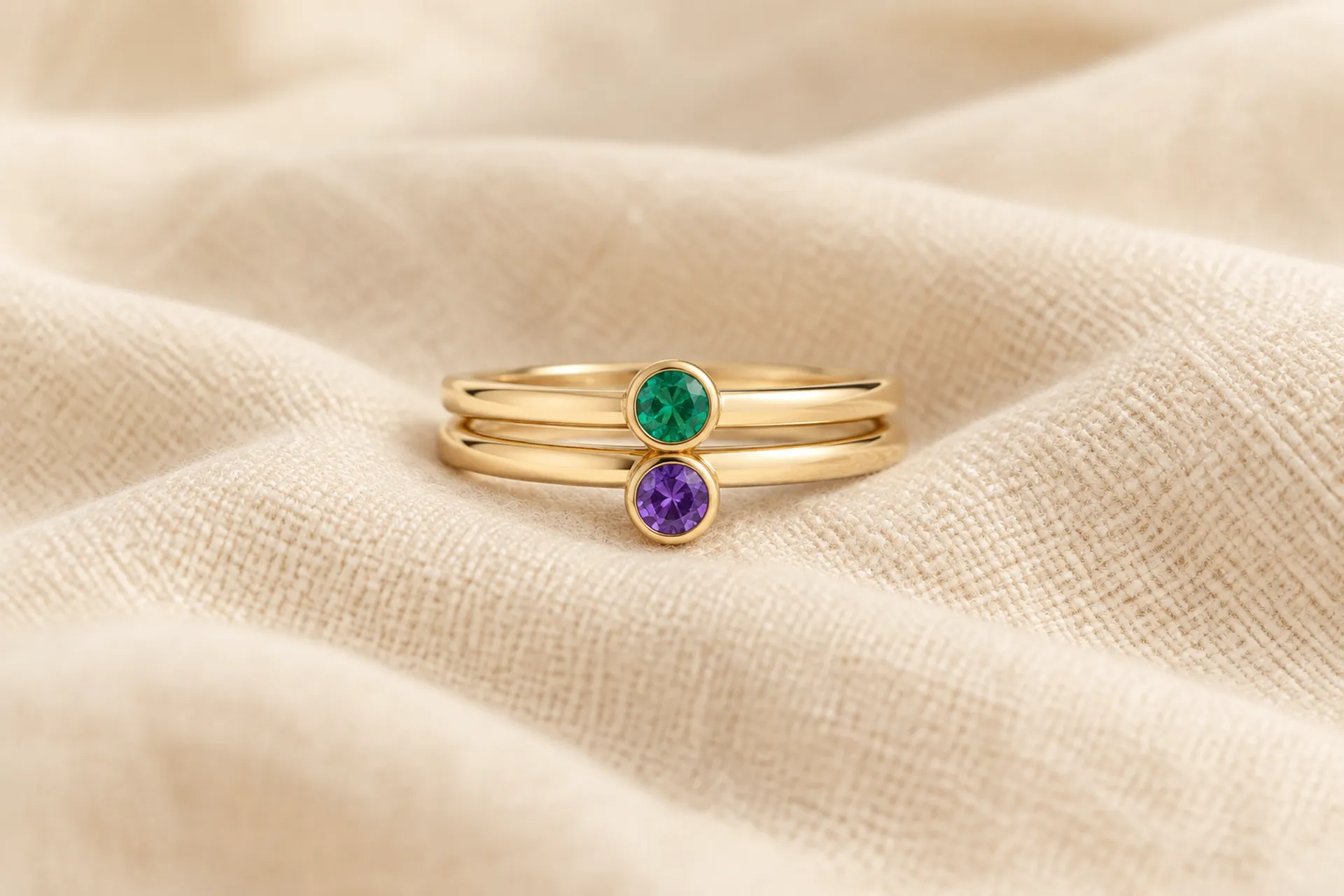
Quick Answer: Yes, you can stack any birthstones together — the old "clashing stones" rules are folklore, not gemology. The real rules are physical and visual: match hardness within about one Mohs point so rings do not scratch each other, keep metals to one family (or mix deliberately), vary stone scale so the stack reads as rhythm, and give the largest ring the base position.
Which birthstones can you stack together?
Gemologically, any stone pairs with any stone — amethyst with citrine is a classic complementary contrast, and no combination cancels another out. The rule that actually matters is hardness adjacency: two rings worn side by side will rub, and the harder one slowly sands the softer one. Diamond and sapphire (Mohs 9–10) beside pearl (2.5–4.5) or opal (5.5–6.5) is a scratching incident on a calendar. Pair within about a point: corundum with corundum, the 6.5–8 quartz family with itself, and put genuinely soft stones on fingers that do not neighbor the hard ones.
How many rings should you stack?
Two to four is the elegant range. One anchor — usually your own birthstone or the largest stone — sits at the base of the finger; one or two meaning-stones (a child's month, an anniversary band) build upward; an optional plain metal spacer gives the eye somewhere to rest. Past five, a stack stops reading as composition and starts reading as inventory. Rotate meanings rather than accumulating all of them at once: the stack is a sentence, not a warehouse.
Can you mix metals when stacking birthstone rings?
One metal family is the safe classic — all yellow, all white — because the stones stay the story. Mixing metals works when it is committed rather than accidental: a deliberate two-tone architecture (warm rings low, cool rings high) reads as design, while a random mix reads as getting dressed in the dark. If your birthstones skew cool (amethyst, aquamarine, blue topaz), white metals unify them; warm stones (garnet, citrine, ruby) glow against yellow gold.
How do you stack birthstone necklaces with rings?
Vary the lengths so each pendant gets its own altitude — roughly two inches between chains prevents the daily tangle knot. Three is the classic necklace count: a choker-length, a mid pendant (your own stone), and a longer family piece. When rings and necklaces stack together, keep the necklaces calmer than the hands: the eye wants one loud zone. The color logic is the same as rings — cool with cool, warm with warm, or a deliberate bridge stone (peridot's green bridges violet and blue) in the middle.
Do stacked rings damage each other?
Honestly: yes, slowly, if you ignore hardness adjacency — that is the one physical rule in this whole guide. Harder bands abrade softer neighbors and shared prongs can catch. Three habits prevent nearly all of it: pair within a Mohs point, take the stack off for gym and gardening (one dish by the door solves this), and store rings in a soft-lined box rather than a shared pile. A well-kept stack outlives the trend that started it.
Frequently asked.
Which birthstones should not be stacked next to each other?
The only real prohibition is physical: do not seat a hard ring (diamond, ruby, sapphire — Mohs 9–10) directly against a soft one (pearl, opal, turquoise, emerald). The hard band will slowly scratch its neighbor. Pair stones within about one Mohs point, or separate them with a plain metal spacer.
How do you stack birthstone rings with an engagement ring?
The engagement ring is the anchor — it takes the base position, usually with a contour or chevron band hugging its shape, then your birthstone and meaning-stones build upward. Keep the wedding stack to one metal family and let the engagement stone stay the largest; everything else is support cast.
Can you wear amethyst and citrine together?
Yes — the old energy folklore about clashing stones has no gemological basis, and this violet-and-gold pair is actually one of the most complementary color combinations in the quartz family. Both sit at Mohs 7, so they are physically safe neighbors too.
Related Articles
A Brief History of Birthstones
From the twelve tribes of Israel to the 1912 standard that rules the modern list — the 3,500-year origin story of why we wear our birth month.
Read MoreThe Ultimate Birthstone Cleaning Guide
Keep every piece in your collection gleaming. Step-by-step methods for gold, silver, and delicate birthstones — no harsh chemicals needed.
Read MoreBirthstone Energy: A Complete Crystal Healing Guide
From root chakra grounding to crown chakra clarity, discover how each birthstone carries healing energy. Learn to activate your crystal for meditation, sleep, and daily intention.
Read More