Raw Crystal Jewelry Trends: Why Uncut Gems Are the Future
Uncut, unpolished, set exactly as the Earth made them. Why raw crystal jewelry moved from festival niche to mainstream fine jewelry
Yueounb Editorial
Jewelry Expert
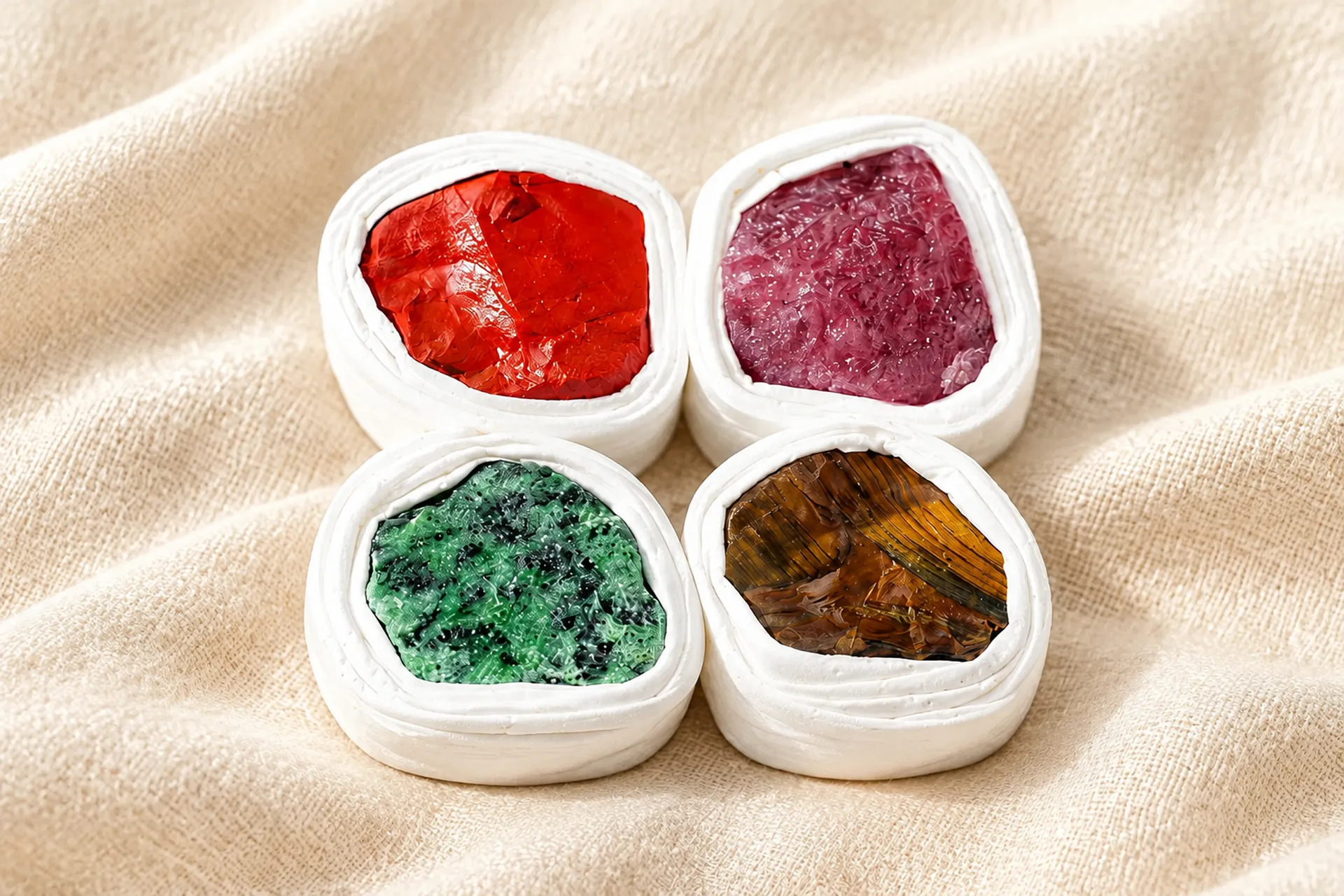
Raw crystal jewelry sets uncut, unpolished gemstones exactly as they came out of the ground — points, clusters, matrix and all — and it has moved from festival-market niche to mainstream jewelers between 2020 and 2026. The drivers: every raw stone is un-repeatably one-of-a-kind, the natural aesthetic pairs with the rejection of over-produced sameness, and rough crystals cost a fraction of faceted stones while reading as more authentic, not cheaper.
| Raw vs cut | Raw crystal | Faceted gem |
| Uniqueness | Literally one of a kind | Graded, matched, replaceable |
| Price | 30-60% less per carat | Premium cutting labor |
| Light behavior | Glows from within, matte | Sparkle and fire |
| Setting style | Bezel, wire, minimal metal | Prongs, halos, pavé |
| Durability | Edges and points are fragile | Optimized for wear |
| What it signals | Natural, individual, intentional | Classic, formal, status |
The styles carrying the trend in 2026. The raw point pendant — a quartz or amethyst crystal in its natural elongated form on a fine chain — is the volume leader. Raw ring clusters follow: small rough crystals grouped on a band, reading organic against tailored clothing. Crystal-in-matrix pieces (the stone still attached to its host rock) serve the maximalists; single bezel-set rough stones serve the minimalists who want natural without the geology-club look.
Which stones work raw — and which do not. Quartz family leads (clear, amethyst, citrine, rose): Mohs 7, durable, naturally photogenic in crystal form. Raw aquamarine and tourmaline are the fine-jewelry tier. Emerald and ruby rough exists but belongs to collectors. Skip raw opal (fragile, water-content issues) and raw turquoise (already soft enough cut). The honest rule: hardness above 7 for daily wear, below that the piece becomes special-occasion.
Why designers pushed it, beyond fashion: three real economics. Cutting a gem wastes 50-70 percent of the rough — raw settings use the whole crystal, which sits well with sustainability stories buyers now ask about. No two raw stones match, which defeats the comparison-shopping that commoditized faceted jewelry. And the rough-to-retail margin structure lets independent designers compete with heritage houses on originality instead of carats.
Wearing it without the costume look: the one-piece rule. One raw element per outfit — the pendant OR the ring, not the museum. Raw stones pair naturally with linen, denim, and knits; against formal wear, choose a single bezel-set rough stone in gold, which reads sculptural rather than festival. Scale matters more than with cut stones: a raw point reads visually heavy, so match it to frame (petite wearers to 2-inch points, not 4).
Care, honestly: raw crystals have open cleavage and points that chip. Knock protection is the whole game — take raw rings off for gym, gardening, and dishwashing. Clean with a soft dry brush; no ultrasonic (fractures), no steam, minimal water for porous stones like raw turquoise. Stored separately, a raw quartz piece outlives its silver setting; that asymmetry between stone-forever and setting-serviceable is the raw category in one sentence.
Frequently asked.
What is raw crystal jewelry?
Jewelry set with uncut, unpolished gemstones in their natural form — points, clusters, or stones still on their host matrix. No faceting, no shaping; the stone is set exactly as mined, making every piece one of a kind.
Are raw crystals cheaper than cut gemstones?
Usually 30-60 percent less per carat, because cutting wastes half or more of the rough and is skilled labor. The exception is collector rough of fine species — raw emerald or ruby specimens can outprice cut commercial stones.
Can you wear raw crystal jewelry every day?
If the stone is Mohs 7 or harder — the quartz family, tourmaline, aquamarine. Softer raw stones chip at their points and edges with daily knocks; bezel settings and the special-occasion drawer are the honest answers for those.
Related Articles
A Brief History of Birthstones
From the twelve tribes of Israel to the 1912 standard that rules the modern list — the 3,500-year origin story of why we wear our birth month.
Read MoreThe Ultimate Birthstone Cleaning Guide
Keep every piece in your collection gleaming. Step-by-step methods for gold, silver, and delicate birthstones — no harsh chemicals needed.
Read MoreBirthstone Energy: A Complete Crystal Healing Guide
From root chakra grounding to crown chakra clarity, discover how each birthstone carries healing energy. Learn to activate your crystal for meditation, sleep, and daily intention.
Read More