Mom Birthstone Ring Guide: Choosing Her Family Stones
A mother's birthstone ring typically features one birthstone per child, set in a band or cluster design.
Yueounb Editorial
Jewelry Expert
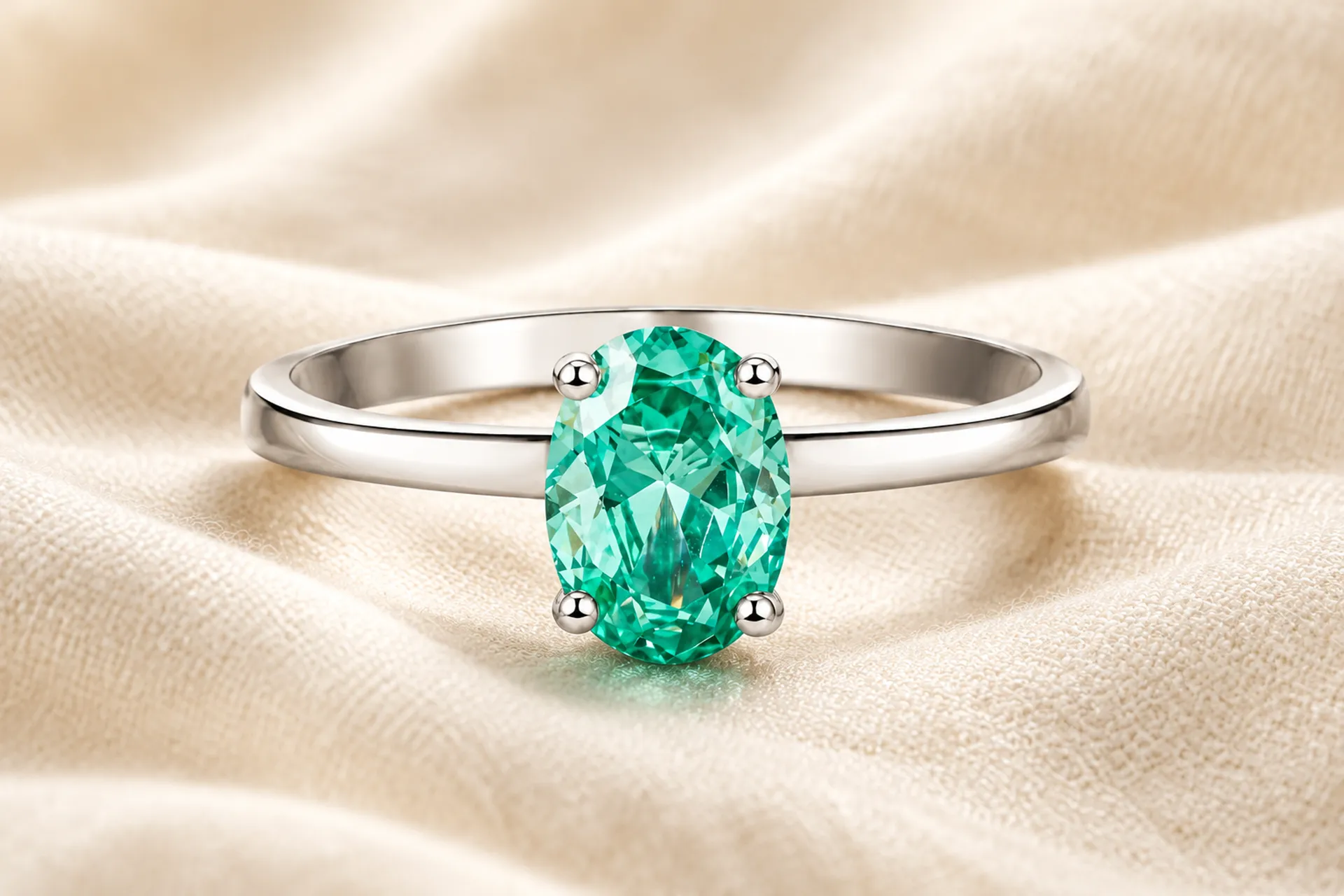
A mother's birthstone ring typically features one birthstone per child, set in a band or cluster design. The three most popular styles are stackable bands (one stone per band, one per child), multi-stone cluster rings, and rings combining her stone with her children's. Choose based on the number of stones needed, her lifestyle, and budget—expect roughly $80–$400 in sterling silver, $400–$1,500 in gold.
The best birthstone ring for a mom depends on how many children you're honoring:
1–2 children: A single band with both stones side by side, or her stone plus each child's - 3+ children: A cluster design, a linear row band, or stackable rings (one stone per child) - Combined anniversary + mother piece: Her stone and the children's stones set together, sometimes with the wedding-month stone added
Material guidance: Sterling silver suits occasional wear; 14K gold is better for daily wear. Durability note: Softer stones (pearl, opal, emerald) need protective settings like bezels, especially on rings, which take more knocks than necklaces.
| Configuration | Best For | Typical Stone Count | Wear Style | Considerations |
| --- | --- | --- | --- | --- |
| Stackable bands | Growing families, modern minimalists | 1 per band; add bands as family grows | Wear together or separately | Most flexible; easiest to add a stone for a new baby |
| Cluster ring | Moms who want one statement piece | 3–6 stones arranged around a center | One ring | Symmetry matters with uneven stone counts |
| Row/linear band | Even number of children (2 or 4) | 2–4 stones in a channel or prong row | One ring | Very wearable; stones sit low |
| Anniversary + mother hybrid | Milestone gifts (birth of child, big anniversary) | Her stone + spouse's + children's | One ring | Can get visually busy beyond 5 stones |
Rings take more abuse than necklaces or earrings—they meet doorknobs, countertops, and steering wheels daily. Hardness alone doesn't tell the whole story. A stone's suitability for a ring comes down to three factors: hardness (scratch resistance), toughness (resistance to chipping and cracking), and stability (resistance to heat and chemicals).
February (amethyst), April (diamond), November (topaz/citrine): Generally durable choices. Note that most citrine and much amethyst on the market is heat-treated—a stable, permanent treatment worth knowing but not a durability concern. - March (aquamarine): Good hardness but brittle; a bezel setting protects the girdle. - June (pearl) and October (opal): Both are soft and moisture-sensitive. They work in mom rings but should be set in protective bezels and removed for washing dishes or showering. If a child's birthday falls in these months, consider a bezel-set accent or a lab-grown alexandrite as the modern June alternative. - May (emerald): Almost always fracture-filled to some degree; avoid ultrasonic cleaners and choose a bezel or halo setting. - December (blue topaz): The vivid blue is typically produced by irradiation—a permanent and stable treatment, safe for daily wear, but worth disclosing to the buyer. - August (peridot) and September (sapphire): Sapphire is an excellent ring stone; peridot is hard but brittle, so again, favor protective settings.
Practical rule: For children with softer stones, place those stones in bezel settings or position them flanked by harder stones rather than at the ring's outer edges.
Birthstone rings are frequently gifts, which makes sizing the hardest logistics problem. Three honest approaches:
1. Borrow and trace. While she sleeps or showers, trace the inside of a ring she wears on the intended finger, or press it into a bar of soap. Note which hand and finger—dominant-hand fingers run about a quarter to half size larger. 2. Ask someone close. A sister, mother, or best friend often knows, or can check a jewelry box. 3. Order a resizable style. Many stackable bands can be adjusted slightly; ask the retailer about exchange or resizing policies before ordering. Some jewelers offer a "size later" program where a placeholder ring is given with the real piece to follow.
If you're between sizes, size up for wider bands (over 4mm)—wider rings fit snugger on the same finger. For stacking multiple bands, consider ordering the stack a half size up if she plans to wear them all on one finger.
The strongest mom-ring moments cluster around three occasions:
Push presents / new baby: Add-one-stone-later stackables are ideal here—you're not locked in if the family grows. - Mother's Day (second Sunday of May): Order early. Custom multi-stone rings typically need 2–4 weeks of production time; avoid the mid-April rush. A May gift featuring May's emerald as mom's own stone is a nice thematic tie if her birthday falls that month. - Anniversary hybrids: Combining the couple's stones with the children's creates a family ring. If you're building around a milestone year, our anniversary gemstone guides cover the traditional stones by year, and individual month pages—like /birthstones/may or /birthstones/september—detail each stone's meaning if a child's month is your starting point.
Related Articles
A Brief History of Birthstones
From the twelve tribes of Israel to the 1912 standard that rules the modern list — the 3,500-year origin story of why we wear our birth month.
Read MoreThe Ultimate Birthstone Cleaning Guide
Keep every piece in your collection gleaming. Step-by-step methods for gold, silver, and delicate birthstones — no harsh chemicals needed.
Read MoreBirthstone Energy: A Complete Crystal Healing Guide
From root chakra grounding to crown chakra clarity, discover how each birthstone carries healing energy. Learn to activate your crystal for meditation, sleep, and daily intention.
Read More