Birthstone Bracelets for Moms: Charm, Tennis & Bangles
Quick Answer: The best birthstone bracelet for a mom depends on how she'll wear it: charm bracelets let you add one birth-month charm per child over time; ten
Yueounb Editorial
Jewelry Expert
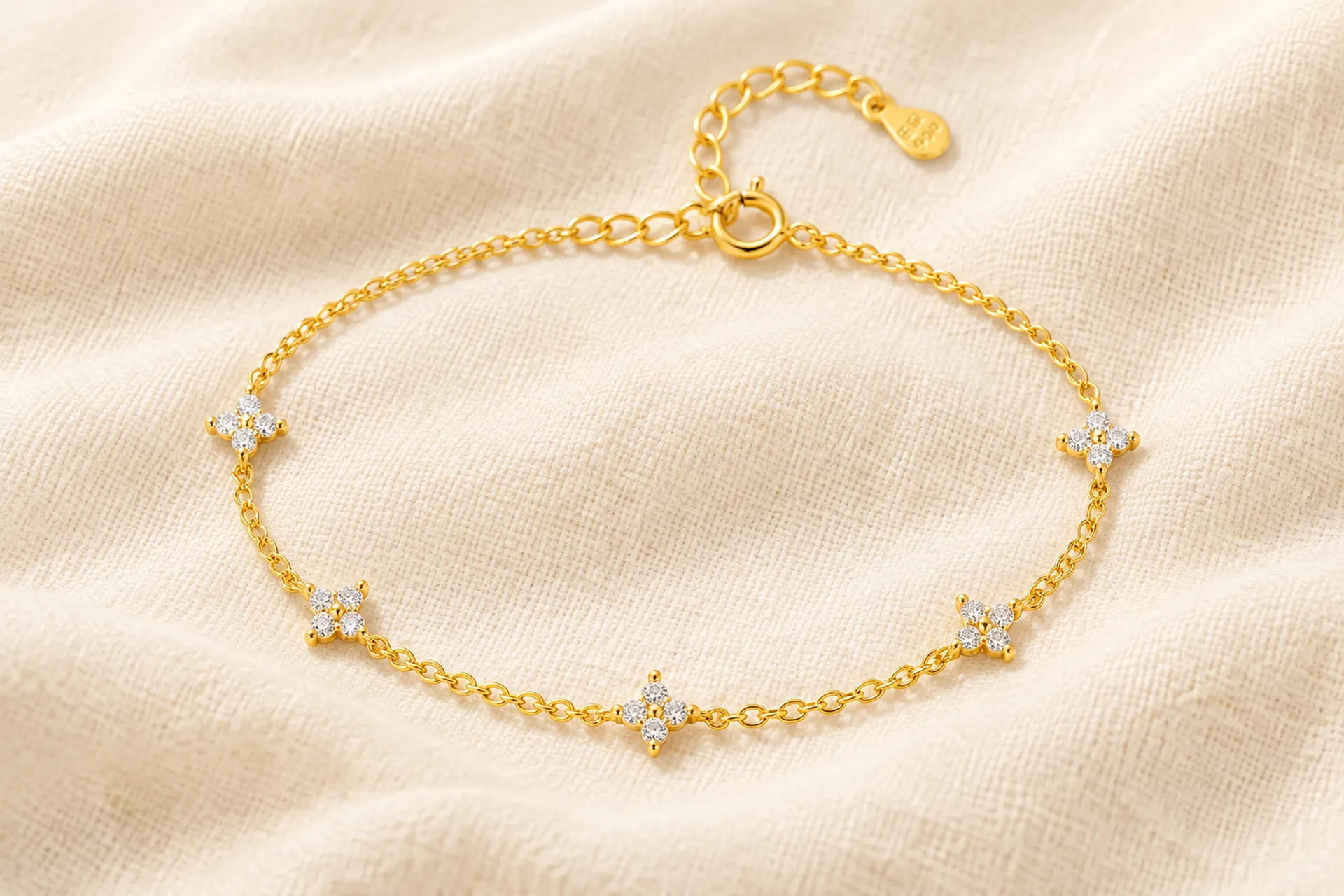
Quick Answer: The best birthstone bracelet for a mom depends on how she'll wear it: charm bracelets let you add one birth-month charm per child over time; tennis-style bracelets set all family birthstones in a continuous line for a dressier look; and engraved bangles with bezel-set stones offer the most protection for soft gems like pearls (June) and opal (October). For everyday wear, choose harder stones (sapphire, ruby, diamond) in secure settings, and confirm whether stones are heat-treated or lab-created before buying.
Charm bracelets are the most flexible format for mothers. Each child (or grandchild) gets a birth-month charm, and the bracelet grows as the family does — which is why they're a popular push-present and baby-shower gift in the U.S.
Stone security. Look for charms where the stone is bezel-set (a metal rim encircling the girdle) rather than glue-mounted. Glued stones in low-cost charms are the most common failure point we hear about, especially with soft or porous gems. - Clasp compatibility. If she already owns a charm bracelet (Pandora-style snake chains, for example), verify the charm's threading or attachment type before ordering. - Month accuracy. Doubled months matter here: March has both bloodstone and aquamarine, June has pearl, alexandrite, *and* moonstone, and December has turquoise, tanzanite, and zircon on the modern list. Pick the variant that suits her style, not just the default.
A tennis bracelet sets stones in a continuous, flexible line. For a mom version, gemmetres typically alternate or sequence the whole family's birthstones — for example, garnet (January), emerald (May), and aquamarine (March) for a three-person family.
1. Prong settings expose gem edges. Tennis bracelets flex constantly at the wrist, and prong-set stones take knocks against desks, counters, and car doors. Emerald is a particular concern: it's brittle (poor toughness due to natural inclusions) despite a 7.5–8 hardness, so a prong-set emerald tennis bracelet is a risky daily-wear choice. Bezel or half-bezel settings are safer. 2. Matching issues. Family birthstones vary wildly in hardness — from pearl and opal (scratch-prone) to sapphire and diamond. A single bracelet mixing opal with diamond means the opal will show wear first. Many jewelers solve this by substituting harder lookalikes, but then the "birthstone" is symbolic rather than mineralogical. Ask the seller to disclose substitutions in writing.
A rigid bangle with a bezel-set or flush-set birthstone, plus engraving (names, birth dates, coordinates), is the most protective configuration for genuine soft birthstones:
June babies: Genuine pearls can't be set in a flexing tennis line safely; a bangle with a pearl in a protective cup setting works far better. - October babies: Opal contains 3–21% water and is both soft (5.5–6.5) and heat-sensitive. A rigid bangle worn occasionally, kept away from household cleaners, is a reasonable home for a genuine opal.
Engraving is also where bangles carry the most sentiment: a child's name and birth date beside each stone turns the piece into a wearable family record.
Bracelets take more abuse than necklaces or earrings — they meet doorknobs, keyboards, and sinks daily. Judge each family member's stone on three factors, not hardness alone:
| Stone (Month) | Hardness (Mohs) | Toughness | Bracelet Suitability |
| --- | --- | --- | --- |
| Diamond (April) | 10 | Excellent | Excellent |
| Sapphire/Ruby (Sept/July) | 9 | Excellent | Excellent |
| Topaz (Nov) | 8 | Poor (cleavage) | Secure setting required |
| Amethyst (Feb) | 7 | Good | Good |
| Garnet (Jan) | 6.5–7.5 | Fair–Good | Good |
| Aquamarine (March) | 7.5–8 | Good | Good, protect from hard knocks |
| Peridot (Aug) | 6.5–7 | Fair–Good | Occasional wear |
| Emerald (May) | 7.5–8 | Poor | Occasional wear, bezel only |
| Pearl (June) | 2.5–4.5 | Good | Bangle/bezel only |
| Opal (Oct) | 5.5–6.5 | Poor–Fair | Occasional wear, rigid setting |
| Turquoise (Dec) | 5–6 | Fair–Good | Occasional wear; often dyed — ask |
Note topaz's counterintuitive case: it's hard but has distinct cleavage, so one sharp blow can split it. Hardness ≠ durability — always weigh all three factors.
Treatment disclosure to request: heat treatment is routine and stable for sapphire, ruby, and tanzanite; irradiation produces blue topaz (stable); dye is common in turquoise and some "birthstone" beads. Any reputable seller should state treatments plainly. Lab-created stones (a genuine option for budget-friendly tennis styles) must be labeled as such under FTC guidelines.
1. Count the wrists, then the kids. Confirm wrist size — many bangles can't be resized without resetting stones. 2. Decide on genuine vs. lab vs. simulant for each stone, and get it in the product description. 3. For mixed-hardness families, consider harder substitutes (e.g., pink tourmaline standing in visually for a softer stone) or a bangle that lets soft stones be worn occasionally. 4. Budget reality: genuine multi-stone tennis styles climb quickly in price because even small calibrated natural stones in rare months (alexandrite for June, for instance) are costly — alexandrite is among the world's rarer gems, so most "June" family pieces use lab-grown alexandrite or pearl/moonstone instead.
To plan each month's stone before configuring the bracelet, browse our month-by-month guides — for example, June's options or October's.
Related Articles
A Brief History of Birthstones
From the twelve tribes of Israel to the 1912 standard that rules the modern list — the 3,500-year origin story of why we wear our birth month.
Read MoreThe Ultimate Birthstone Cleaning Guide
Keep every piece in your collection gleaming. Step-by-step methods for gold, silver, and delicate birthstones — no harsh chemicals needed.
Read MoreBirthstone Energy: A Complete Crystal Healing Guide
From root chakra grounding to crown chakra clarity, discover how each birthstone carries healing energy. Learn to activate your crystal for meditation, sleep, and daily intention.
Read More