June Birthstone Jewelry: Pearl, Moonstone, or Alexandrite?
June is the only month with three birthstones — pearl, moonstone, and alexandrite — and they could not be more different. A durability-first comparison for choosing For keeping a color-change stone at its best, our [alexandrite ring care guide](/journal/how-to-clean-alexandrite-ring) covers the specifics.
Yueounb Editorial
Gemologist
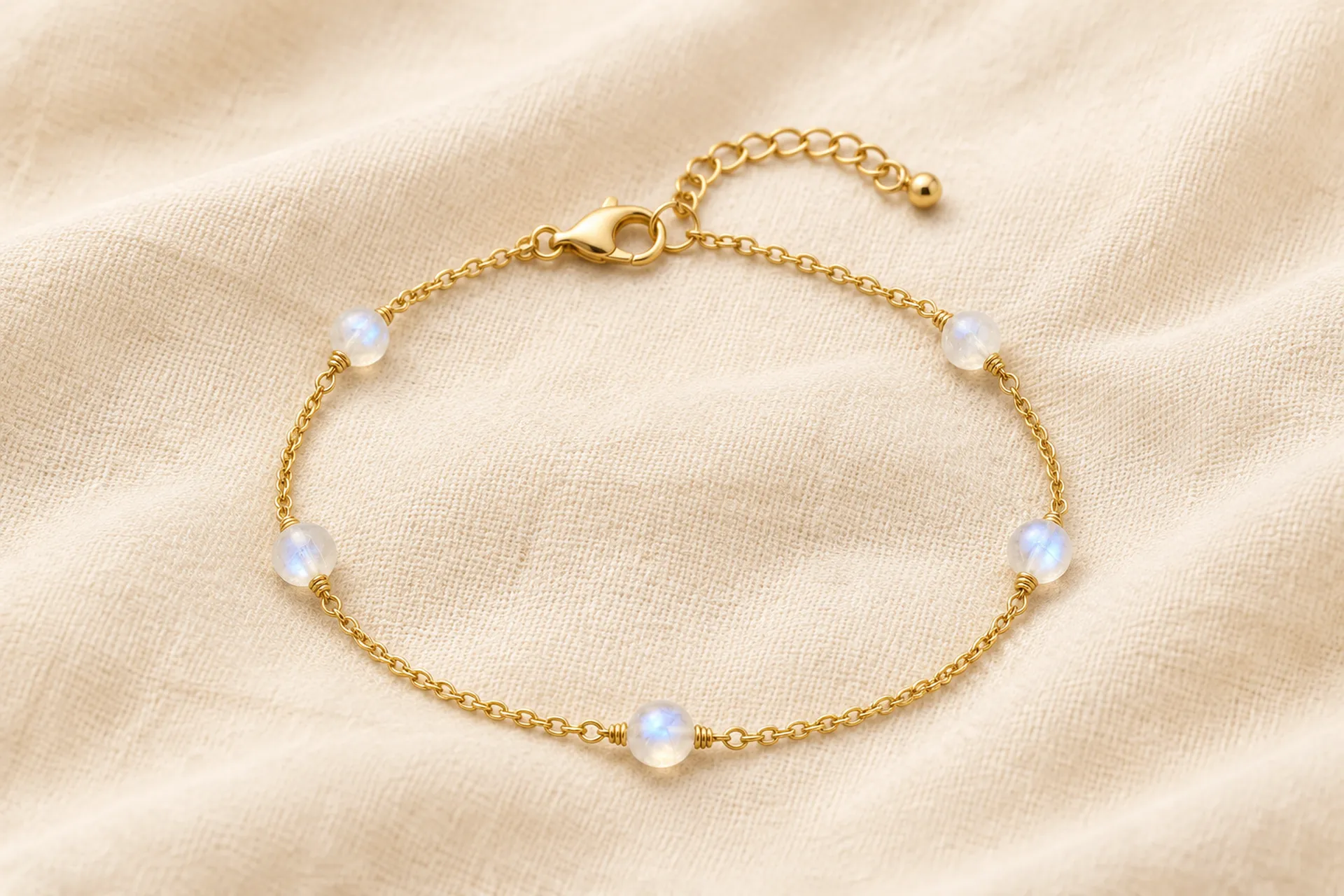
June is the only month with three official birthstones, and they could not be more different from one another. Pearl (2.5–4.5 on the Mohs scale) is organic and soft; moonstone (6–6.5) is a feldspar with distinctive cleavage; alexandrite (8.5) is one of the hardest colored gemstones in commerce. If you want everyday-wear durability, choose alexandrite. For occasional elegant wear, natural or fine cultured pearls are unmatched. Moonstone suits rings and pendants worn with care. Below is a durability comparison, a natural-vs-cultured pearl explainer, and honest guidance on which stone fits which lifestyle. GIA's guide to gem durability separates hardness from toughness
Quick Answer: Which June Birthstone Should You Buy?
| If you want... | Choose | Why |
| --- | --- | --- |
| Daily wear in a ring | Alexandrite | Mohs 8.5, excellent toughness, no cleavage concern in normal wear |
| Classic elegance, occasional wear | Pearl (cultured, ideally saltwater) | Soft (2.5–4.5 Mohs) but luster no other gem can imitate; needs care |
| Affordable color-shift novelty | Alexandrite simulant / lab alexandrite | Natural alexandrite often costs more than diamond per carat |
| Ethereal look on a budget | Moonstone | Strong adularescence at low cost, but cleavage means avoid knocks |
How Durable Are Pearl, Moonstone, and Alexandrite?
Shoppers often rank gems by Mohs hardness alone, but jewelers and gemologists at GIA assess durability through three factors: hardness (resistance to scratching), toughness (resistance to breaking and chipping), and stability (resistance to chemicals, heat, and light).
June's three birthstones sit at the extreme ends of every one of these measures:
- Pearl is soft (2.5–4.5 Mohs), with good toughness thanks to its layered nacre structure — but poor stability. Acids, including perspiration and perfume, attack the calcium carbonate and aragonite that make up nacre. This is why pearls should be "last on, first off" when dressing. per-stone properties are documented in GIA's Gem Encyclopedia - Moonstone is moderate on hardness (6–6.5) but has two directions of cleavage, meaning a sharp blow in the wrong direction can split the stone. Its toughness is rated poor to fair. It is stable in normal wear but sensitive to sudden temperature changes during repair work. - Alexandrite is exceptional: 8.5 Mohs, excellent toughness, no cleavage. It is a variety of chrysoberyl, which is stable to heat and everyday chemicals. Chemically and optically it is simply one of the most durable colored stones you can buy.
The practical translation: a pearl ring worn daily will need restringing and eventually re-polishing; a moonstone ring set in a protected bezel can last decades; an alexandrite ring can be worn like a sapphire. Our month guide at June Birthstones covers the full history of all three stones if you want the backstory.
Natural or Cultured Pearls — Does It Matter?
This is the question June buyers ask most, and the answer surprises people: nearly every pearl sold today is cultured, and that is not a downgrade.
A natural pearl forms when a parasite or other irritant enters a wild mollusk with no human involvement. Because pearl fisheries harvested wild mollusks for centuries, natural pearls are now extraordinarily rare — fine strands from the Gulf or historic sources trade at auction for six and seven figures. Gemological labs like GIA can X-ray a pearl to distinguish natural from cultured by examining the internal structure.
A cultured pearl is grown the same biological way — the mollusk deposits layer upon layer of nacre — but a technician inserts the irritant to start the process. The nacre is real. The mollusk is real. The luster is real. The Federal Trade Commission's Jewelry Guides require sellers to identify pearls as "cultured" or "natural," so if a listing just says "pearl," ask.
Within cultured pearls, quality and price tiers differ sharply:
- Akoya (Japan, China): classic white-to-cream round pearls, sharp mirror-like luster, typically 6–8 mm. - Freshwater (mostly China): the most affordable; modern techniques produce largely solid-nacre pearls, often baroque in shape. - Tahitian (French Polynesia): naturally dark gray to black with green, purple, or peacock overtones. - South Sea (Australia, Indonesia, Philippines): large (typically 9–15 mm), satin luster, white or golden — the most expensive cultured category.
One disclosure worth demanding: many freshwater and some saltwater pearls are dyed or irradiated to create colors like vivid lavender or uniform black. Treatment is legitimate but should be disclosed. Dyed color can fade or scratch off over decades.
Moonstone: Beauty With an Engineering Problem
Moonstone is orthoclase feldspar that displays adularescence — a soft blue or white glow that seems to float beneath the surface, caused by light scattering between microscopic layers of two intergrown feldspar minerals. The finest material, historically from Sri Lanka, shows a blue sheen on a colorless body; India produces silvery-white sheen on a warmer body color, often with a cat's-eye effect.
The buying advice is blunt: moonstone is a poor choice for an everyday ring unless the setting protects it. Its cleavage means one hard knock against a countertop can cleave the stone. Choose:
- Bezel settings over prong settings — metal fully surrounding the girdle absorbs impact. - Pendants and earrings, where impact risk is minimal and the glowing sheen reads best. - A cabochon cut, which is standard, and avoid very high domes that protrude and take hits.
Moonstone is not routinely treated, which is a point in its favor for buyers who want untreated gems. Read any claim of "rainbow moonstone" carefully — that material is actually labradorite, a different feldspar species, and honest sellers label it as such.
What Makes Alexandrite Change Color?
Alexandrite is the chrysoberyl variety famous for a dramatic color change: green to greenish blue in daylight, red to purplish red under incandescent light. The effect comes from chromium replacing aluminum in the crystal structure, which absorbs light in a way that flips perceived color with the light source. Fine examples from the original Russian deposits in the Ural Mountains — discovered in the 1830s and named for Tsar Alexander II — established the standard: "emerald by day, ruby by night."
The honest problem: fine natural alexandrite is rarely inexpensive. Top-color Russian material is effectively collector territory; Brazilian, Sri Lankan, and East African material (especially from Tanzania and Madagascar) supplies the commercial market, with visible color change commanding steep premiums even at small sizes. Many stones show only a partial shift.
Practical options, ranked by honesty of value:
1. Lab-grown alexandrite (flux or Czochralski process): identical chemistry and color change, honest disclosure, a fraction of the price. Excellent choice for an everyday June ring. 2. Natural alexandrite with moderate color change: buy the change, not the size. A 1-carat stone with a strong shift beats a 3-carat weak one. 3. Color-change corundum (sapphire): related phenomenon, more available, less expensive — but it is not the June birthstone.
Alexandrite is rarely treated, another authenticity point in its favor.
Matching the Stone to the Wearer: A Practical Framework
Durability data only matters when matched to real life. A reasonable framework:
- A nurse, mechanic, gardener, or anyone working with hands: alexandrite (or its lab-grown equivalent). Pearl and moonstone rings will not survive gloves, tools, and soil. - A graduate, June bride, or someone marking a milestone in June: pearls carry the ceremonial weight. Strand, studs, or a pendant worn on occasion will last generations with basic care — wipe after wearing, store flat away from other jewelry, restring every few years if worn often. - A bohemian or vintage aesthetic: moonstone in a bezel-set ring or as a pendant delivers a distinctive look for modest money. - An anniversary crossover: alexandrite and pearl both appear on anniversary lists — alexandrite is associated with the 55th anniversary, and pearl with several others. If you're shopping for a milestone year, our anniversary gemstone guides map traditional and modern lists stone by stone.
Whatever you choose, ask the seller three questions: Is this pearl natural, cultured, or simulant? Has any stone been treated (dyed, heated, irradiated)? Is this moonstone true orthoclase or labradorite sold loosely? Sellers who answer crisply are selling honestly.
Care Cheat Sheet
- Pearl: wipe with a soft damp cloth after wear; no ultrasonic, no steam, no perfume or hairspray contact; store separately (other gems scratch nacre). - Moonstone: warm soapy water only; no ultrasonic (cleavage risk); remove before sports or heavy housework. - Alexandrite: warm soapy water and ultrasonic are generally safe for untreated material; remove before harsh chemical work as with any fine jewelry.
Frequently asked.
What is the official June birthstone?
June has three official birthstones: pearl, moonstone, and alexandrite, all recognized by the modern birthstone list standardized by Jewelers of America in 1912 (alexandrite and moonstone were added as June alternatives in 1952). Any of the three qualifies as a genuine June birthstone, so choose based on look, budget, and how the piece will be worn.
Are cultured pearls "fake" pearls?
No. Cultured pearls are grown inside real mollusks with genuine nacre — the only difference from natural pearls is that a human initiates the process. Simulants like glass or plastic "shell pearls" are the fakes. Ask for disclosure per FTC Jewelry Guides; reputable sellers always state whether pearls are natural, cultured, or imitation.
Can I wear a pearl or moonstone ring every day?
Not recommended. Pearls (Mohs 2.5–4.5) scratch easily and are damaged by acids in sweat and cosmetics; moonstone (Mohs 6–6.5) has cleavage that can split under a sharp blow. For daily ring wear, alexandrite (Mohs 8.5, excellent toughness) is the durable June choice. Pearls and moonstone perform best in earrings, pendants, and occasionally-worn pieces.
Why is natural alexandrite so expensive?
Fine alexandrite combines extreme rarity with a dramatic daylight-to-incandescent color change driven by chromium in its crystal structure. The original Russian deposits are largely depleted, and current sources in Brazil, Sri Lanka, Tanzania, and Madagascar yield limited quantities of strongly shifting stones. Lab-grown alexandrite offers the same chemistry and color change at a small fraction of the price.
Related Articles
A Brief History of Birthstones
From the twelve tribes of Israel to the 1912 standard that rules the modern list — the 3,500-year origin story of why we wear our birth month.
Read MoreThe Ultimate Birthstone Cleaning Guide
Keep every piece in your collection gleaming. Step-by-step methods for gold, silver, and delicate birthstones — no harsh chemicals needed.
Read MoreBirthstone Energy: A Complete Crystal Healing Guide
From root chakra grounding to crown chakra clarity, discover how each birthstone carries healing energy. Learn to activate your crystal for meditation, sleep, and daily intention.
Read More