July Birthstone Jewelry: Ruby Color, Alternatives, Timing
July birthstone jewelry means ruby — pigeon-blood red at the top, heat treatment the norm, garnet and spinel the smart alternatives. What to ask before buying.
Yueounb Editorial
Jewelry Expert
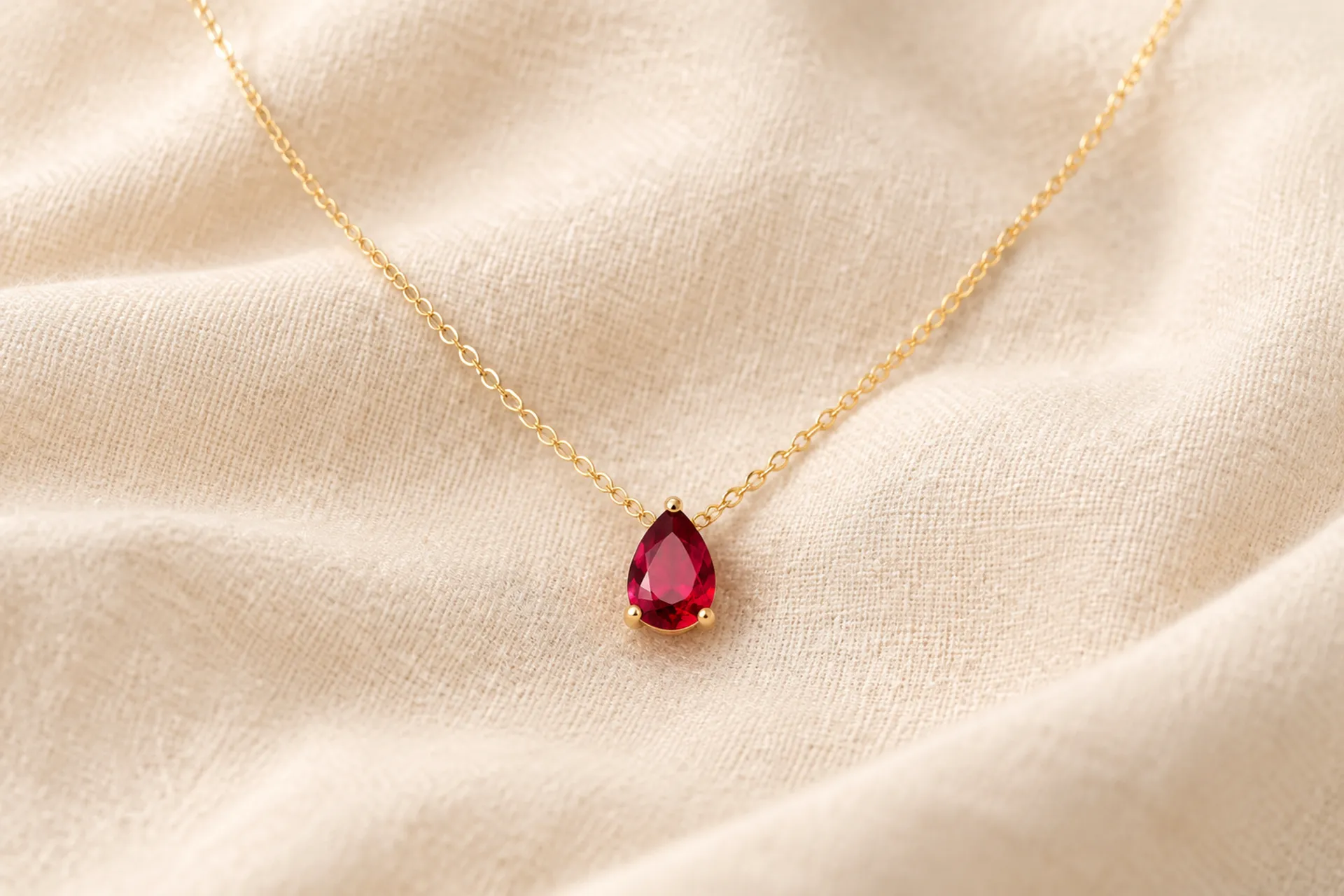
July birthstone jewelry centers on ruby, the red gemstone of the corundum family. Most buyers face two decisions: which shade of red to buy (from pinkish-red to the coveted "pigeon's blood" crimson) and how much to spend, since fine untreated ruby can exceed the price of diamond per carat. This guide breaks down ruby color grading in plain terms, compares budget-friendly lookalikes like garnet and spinel, and maps the gifting moments where July ruby jewelry carries the most meaning. the International Gem Society's Mohs chart places ruby near the top
Quick Answer
What is the July birthstone? Ruby — red corundum, hardness 9 on the Mohs scale, second only to diamond among natural gems. Which color is best? The most valued is a vivid, slightly purplish-red often called "pigeon's blood" in the trade; stones that look noticeably pink may be graded and priced lower (and in pale tones may even be classified as pink sapphire). Cheaper options? Rhodolite garnet and red spinel offer similar richness at a fraction of the price. When to gift it? July birthdays, 15th and 40th anniversaries, and 52nd wedding anniversaries (one of the traditional "wedding week" ruby celebrations).
How Is Ruby Color Graded?
Color drives 80%+ of a ruby's value — more than clarity, cut, or carat. GIA evaluates colored stones on hue (the base color), tone (light to dark), and saturation (color intensity). For ruby:
- Hue: Ruby is defined by its dominant red. Stones that tilt strongly toward pink sit in a gray zone; there is no universally agreed boundary between ruby and pink sapphire, and different labs can grade the same stone differently. This is worth knowing because the price gap between "ruby" and "pink sapphire" on similar material can be substantial. - Tone: Medium to medium-dark is ideal. Too light reads as pink sapphire; too dark looks muddy and lifeless. - Saturation: Vivid, strong saturation with minimal brown or orange modifier commands the top prices.
"Pigeon's blood" is a trade term — not a standardized GIA grade — historically associated with Burmese (Myanmar) rubies: a pure red with a subtle blue tint and strong fluorescence. Labs such as GRS and GÜBELIN use it on reports, but its application varies between laboratories, so treat it as a descriptor of a color range rather than a guarantee of quality.
Practical takeaway: judge the stone with your eyes under daylight-equivalent lighting. A slightly included, vivid medium-tone ruby from Madagascar or Mozambique can outshine a darker, cleaner stone on the wrist — at a lower price.
What Should You Ask About Treatments?
Most commercial rubies on the market are heat-treated to improve color and clarity. This is an accepted, stable industry practice — but the degree of treatment matters: treatment norms are documented per stone in GIA's Gem Encyclopedia
| Treatment | What it means | Value impact |
| --- | --- | --- |
| No treatment (natural) | Rare; carries premium pricing, especially with lab report | Highest, often collector territory |
| Standard heat | Routine, permanent, widely accepted | Moderate — the norm for fine jewelry |
| Flux healing / glass filling of cavities | Fills fractures with glassy material | Significantly lower; requires gentle care |
| Lead-glass filling | Heavy fracture filling in low-grade material | Very low; damaged by even jewelers' acids/heat |
Reputable sellers disclose treatment status; for stones over roughly $1,000, ask whether a report from GIA, GRS, GÜBELIN, or another recognized lab is available. If a ruby looks too good for its price, it usually is.
Durability note: hardness 9 makes ruby excellent for everyday rings and bracelets, but hardness is not toughness. Hard stones still chip under a sharp blow, so remove ruby jewelry during heavy manual work. Heat-treated ruby is stable for normal cleaning; glass-filled ruby should avoid ultrasonic cleaners and harsh chemicals.
What If Ruby Is Not in the Budget?
Fine ruby prices have climbed sharply as top mines produce less. If the budget doesn't stretch, these natural alternatives deliver genuine character:
- Rhodolite garnet — a purplish-red garnet variety, typically eye-clean, no treatment needed, and very affordable. Softer than ruby (roughly 7–7.5 on Mohs) and best for pendants, earrings, and occasional-wear rings rather than daily-wear rings. - Red spinel — historically mistaken for ruby (some famous "rubies" in royal collections turned out to be spinel). Bright, lively red, hardness 8, usually untreated, and still far below ruby pricing — though top reds are rising in value as collectors catch on. - Rubellite tourmaline — saturated pinkish-red to red, with a distinctive depth. Hardness 7–7.5; warmth, hot water, and ultrasonic cleaning should be avoided.
Being transparent about the substitution actually makes a gift better: "This is a rhodolite garnet — chosen for its color, at a price that let me pick a bigger, cleaner stone" is a story, not an apology. Discover the full range on our July birthstone page.
When Do Ruby Gifts Land Best?
Ruby's red gives it a wide emotional range beyond July birthdays:
- July birthdays — the obvious anchor; birthstone jewelry is at its most personal when the stone is "theirs." - Anniversaries — ruby is the traditional 15th anniversary gemstone and is also strongly associated with the 40th (the "ruby anniversary") — see our 15th and 40th guides. also verify 52nd anniversary traditions if referencing - Milestone moments — Valentine's Day, a promotion, a fortieth birthday: ruby's red reads as both romantic and celebratory, which suits it to self-purchases as much as gifts.
Style-wise, small rubies (under 0.5 ct) in bezel or halo settings look richer than their size suggests, because the metal amplifies color; larger stones benefit from minimal settings that let light reach the pavilion.
Frequently asked.
Is a pink ruby actually a ruby?
There is no international standard dividing ruby from pink sapphire — it's a trade and lab judgment call based on hue. A stone with a clearly dominant red hue is ruby; one that reads pink is typically sold as pink sapphire at a lower price. Buy the color you love, and check the report wording.
How much does a July ruby birthstone ring cost?
Small heat-treated rubies suitable for everyday birthstone rings commonly start in the low hundreds of dollars; fine untreated rubies over 1 carat with top color and lab reports can reach five to six figures. Rhodolite garnet or spinel alternatives can deliver a similar look for well under $200.
Can I wear ruby jewelry every day?
Yes, with reasonable care. Ruby's hardness 9 and good toughness make it suitable for daily-wear rings — better than most colored gems. Avoid sharp knocks and harsh chemicals, and clean with warm soapy water. Glass-filled rubies are the exception: treat them gently and skip ultrasonic cleaners.
Related Articles
A Brief History of Birthstones
From the twelve tribes of Israel to the 1912 standard that rules the modern list — the 3,500-year origin story of why we wear our birth month.
Read MoreThe Ultimate Birthstone Cleaning Guide
Keep every piece in your collection gleaming. Step-by-step methods for gold, silver, and delicate birthstones — no harsh chemicals needed.
Read MoreBirthstone Energy: A Complete Crystal Healing Guide
From root chakra grounding to crown chakra clarity, discover how each birthstone carries healing energy. Learn to activate your crystal for meditation, sleep, and daily intention.
Read More