December Birthstone Jewelry: Turquoise, Tanzanite, Zircon
December is the only month with three official birthstones — turquoise, tanzanite, and zircon. A decision tree by style, durability, and budget.
Yueounb Editorial
Jewelry Expert
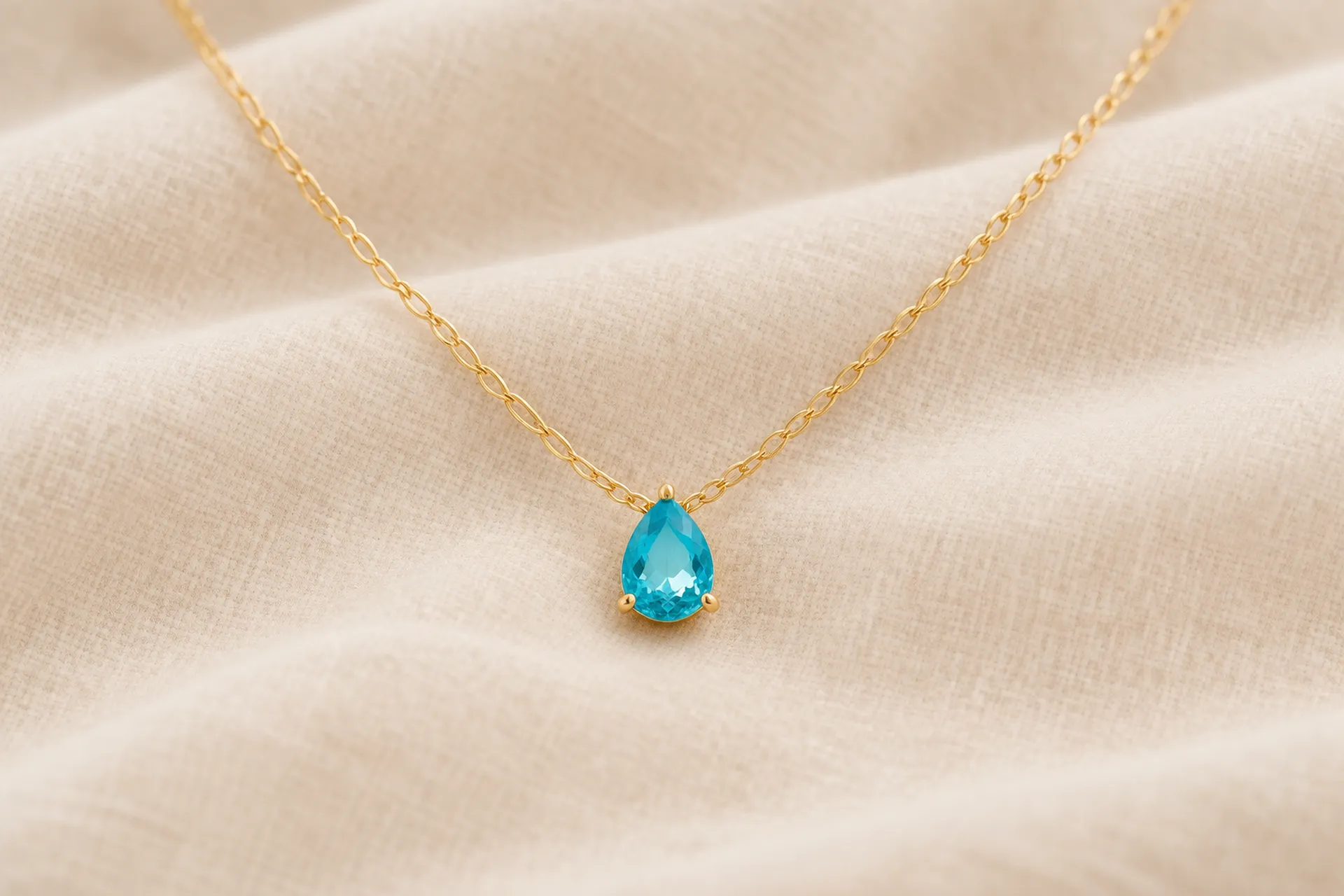
December is the only month with three official birthstones—turquoise, tanzanite, and zircon—so the real question isn't whether to buy December birthstone jewelry, but which stone fits you. Choose tanzanite for a modern, violet-blue statement piece (typically in the low hundreds for quality 1-carat gems); zircon for brilliant, affordable sparkle in warm or cool tones ($50–$300 per carat); turquoise for bohemian, artisan, or Southwest-style pieces where the robin's-egg blue matrix is the point. Skin tone, lifestyle, and budget decide the rest. each stone's profile is documented in GIA's Gem Encyclopedia
Quick Answer: The 3-Stone Decision Tree
| Question | Answer | Your Stone |
| --- | --- | --- |
| Want a rich blue-violet look, fine-jewelry feel? | Yes | Tanzanite |
| Want maximum diamond-like sparkle on a budget? | Yes | Zircon (blue) |
| Love organic, matte, artisan or vintage-southwest style? | Yes | Turquoise |
| Buying an everyday ring that takes knocks? | — | Zircon or turquoise in a protective bezel; tanzanite is better for pendants/earrings |
| Budget under $100 for a real gemstone ring? | — | Turquoise or small zircon |
Explore the full stone profiles on our December birthstone page.
Turquoise, Tanzanite, or Zircon — What Are You Buying?
Each of the three December stones occupies a completely different corner of the gem world, and understanding why is the key to a purchase you won't regret.
Turquoise was December's original birthstone, listed in ancient Polish and Tibetan traditions long before tanzanite and zircon were added (both added to the modern US list in 2002 — the same update our birthstone history covers list is widely attributed to the American Gem Trade Association and Jewelers of America in 2002]).
Durability picture, honestly stated: - Hardness: 5–6 on the Mohs scale — soft compared to sapphire or diamond hardness figures follow the International Gem Society's Mohs chart - Toughness: Generally fair to poor; the stone is porous and can chip - Stability: Sensitive to heat, oils, cosmetics, and household chemicals
Treatment disclosure matters enormously with turquoise. Most commercial turquoise is stabilized (impregnated with resin to harden it), which is a legitimate, accepted practice if disclosed. Dyed howlite or magnesite sold as turquoise is not. Natural, untreated turquoise of top color—particularly classic "sleeping beauty" light blue—commands a premium. If a deal looks too good, ask the seller directly about stabilization.
Best for: cuffs, pendants, beads, statement rings worn occasionally. Avoid: daily-wear rings and ultrasonic cleaners.
Tanzanite — The One-Source Modern Star
Tanzanite was discovered in 1967 near Mount Kilimanjaro, Tanzania, and is found commercially in that single area to this day. That geological singularity is the core of its value story.
- Hardness: 6.5–7 - Toughness: Fair — has distinct cleavage, so a hard knock can split it - Stability: Good, but sudden temperature changes should be avoided
Nearly all tanzanite on the market is heat-treated to transform brownish zoisite into the prized blue-violet color. This is routine, permanent, and universally accepted—no need to pay a premium seeking "untreated" blue material.
Best for: pendants, earrings, and special-occasion rings. This is the stone for someone who wants a December birthstone that reads as "fine jewelry."
Don't confuse zircon with cubic zirconia—zircon is a natural mineral (zirconium silicate), and blue zircon's dispersion (fire) rivals or exceeds diamond's.
- Hardness: 6.5–7.5 - Toughness: Variable — brittle; facet edges can chip over years of wear - Stability: Good overall
Most blue zircon is heat-treated (from brownish rough, primarily Cambodian and Vietnamese material). The treatment is stable and standard.
Best for: budget engagement-adjacent rings, vintage-style settings, anyone who wants sparkle first.
Which December Stone Suits Her Style?
A practical shortcut American shoppers use:
- Cool/rose undertones: Blue zircon and violet-leaning tanzanite flatter most; set in white gold or silver. - Warm/golden undertones: Turquoise's blue-green reads beautifully against warm skin; yellow gold settings amplify this. Teal-leaning tanzanite also works. - Neutral undertones: All three work—choose by wardrobe instead.
Style-wise: turquoise belongs with boho, western, and artisan jewelry languages; zircon suits vintage, Art Deco, and classic solitaire styles; tanzanite fits contemporary luxury looks (it was famously named and championed by Tiffany & Co. after its late-1960s discovery starting 1968]).
What Does Each December Stone Cost?
| Stone | Entry | Mid | Fine |
| --- | --- | --- | --- |
| Turquoise (stabilized) | $30–80 | $100–300 | $500+ natural untreated |
| Blue zircon | $60–150/ct | $150–300/ct | $300+/ct top color |
| Tanzanite | $150–350/ct small sizes | $400–800/ct | $1,000+/ct large vivid |
All figures are indicative U.S. retail ranges.
Frequently asked.
Which December birthstone is most durable for an everyday ring?
Zircon edges out turquoise and tanzanite, but all three are softer than sapphire. For daily wear, choose a bezel setting (metal fully surrounding the stone), remove the ring during sports and cleaning, and never use ultrasonic cleaners on turquoise or tanzanite.
Is tanzanite rarer than diamond?
By single-source geography, tanzanite is often described as far rarer—it comes from one small mining area in northern Tanzania—though "1,000 times rarer than diamond" claims circulating online are marketing framing, not a verified statistic. Its rarity is real; the specific multiplier is not.
Can I combine all three December stones in one piece?
Yes—three-stone December "trilogy" rings and stacked bracelets mixing turquoise, tanzanite, and zircon are a growing trend and a meaningful gift for someone born in December. Ask your jeweler to set the turquoise last and avoid shared-prong tension on it. --- Every stone mentioned here is covered in more depth at /birthstones/december.
Related Articles
A Brief History of Birthstones
From the twelve tribes of Israel to the 1912 standard that rules the modern list — the 3,500-year origin story of why we wear our birth month.
Read MoreThe Ultimate Birthstone Cleaning Guide
Keep every piece in your collection gleaming. Step-by-step methods for gold, silver, and delicate birthstones — no harsh chemicals needed.
Read MoreBirthstone Energy: A Complete Crystal Healing Guide
From root chakra grounding to crown chakra clarity, discover how each birthstone carries healing energy. Learn to activate your crystal for meditation, sleep, and daily intention.
Read More