Birthstone Jewelry for Women: Everyday vs Special Occasion
Birthstone jewelry for women works when the piece matches how it will be worn: durable everyday stones versus occasion pieces, and the self-purchase versus gift decision.
Yueounb Editorial
Jewelry Expert
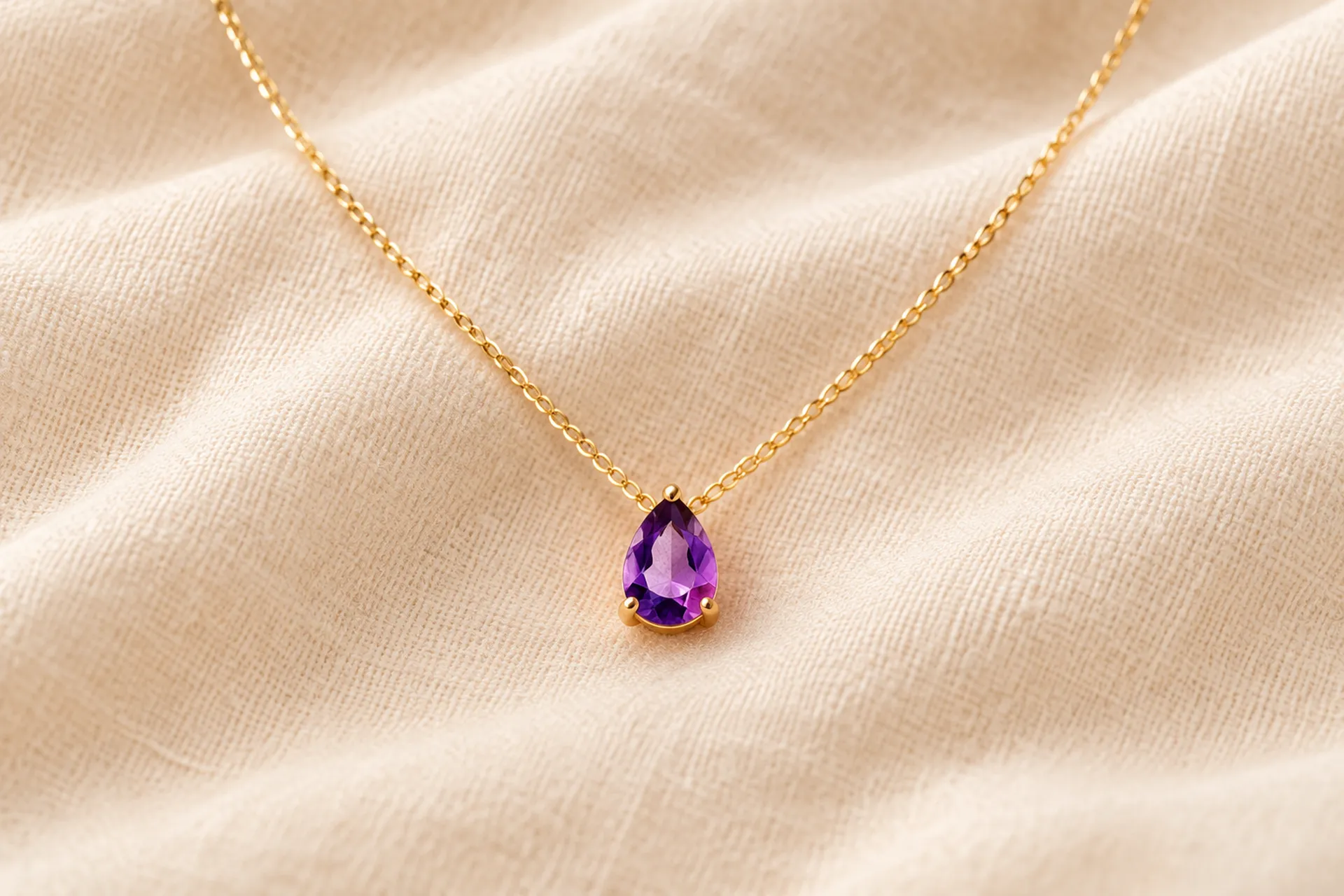
Buying birthstone jewelry for women works best when you match the piece to two things: how it will be worn (daily vs. occasional) and who is choosing it (self-purchase vs. gift). For everyday wear, prioritize durable stones like sapphire, ruby, and aquamarine in secure settings like bezels. For gifts, the recipient's birth month sets the stone automatically — making birthstone jewelry one of the most personal, low-risk gift categories in fine jewelry.
Quick Answer: The Right Pick for Each Scenario
| Scenario | Best Approach | Why |
| --- | --- | --- |
| Everyday self-purchase | Hard, tough stones (sapphire, ruby, aquamarine, garnet) in bezel or low-profile settings | Survives hand-washing, knocks, and daily wear |
| Occasional self-purchase | Softer or treated stones (opal, pearl, emerald, irradiated blue topaz) are acceptable | Less exposure to damage; settings can be more delicate |
| Gift — you know her birth month | Her month's stone; choose metal color you've seen her wear | Eliminates the biggest guesswork in jewelry gifting |
| Gift — you don't know details | Necklace or pendant over ring | Necklaces have no sizing problem |
| Gift — milestone (birthday, Mother's Day, anniversary) | Stackable birthstone ring or family pendant with children's stones | Combines meaning with wearability |
Everyday or Special Occasion — How Durable Must It Be?
Many shoppers assume a "hard" gemstone is a durable one. In gemology, that's only a third of the picture:
- Hardness (resistance to scratching) — measured on the Mohs scale, 1–10 durability calls follow GIA's guide to gem durability - Toughness (resistance to chipping and cracking) — why jade and corundum endure, while topaz (Mohs 8 but brittle with perfect cleavage) can chip on a hard knock - Stability (resistance to heat, light, and chemicals) — why opals can dry out and pearls are damaged by even mild acids like vinegar or perfume
For daily wear, the strongest everyday birthstones are:
- Garnet (January) — Mohs 6.5–7.5, good toughness, rarely treated - Aquamarine (March) — Mohs 7.5–8, good toughness; note that most blue aquamarine on the market is heat-treated to reduce greenish tones, a stable and permanent treatment - Sapphire (September) — Mohs 9, excellent toughness, the benchmark for durability - Ruby (July) — Mohs 9, excellent toughness; heat treatment is common and should be disclosed by the seller
Stones to treat as occasional-wear pieces:
- Opal (October) — Mohs 5.5–6.5, contains water, sensitive to sudden heat and dryness - Pearl (June) — Mohs 2.5–4.5 (on the coral-nacre surface), vulnerable to acids, perfume, and perspiration; a "last on, first off" rule applies - Emerald (May) — Mohs 7.5–8 but typically heavily included, which lowers toughness; traditional oiling treatments can be affected by ultrasonic cleaners
Also check treatment status for November's citrine and December's irradiated blue topaz — irradiation in blue topaz is a permanent, stable treatment and standard in the industry, but dyed stones (occasionally seen in "birthstone" fashion lines) can fade and are a different quality tier entirely.
Setting matters as much as stone: a bezel setting (metal fully surrounding the stone's edge) protects far better than prong settings for daily wear, and low-profile designs catch less on sleeves and bags.
Buying for Yourself or Receiving a Gift?
When a woman buys for herself, the practical questions dominate:
1. Will it survive my routine? Gym-goers, nurses, and frequent hand-washers should lean toward bezel-set sapphire, garnet, or stacking-friendly bands. 2. Does it match what I already own? Mixing yellow gold with existing white gold pieces is a deliberate style choice — decide it consciously, not by accident. 3. Can it grow? Stackable birthstone rings let you add a child's stone, an anniversary stone, or a second birthstone later.
When buying as a gift, the calculus flips: her birth month removes the taste question (the stone is fixed by meaning), so your remaining decisions are metal, piece type, and budget. Three gift rules that hold up:
- Necklaces and pendants are the safest format — no finger sizing needed, and a pendant sits at a flattering, visible height. - If sizing a ring secretly, borrow one she wears on the intended finger and trace the inner circle, or press it into a bar of soap. Jewelers can read the size from either. - Mother's pieces carry the strongest emotional payload: pendants or rings set with each child's birthstone are consistently among the most-gifted birthstone designs in the U.S. market.
For milestone gifts tied to marriage years rather than birth months, the anniversary gemstone tradition offers its own stone list — see our anniversary gemstone guides for matched gifting ideas.
Which Stone Belongs to Your Birth Month?
Every month's stone, with a one-word wear profile:
| Month | Stone | Everyday-Suitable? |
| --- | --- | --- |
| January | Garnet | Yes |
| February | Amethyst | Yes (Mohs 7; avoid prolonged strong heat) |
| March | Aquamarine | Yes |
| April | Diamond | Yes |
| May | Emerald | Occasional (inclusions + oiling) |
| June | Pearl / Alexandrite | Pearl: occasional; Alexandrite: yes (Mohs 8.5) |
| July | Ruby | Yes |
| August | Peridot | Yes, with care (Mohs 6.5–7, avoid hard knocks) |
| September | Sapphire | Yes |
| October | Opal / Tourmaline | Opal: occasional; Tourmaline: yes with care |
| November | Citrine / Topaz | Citrine: yes; Topaz: careful (brittle despite hardness) |
| December | Turquoise / Zircon / Tanzanite / Blue Topaz | Mostly occasional; turquoise is softer (Mohs 5–6) |
Explore any month in depth on its dedicated page — for example, September birthstones or June birthstones.
Frequently asked.
Is birthstone jewelry a good gift if I don't know her ring size?
Yes — choose a pendant, necklace, or bracelet instead. If a ring is the right emotional choice, secretly trace or soap-impress a ring she already wears on that finger and have a jeweler measure it. Resizing is usually possible later, but some settings (like full eternity bands) are difficult to resize.
Which birthstones can be worn every day without worry?
Sapphire and ruby (both Mohs 9, excellent toughness), diamond (April), garnet, aquamarine, and alexandrine-grade June alternatives are the safest daily wearers. Even with these, remove jewelry before heavy lifting, sports, and household cleaning — chemical cleaners and hard impacts damage settings as often as stones.
Are treated birthstones okay to buy?
Yes, when disclosed. Heat treatment in sapphire, ruby, aquamarine, and tanzanite is permanent and industry-standard; irradiation in blue topaz is stable and routine. What to avoid is undisclosed treatment or dye, which can fade. A reputable seller states treatment status clearly — if they can't tell you, buy elsewhere.
Related Articles
A Brief History of Birthstones
From the twelve tribes of Israel to the 1912 standard that rules the modern list — the 3,500-year origin story of why we wear our birth month.
Read MoreThe Ultimate Birthstone Cleaning Guide
Keep every piece in your collection gleaming. Step-by-step methods for gold, silver, and delicate birthstones — no harsh chemicals needed.
Read MoreBirthstone Energy: A Complete Crystal Healing Guide
From root chakra grounding to crown chakra clarity, discover how each birthstone carries healing energy. Learn to activate your crystal for meditation, sleep, and daily intention.
Read More