Emerald Guide: From Cleopatra's Mines to the Cut Built Around Its Cracks
Emeralds were mined for pharaohs 3,500 years ago and got a cut named after them for one reason: their inclusions. May's green, the jardin, and how to buy the most charismatic fragile gem.
Yueounb Editorial
Gemology Researcher
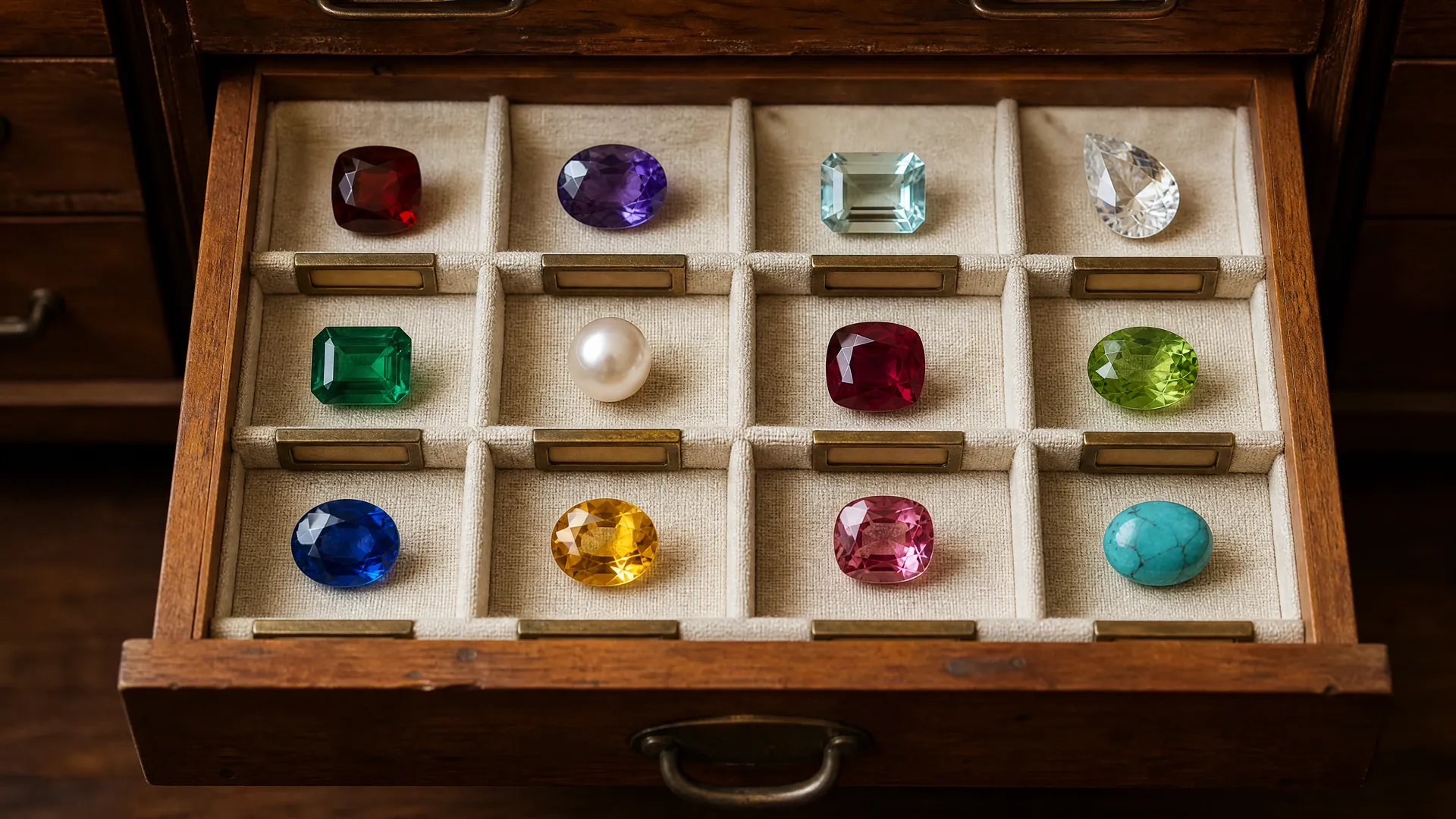
Emerald is the gem with a mining license older than most countries: Egypt's Cleopatra mines (actually worked from roughly 1500 BC, long before her) supplied the ancient world's greens for a thousand years. Spanish conquistadors hauled Colombian emeralds back to Europe in the 1500s, and Colombia's Muzo and Chivor mines still define the top of the market today. The color standard — vivid green with a blue undertone — has barely moved in three millennia.
Quick Answer: Buying Emerald - **Color above all:** vivid green with blue lean beats size, clarity, and everything else — a small vivid stone outshines a big pale one - **The jardin:** emerald's inclusions (French: garden) are expected, not flaws — eye-clean emeralds are rare and priced like it - **Oil disclosure:** nearly all emeralds are clarity-enhanced with cedar oil — minor oiling is the accepted standard; ask and expect a straight answer - **Wear plan:** Mohs 7.5-8 but brittle — pendants and earrings outlast rings
The emerald cut exists because of emerald's brittleness: the step-cut's cut-off corners reduce the stress concentrations that shatter fragile stones, and its broad open facets show color depth instead of demanding sparkle. That a rectangular cut with notched corners became an aesthetic classic is jewelry's most practical homage — engineers solving for a gem's weakness and accidentally inventing elegance.
May's stone wears like a power color: the green reads regal against gray, black, camel, and white, and unlike pastel birthstones it holds its own in a boardroom. Setting choices matter more than for hard gems — bezels and halo protectors are not just aesthetic here, they are engineering. For May's full story, the May birthstone page is the hub; our emerald clover ring is the stone set in a luck-shaped protective frame; and the green-family comparison (emerald vs peridot vs green garnet, and where the money actually goes) runs in best stone for jewelry.
Care honesty to finish: no ultrasonic, no steam, no harsh chemicals — warm soapy water and a soft brush only, because the oil enhancement and the internal fissures both dislike violence. Re-oiling after years is a routine, legitimate service. And buy the jardin with open eyes: those internal gardens are the fingerprint of a natural stone — a flawless emerald at a friendly price is either lab-grown (fine, if disclosed) or green beryl mislabeled (neither fine nor legal).
Frequently asked.
Why do emeralds have so many inclusions?,
Formation conditions: emerald crystallizes in geological chaos — hydrothermal veins and tectonic contact zones — so liquids, gases, and minerals get trapped as it grows. The trade calls the internal landscape jardin (garden) and treats it as character, not defect. Eye-clean natural emeralds are rare enough that their price quotes prove the rule.
What is emerald oiling and is it bad?,
Oiling with cedarwood oil fills surface-reaching fissures, improving clarity — it is the centuries-old, universally accepted standard, applied to nearly all emeralds. Minor oil is a maintenance-level enhancement; the disclosure line matters at the resin end (glass-filling), which is heavier treatment. A straight answer to how much oil? is a mark of a straight seller.
Why is the emerald cut rectangular with cut corners?,
Engineering inheritance: emerald is brittle, and the step-cut's notched corners relieve the stress points where rectangular gems crack on impact. The style graduated from protective measure to design classic — which is why emerald cut now describes diamonds and sapphires cut in the same shape.
Can I wear an emerald ring every day?,
Carefully, yes — Mohs 7.5-8 resists scratches, but emerald's inclusions make it brittle against knocks. Bezel settings, protective halos, and hands-off-heavy-work habits extend a ring's life indefinitely. Pendants and earrings face almost no impact and are the worry-free formats.
Where do the best emeralds come from?,
Colombia — the Muzo and Chivor mines set the world's color standard: vivid green with the blue undertone other origins chase. Zambia produces strong cooler greens, Brazil solid commercial grades. Origin affects price at the top end; color quality decides value at every level, Colombian or not.
Related Articles
A Brief History of Birthstones
From the twelve tribes of Israel to the 1912 standard that rules the modern list — the 3,500-year origin story of why we wear our birth month.
Read MoreThe Ultimate Birthstone Cleaning Guide
Keep every piece in your collection gleaming. Step-by-step methods for gold, silver, and delicate birthstones — no harsh chemicals needed.
Read MoreBirthstone Energy: A Complete Crystal Healing Guide
From root chakra grounding to crown chakra clarity, discover how each birthstone carries healing energy. Learn to activate your crystal for meditation, sleep, and daily intention.
Read More