Birthstone Ring Guide: Every Style and Setting Explained
Solitaire, halo, three-stone, bezel, prong. Our ring guide breaks down every setting style so you can choose the perfect birthstone ring.
Yueounb Editorial
Jewelry Expert
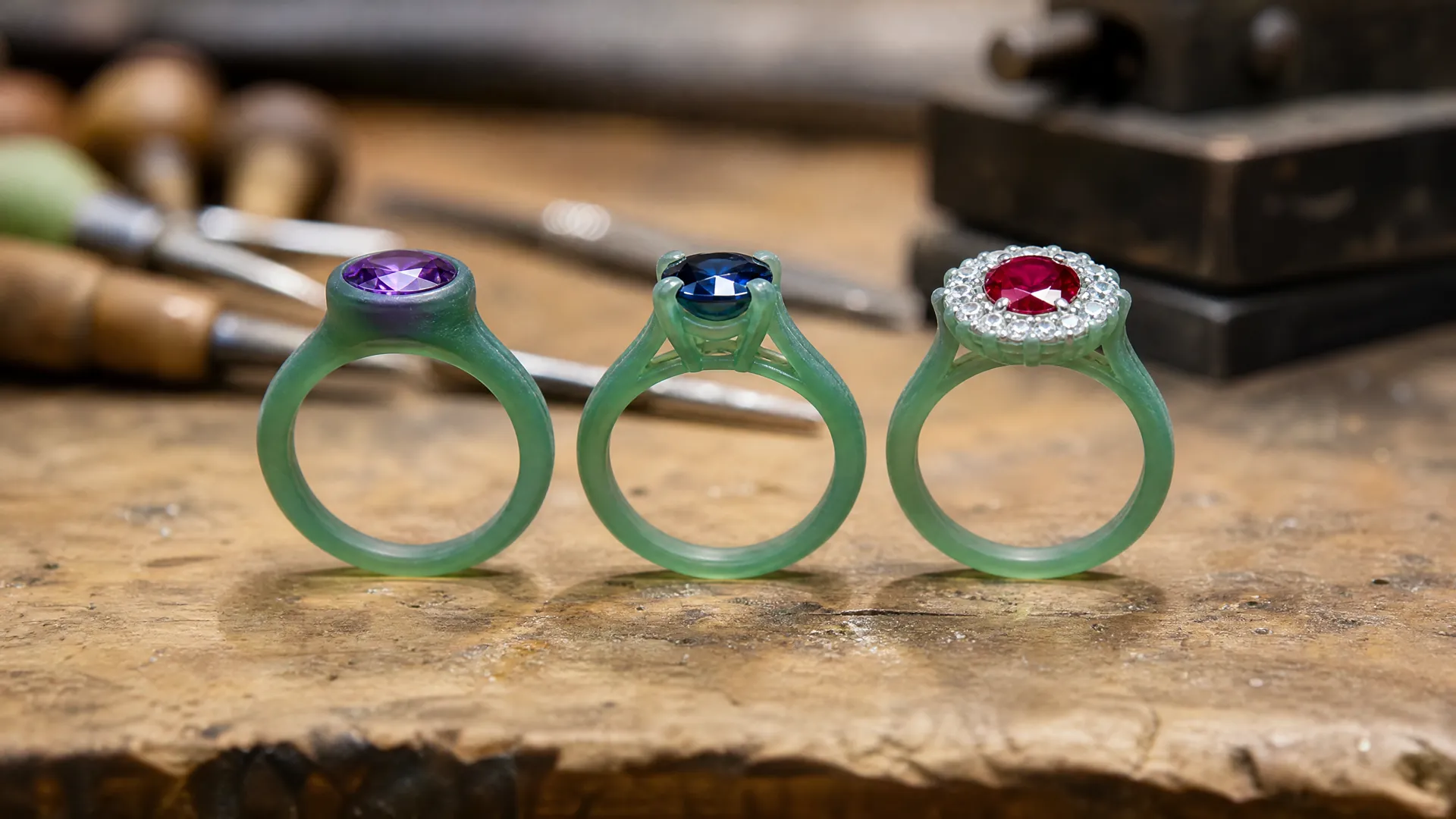
A birthstone ring is any ring set with the gemstone of your birth month — and the six styles that matter are solitaire (one stone, the classic), halo (center stone ringed by small diamonds), three-stone (past-present-future or one per child), stackable (slim bands worn together), eternity (stones all around), and signet (a flat engraved top). The style you choose decides the price, the statement, and how it is worn.
| Style | Look | Stone count | Best for | Price band |
| Solitaire | One stone, full focus | 1 | The everyday signature | $70-300 |
| Halo | Center + diamond ring | 1 + halo | Milestone gifts, maximum sparkle | $150-500 |
| Three-stone | Side by side | 3 | Moms, anniversaries, couples | $120-400 |
| Stackable | Slim bands, layered | 1 per band | Families, growing collections | $60-90 each |
| Eternity | Stones all around | 12-30 | Milestones, anniversary bands | $180-600 |
| Signet | Flat engraved top | 0-1 | Men, personalized engraving | $90-350 |
How to wear a birthstone ring — the finger question, answered honestly. Ring finger (right hand in most Western tradition): the personal-signature spot, where solitaires and three-stone pieces live. Index finger: statement rings and signets — confident, visible. Middle finger: balanced and practical for larger stones. Pinky: signets and petite stacks. Thumb: fashion-only territory. There is no wrong finger in 2026; there are only conventional readings, and knowing them lets you choose whether to follow or break them.
Stacking — the way rings are worn now. Start with one anchor (a solitaire or your birthstone band), add slim plain bands for rhythm, and mix metals deliberately rather than accidentally. The family version: one birthstone band per person — mother, father, children — worn together. The full method lives in our birthstone stacking rules guide.
Settings, ranked by stone safety. Bezel — a metal rim encircling the stone — protects best and suits soft stones (opal, moonstone, turquoise, pearl). Prong shows the most stone and suits hard gems (sapphire, garnet, ruby, diamond); expect a re-tightening every few years. Pavé adds small stones across the band; check hand-setting, not glue. Channel and flush settings hide stone edges inside the band — the sleeper-safe choice for people who work with their hands.
Which stones survive a daily ring — the honest table from the geology. Mohs 9 (sapphire, ruby): wear forever. Mohs 7-8 (quartz family, aquamarine, topaz, emerald-with-care): daily wear fine, polish eventually softens. Mohs 6 and below (moonstone, opal, turquoise, pearl): beautiful in rings but special-occasion or bezel-protected — keyboards and doorframes are their natural enemies. Your month decides your stone; the hardness decides your setting.
Sizing and buying right: measure at the end of the day (fingers swell by morning-to-evening up to half a size), size up for wide bands, and when gifting blind, borrow a ring she wears on the target finger. Resizing is routine for plain bands, riskier for eternity rings — buy those confidently sized. Full size chart with measurements is on our stackable star ring page. For everything after the box is opened — which finger, which order to stack, what daily wear does to each setting — how to wear a birthstone ring is the companion guide.
Frequently asked.
What finger do you wear a birthstone ring on?
Any finger works in 2026 — the conventional readings: ring finger for the personal signature, index for statement and signet styles, pinky for signets and petite stacks, middle for larger stones. The family-stack version spreads birthstone bands across fingers.
What is the best setting for a birthstone ring?
Bezel for soft stones (opal, moonstone, turquoise — the metal rim protects edges), prong for hard stones (sapphire, ruby, garnet — shows maximum stone), and channel or flush settings if you work with your hands.
Can you wear a birthstone ring every day?
Depends on the stone: sapphire and ruby (Mohs 9) wear forever; quartz-family stones (Mohs 7) handle daily wear with eventual re-polishing; opal, moonstone and turquoise (Mohs 6 and under) belong in protective bezel settings or rotation.
How do I clean the stone in my birthstone ring?
Soak 15-20 minutes in warm water with a drop of mild dish soap, brush gently under the stone, rinse, pat dry. Opal, pearl, turquoise, emerald: barely damp cloth only.
Related Articles
A Brief History of Birthstones
From the twelve tribes of Israel to the 1912 standard that rules the modern list — the 3,500-year origin story of why we wear our birth month.
Read MoreThe Ultimate Birthstone Cleaning Guide
Keep every piece in your collection gleaming. Step-by-step methods for gold, silver, and delicate birthstones — no harsh chemicals needed.
Read MoreBirthstone Energy: A Complete Crystal Healing Guide
From root chakra grounding to crown chakra clarity, discover how each birthstone carries healing energy. Learn to activate your crystal for meditation, sleep, and daily intention.
Read More