Birthstone Pendant Meaning: What Your Necklace Says Before You Speak
A birthstone pendant is a personal emblem: it ties a necklace to your birth month, and by extension to identity, memory, and the traits tradition has assigned
Yueounb Editorial
Jewelry Expert
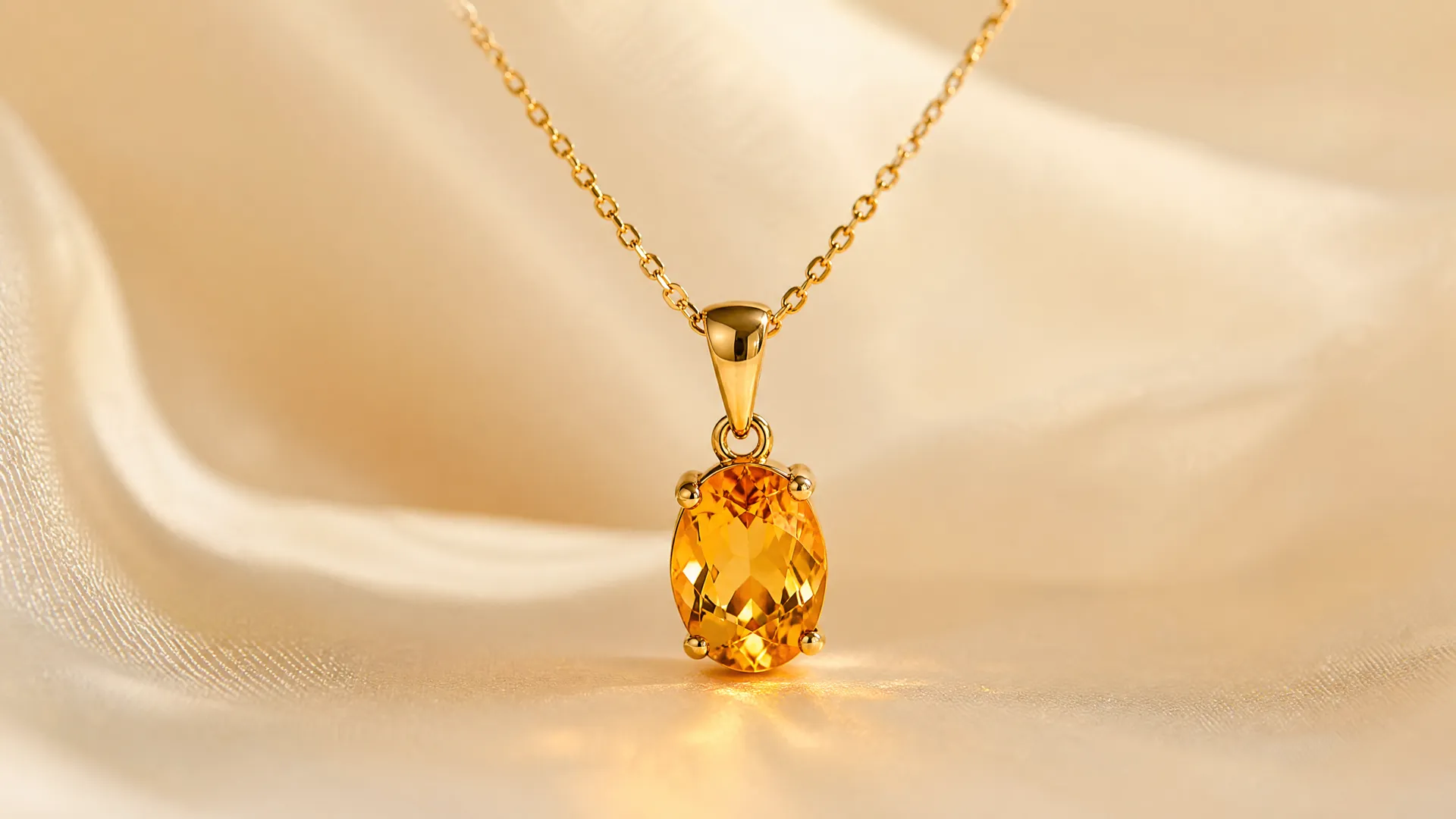
A birthstone pendant is a personal emblem: it ties a necklace to your birth month, and by extension to identity, memory, and the traits tradition has assigned to that month's gem. Unlike rings or bracelets, a pendant sits close to the heart, which is exactly why birthstone pendants carry a "worn meaning" — a quiet statement about who the pendant is for, who gave it, and why.
What does a birthstone pendant mean? A birthstone pendant symbolizes the wearer's birth month and the qualities traditionally associated with that gem — garnet's protection, amethyst's clarity, emerald's renewal, and so on. Because it hangs near the heart, it's often read as a symbol of identity, love, or remembrance. A single-stone pendant typically represents one person or one story; multi-stone pendants represent family bonds, milestones, or several loved ones at once. Common gift contexts include birthdays, births of children, Mother's Day, and memorials — a birthstone pendant is one of the few jewelry gifts that is "about someone" even when the gem itself is modest.
The Core Comparison: Single vs. Multi-Stone Birthstone Pendants.
| Single-Stone Pendant | Multi-Stone Pendant | |
| --- | --- | --- |
| Primary symbolism | One person, one story, one birth month | Relationships: family, children, milestones |
| Common design | Solitaire halo, bezel drop, heart-shaped setting | Mother's ring style, stack bars, cluster, vertical drops |
| Typical gift context | Birthday, coming-of-age, self-purchase, memorial | Mother's Day, new baby, anniversary, grandmother gifts |
| What it "says" | "This is who I am" / "This is who I remember" | "These are my people" |
| Practical note | Easier to size around a meaningful stone | Stone hardness varies — mixed gems need matched care |
Solo birthstone, worn daily: identity and self-connection. Often a self-purchase — a way of marking "this is my month, my year, my chapter." - Two stones: most often a pair — mother and child, or two partners. When set vertically, the convention (borrowed from mother's jewelry) usually places the parent's stone on top. - Three or more stones: the classic "mother's pendant" territory — children's birthstones arranged by birth order. Grandmother pendants can carry five, six, or more stones in a drop or curve. - Stone + diamond accent: the diamond reframes the birthstone as a milestone piece — commonly anniversaries and milestone birthdays, echoing the tradition of diamond as the 10th anniversary gemstone.
Of all jewelry formats, the pendant is the one cultures have most consistently tied to the chest and heart. Lockets — the pendant's closest ancestor — were historically used to hold portraits, locks of hair, and keepsakes of the departed. A birthstone pendant inherits some of that vocabulary: it's a way of *keeping someone close*.
This is why birthstone pendants dominate two emotional contexts that rings rarely serve well:
1. Memorial jewelry. Wearing a deceased parent's or child's birthstone at the heart is a widely practiced, understated form of remembrance. Darker, durable stones — garnet (January), amethyst (February), peridot (August) — are frequent choices because they withstand daily wear. 2. New-baby gifts. A pendant set with an infant's birth month, given at the birth or first birthday, is a "grows with them" gift: meaningful to the parent now, wearable by the child later.
One honest caveat: the traditional "meanings" of birthstones (love, protection, courage) are cultural and commercial inheritances — largely standardized in the modern era by the American National Association of Jewelers' 1912 birthstone list in Kansas — not scientifically established properties. Treat them as symbolism, not therapy. That's part of their charm: the meaning is real because *you* assign it, not because the mineral does anything.
Matching the Message to the Stone's Practical Nature.
Meaning matters less if the pendant can't survive being worn. Pendants actually get gentler treatment than rings (no gripping, less knocking), which widens your options — but the gem's three-factor durability profile still matters:
Everyday-wear birthstones: garnet, sapphire, ruby, diamond, spinel — hard *and* reasonably tough. September sapphire and July ruby pendants are heirloom-grade choices. - Handle-with-care birthstones: opal (October) and pearl (June) are softer and, in opal's case, sensitive to dryness and sudden temperature change. Beautiful in pendants — which shield them — but not for constant rough wear. - Treatment disclosure: many emeralds are oiled, most rubies and sapphires are heat-treated, and some blue topaz is irradiated. None of this is bad, but it's part of the stone's story — ask for it in writing when you buy, and disclose it if you ever resell or pass the piece down.
For month-specific symbolism and care, start from your month's page — for example January garnet, June pearl, or December turquoise/tanzanite/zircon.
Frequently asked.
What does wearing a birthstone pendant mean?
Three honest layers: the calendar fact (this stone belongs to your birth month — a tradition standardized by jewelers in 1912 from much older roots), the folklore layer (each stone carries its own legend — garnet the traveler's guardian, amethyst the sobriety stone), and the personal layer (who gave it, or why you chose it). Most wearers mean the third layer; the first two give it depth.
Can I wear a birthstone pendant that isn't my month?
Yes — the tradition has no police. The three legitimate reasons people do: wearing a loved one's month (a child's stone at the collarbone), wearing a meaning they want (rose quartz for love, regardless of calendar), and wearing an heirloom. The only rule with teeth is factual: know which month the stone represents, so the story you tell about it is true.
Related Articles
A Brief History of Birthstones
From the twelve tribes of Israel to the 1912 standard that rules the modern list — the 3,500-year origin story of why we wear our birth month.
Read MoreThe Ultimate Birthstone Cleaning Guide
Keep every piece in your collection gleaming. Step-by-step methods for gold, silver, and delicate birthstones — no harsh chemicals needed.
Read MoreBirthstone Energy: A Complete Crystal Healing Guide
From root chakra grounding to crown chakra clarity, discover how each birthstone carries healing energy. Learn to activate your crystal for meditation, sleep, and daily intention.
Read More