The Best Birthstone Bracelets, Ranked by What Actually Survives Daily Wear
A birthstone bracelet is the one piece of birthstone jewelry that takes more punishment than any other — it sits on your wrist, knocks against desks, doorknob
Yueounb Editorial
Gemologist
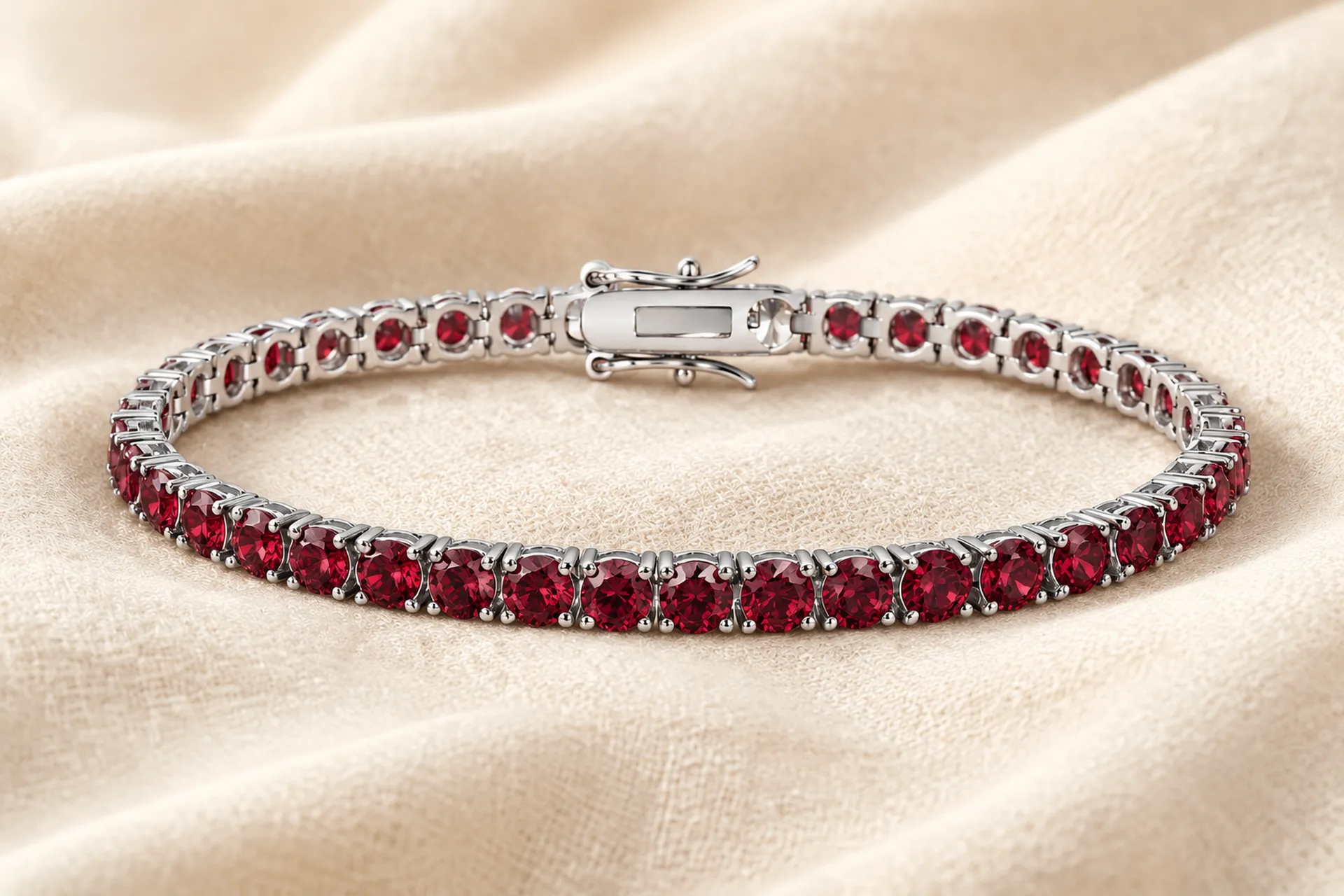
A birthstone bracelet is the one piece of birthstone jewelry that takes more punishment than any other — it sits on your wrist, knocks against desks, doorknobs, and steering wheels all day. So the "best" birthstone bracelet depends less on trend and more on durability data: hardness (scratch resistance), toughness (chip resistance), and stability (how the stone handles heat and household chemicals). Our verdict: sapphire (September), ruby (July), and diamond (April) are the clear winners for everyday bracelets; pearl (June), opal (October), and emerald (May) should be reserved for occasional-wear or protective settings.
| Category | Winner | Why |
| --- | --- | --- |
| Best overall everyday birthstone bracelet | September sapphire | Hardness 9, excellent toughness, heat-stable — survives a decade of wrist wear |
| Best budget everyday option | August spinel or July ruby (small stones) | Spinel hits 8 hardness at a fraction of sapphire pricing; small rubies resist chipping |
| Best "mom bracelet" configuration | Bezel-set 2–3 mm stones, one per child | Bezel edges absorb impact; small stones resist chipping far better than large ones |
| Avoid for daily wear | June pearl, October opal, May emerald | Soft, porous, or fracture-prone — all three degrade under normal bracelet abuse |
A ring touches surfaces maybe a few dozen times a day. A bracelet — especially a tennis-style or bangle that rotates freely around the wrist — hits desks, countertops, car doors, and laptop edges hundreds of times a week. GIA's own care guidance implicitly acknowledges this: bracelets are routinely listed alongside rings as the jewelry categories most exposed to impact, versus pendants and earrings which sit largely protected.
That means the durability math matters more here than anywhere else. Jewelers evaluate a gemstone's wearability on three separate axes, and confusing them is the single most common consumer mistake:
Hardness (Mohs scale, 1–10): resistance to scratching. Diamond is 10, sapphire/ruby 9, topaz 8. - Toughness: resistance to chipping and cracking. This is where hardness misleads people — diamond is the hardest material known but only has *good* toughness, and a hard blow to a thin girdle can chip it. Jadeite and nephrite jade are *exceptional* in toughness despite modest hardness. - Stability: resistance to heat, light, and chemicals. Emerald's traditional oil fillings, pearl's organic calcium carbonate, and opal's water content all create stability vulnerabilities that no amount of hardness fixes.
A stone that scores well on all three is a bracelet stone. A stone that scores well on only one is a pendant stone.
Here is the honest tier list, built from published GIA gem reference data on hardness and toughness, with treatment status flagged where it matters.
April diamond (Mohs 10, good toughness): The benchmark. The tennis bracelet exists *because* diamond can take decades of wrist friction. Cost is the only real objection. - September sapphire (Mohs 9, excellent toughness): Arguably better value than diamond for bracelets — the 1-point hardness gap is irrelevant in daily life, and sapphire's toughness rating is excellent. Corundum is also highly heat-stable, so routine jewelry repair (soldering near the stone) carries less risk. Most commercial sapphires are heat-treated to improve color; this treatment is permanent and does not degrade with wear, but it should be disclosed on any listing worth trusting. - July ruby (Mohs 9, excellent toughness): Same mineral family as sapphire (corundum), same performance. Heat treatment is near-universal in mid-market ruby; glass-filled fracture treatment is another matter entirely — glass-filled ruby should never go into a bracelet, because the filler can degrade with ultrasonic cleaning and impact.
August spinel (Mohs 8, good toughness): criminally underrated bracelet stone. No routine treatments — most spinel on the market is unheated, which matters to buyers who want disclosure simplicity. - December turquoise vs. tanzanite vs. topaz vs. zircon: December's modern lists include tanzanite, zircon, and turquoise, and these are *wildly* different in durability. Tanzanite (Mohs 6.5–7, poor toughness due to strong cleavage) and turquoise (Mohs 5–6, often polymer-impregnated, sensitive to acids and even skin oils over time) are poor bracelet choices. Zircon (Mohs 6.5–7.5, brittle) chips easily. If December is your month and you want a bracelet, blue topaz — Mohs 8 — is the practical pick, with one caveat: most blue topaz is irradiation-treated, a permanent and stable treatment, but the stone still has distinct cleavage and can chip on a hard knock. - March aquamarine (Mohs 7.5–8, good toughness): solid, though its pale color reads best in larger stones, which raises cost and impact exposure. - June alexite or November topaz/citrine (Mohs 8 / 7): citrine (Mohs 7) is a workhorse at budget prices. Topaz at Mohs 8 scratches well but has perfect cleavage — one bad knock on a prong tip and it splits. - January garnet (Mohs 6.5–7.5 depending on species, fair-to-good toughness): mid-pack. Most almandine garnets are untreated, which is a disclosure plus.
May emerald (Mohs 7.5–8, notoriously poor toughness): almost all emeralds have surface-reaching fissures, and the vast majority are fracture-filled with oil or resin. Filler can be damaged by heat, ultrasonic cleaners, and even prolonged soaking. A bezel-set emerald bracelet worn twice a month: fine. Daily wear: you are gambling. - June pearl (Mohs 2.5–4.5 on the Mohs scale of its aragonite component, poor durability against acids): pearls are organic, porous, and attacked by perfume, sweat, and household vinegar-tier acidity. A pearl birthstone bracelet must be "last on, first off" — and even then, daily wear will dull the nacre within years. - October opal (Mohs 5.5–6.5, poor toughness, with water content varying by opal type): sudden temperature changes and dehydration are genuine risks. Opal belongs in earrings and pendants, not on a wrist. - February amethyst (Mohs 7, good toughness but…): fair mid-tier; the real risk is that amethyst's purple can fade with prolonged UV exposure over years. Fine for daily wear, just don't sunbathe in it weekly.
Special mention — May chrysoprase and August sardonyx (alternative birthstones): sardonyx at Mohs 6.5–7 with good toughness is a legitimate carved-cameo bracelet material, historically proven by centuries of intaglio wear.
Durability gets you the stone; the *setting* determines whether the stone survives. This is where bracelet design earns its money:
Tennis/line bracelets (uniform stones in a flexible line): the classic, and the best format for Tier 1 stones. Choose stones under 0.15 ct each in shared-prong or bezel settings — smaller stones mean less lever arm per impact. A sapphire tennis bracelet is, in our editorial opinion, the single best value in fine birthstone jewelry: the September page on our site covers stone sourcing in more depth at September birthstone. - Bangles (rigid): the *worst* format for fragile stones and the *best* for diamonds — rigidity transmits full impact to the stone. A rigid emerald bangle is a repair invoice waiting to happen; a rigid diamond bangle is a family heirloom. - Bezel-set stations on a cable chain: the all-around winner for Tier 2 and even Tier 3 stones. A full metal rim around each stone absorbs edge impacts that would chip a prong-set stone. If your heart is set on an opal or emerald bracelet, bezels plus occasional wear is the honest formula. - Charm/tag bracelets: best for adding children's birthstones over time — one charm per child, replaceable individually if damaged. This modular format is inherently lower-risk than a fixed line.
Under $150: sterling silver with genuine garnet, citrine, amethyst, or blue topaz in bezel settings. This tier is where honesty matters: "lab-created" stones are real gemstones (same crystal structure and chemistry) and are a legitimate way to get sapphire-tier durability at this price — just make sure the listing says lab-created or lab-grown, not the vaguer "synthetic-sounding" euphemisms. Avoid dyed howlite sold as "turquoise" at this tier; genuine stabilized turquoise costs more. - $150–$600: 14K gold vermeil or solid 10–14K gold with genuine spinel, aquamarine, or small accent sapphires. This is the sweet spot for a first fine birthstone bracelet. - $600+: solid 14K or 18K gold, natural sapphire or ruby tennis styles, or diamond-accent designs. At this level, insist on treatment disclosure in writing — a natural unheated sapphire commands a large premium over heat-treated, and you deserve to know which you bought. Our July birthstone page goes deeper on ruby treatment grading.
The multi-stone "family birthstone bracelet" is the most popular gift configuration we see, and it's also where durability mismatches hurt most — because a mom bracelet gets *daily* wear and mixes stones of different hardness in one piece. The failure mode: the softest stone in the set fails first, and replacing one stone in a matched line is harder than buying the original.
1. 2–3 mm round stones, one per child, all bezel-set. Small stones resist chipping geometrically better than large ones; bezels absorb impacts. 2. Match the setting to the weakest stone, not the strongest. If one child is a June baby, the whole bracelet should be built to pearl-tolerant standards — and honestly, consider swapping that child's stone to alexandrite or moonstone alternatives, or mounting the pearl as a slightly recessed cabochon. 3. Cable chain over bangle. Flex absorbs shock that rigidity transmits. 4. Add stones as the family grows via a charm format rather than re-setting a fixed line.
Take it off for cleaning, gym, gardening, and sleeping — the last one is under-rated; sheets and mattress edges abrade settings over years. - No ultrasonic cleaning for emerald, pearl, opal, or any fracture-filled stone. Warm water, mild dish soap, soft toothbrush for everything else. - Store individually. A diamond bracelet stored loose with a pearl bracelet will scratch the pearl — Mohs 10 against Mohs 3 is not a fair fight. - Have prongs checked annually by a jeweler; bracelet prongs wear faster than ring prongs because of constant rotation friction.
Related Articles
A Brief History of Birthstones
From the twelve tribes of Israel to the 1912 standard that rules the modern list — the 3,500-year origin story of why we wear our birth month.
Read MoreThe Ultimate Birthstone Cleaning Guide
Keep every piece in your collection gleaming. Step-by-step methods for gold, silver, and delicate birthstones — no harsh chemicals needed.
Read MoreBirthstone Energy: A Complete Crystal Healing Guide
From root chakra grounding to crown chakra clarity, discover how each birthstone carries healing energy. Learn to activate your crystal for meditation, sleep, and daily intention.
Read More