60th Birthday Gemstone: Why Diamond Leads the List
A 60th birthday is traditionally celebrated with diamond — a pairing borrowed from the diamond-designated 60th wedding anniversary. Four features that matter, honest alternatives, and the more personal answer: her own birthstone.
Yueounb Editorial
Gemologist
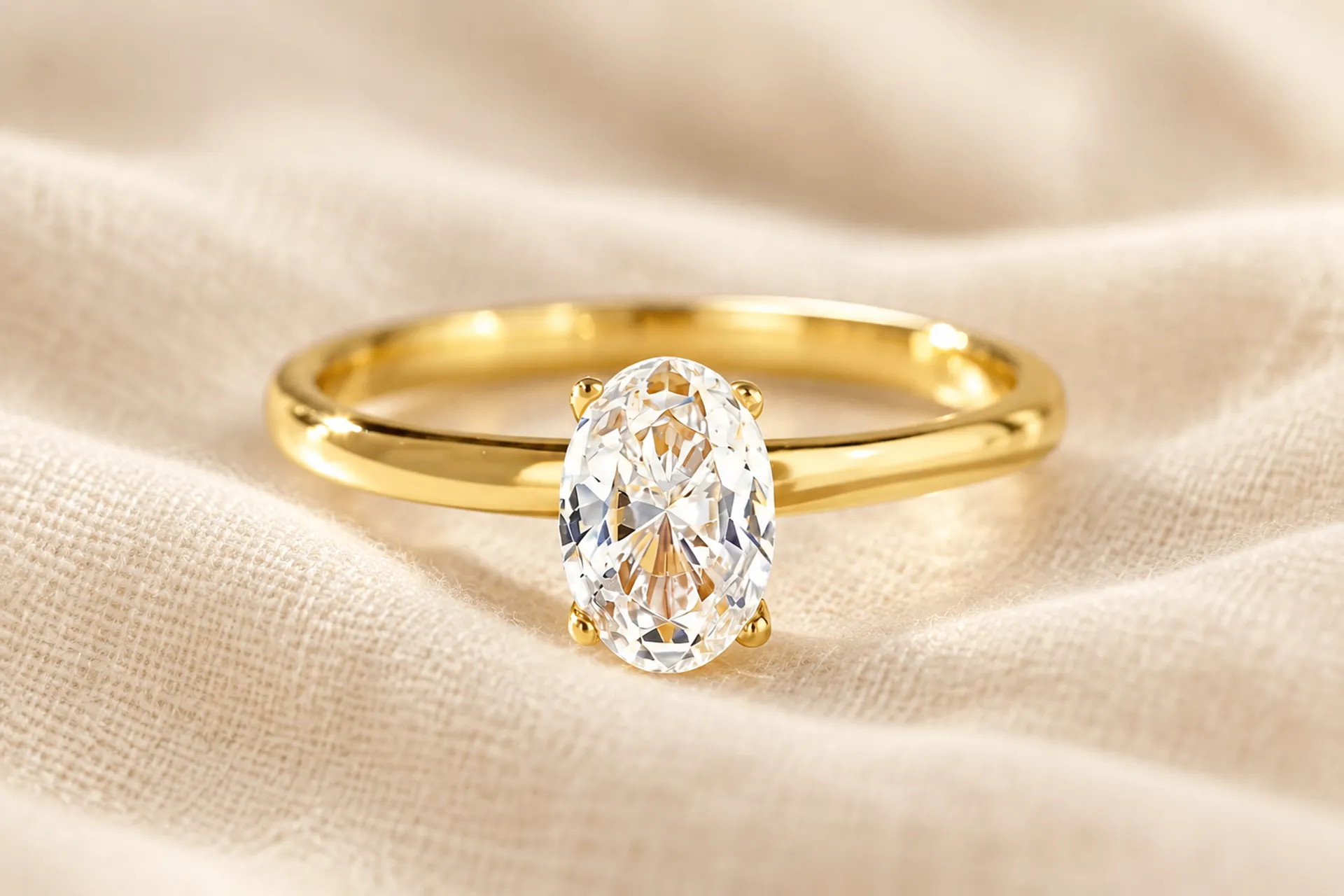
A 60th birthday is traditionally celebrated with diamond, a pairing borrowed from the diamond-designated 60th wedding anniversary—though it's worth knowing that no official "birthday gemstone" list assigns a stone to age 60 the way birthstone lists assign stones to months. The person's actual birth-month stone (garnet, amethyst, aquamarine, and so on) remains the more personal choice, and diamond works as the milestone overlay. Honest takeaway: for a 60th birthday gift, diamond is the convention, the birthstone is the sentiment, and combining both—or choosing a well-built alternative like white sapphire or moissanite—is a legitimate decision, not a compromise.
Quick Answer: The 60th Birthday Gemstone at a Glance
| Question | Short Answer |
| --- | --- |
| What is the gemstone for a 60th birthday? | Diamond, by convention borrowed from the 60th (diamond) wedding anniversary. There is no official age-to-stone list. |
| Is a 60th birthday stone different from a 60th anniversary stone? | No—both point to diamond. See our [60th anniversary gemstone guide](/anniversary-gemstones/60) for the anniversary framing. |
| Best non-diamond option? | White sapphire (hardness 9, no special care) or the person's own birth-month stone. |
| Typical budget for real diamonds? | Certified natural diamonds in the half-to-one-carat range are a four-figure purchase; lab-grown equivalents cost a small fraction of that. |
Why Is Diamond the 60th Birthday Stone?
The association between the number 60 and diamond comes from the anniversary tradition, not a birthday one. Queen Victoria's Diamond Jubilee in 1897, marking 60 years on the throne, is widely credited with popularizing "diamond" as the emblem of a sixtieth milestone, and the modern anniversary-gift lists that followed cemented diamond as the 60th wedding anniversary stone in both the American traditional and modern lists.
Birthday gift lists simply borrowed the logic: if 60 years of marriage earns a diamond, 60 years of life can too. That's a reasonable cultural convention, but it's not a rule with a governing body behind it. There is no GIA or AGTA publication that assigns gemstones to birthdays by decade. What this means practically: you are free to treat diamond as the expected answer, and equally free to deviate without breaking any tradition—because the tradition itself is young and borrowed.
This distinction matters when you're shopping. Marketing copy that claims "diamond is the official 60th birthday gemstone" is overstating the case. Our own 60th anniversary page keeps the two occasions deliberately separate, because the buyer's questions are different: anniversary shoppers are usually replacing or adding to a wedding set, while birthday shoppers are often children or grandchildren buying for someone whose taste they know well.
Which Stone Is More Personal Than Diamond?
If the 60th birthday person has worn jewelry for decades, you already know something important: people in their sixties have established taste. A 60-year-old born in January may have worn garnet for decades and feel genuine affection for it; a September baby may love sapphire precisely because it's their stone.
Pairing the two ideas is often the strongest play—a birthstone piece with a diamond accent. A garnet halo ring, an amethyst pendant with diamond shoulders, or a peridot ring framed in diamonds says "we know your stone, and we know the milestone." This is also where budget flexibility comes in: birthstones like garnet, amethyst, citrine, and peridot are dramatically more affordable than diamond, so the same budget buys a larger, richer-looking center stone plus genuine diamond accents rather than a barely-visible solitaire.
For reference, the twelve birth-month pages on this site—such as April's diamond page or January's garnet page—cover each stone's durability and care details if you're weighing a birthstone-led gift.
Which Four Diamond Features Matter Most?
If you're going with diamond, spend your money on durability and cut, not carat vanity.
Durability is real but not absolute. Diamond sits at 10 on the Mohs scale—the hardest natural material—but hardness measures scratch resistance, not shatter resistance. Diamonds have perfect cleavage in four directions and can chip if struck at the wrong angle against a hard edge. For a 60-year-old recipient who may eventually hand the piece down, a bezel or half-bezel setting protects the girdle better than a high prong setting. Diamond's famous durability is hardness plus toughness plus stability — GIA's guide to gem durability breaks the three properties apart.
Cut drives appearance more than carat. A well-cut 0.70 ct diamond will out-sparkle a poorly cut 1.00 ct at the same price. GIA grades cut for round brilliants only (Excellent to Poor); fancy shapes get proportion assessments instead. If you're buying online, prioritize cut grade and be skeptical of any listing that doesn't disclose it for a round stone.
Treatment disclosure is mandatory. Diamonds can be laser-drilled to remove dark inclusions or fracture-filled to improve clarity; both must be disclosed under FTC guidelines, and GIA won't issue full grading reports on fracture-filled stones. Lab-grown diamonds (HPHT or CVD) are chemically the same material and must be sold as laboratory-grown—they're a legitimate, honest choice for this budget, not a fake.
Certificate or walk away. For any diamond above roughly 0.30 ct, insist on a grading report from GIA or AGS. Other labs exist with looser standards, and an inflated "SI2" from a lenient lab can cost you a full clarity grade in reality.
What If Diamond Doesn't Fit the Budget?
Three legitimate paths exist, and none of them is a consolation prize.
White sapphire. Hardness 9, no cleavage-plane fragility to speak of in daily wear, completely untreated on the market, and a fraction of diamond's price. The honest tradeoff: sapphire's refraction gives it a softer, glassier sparkle rather than diamond's sharp fire. For someone who wants a white stone that lasts generations and doesn't care about sparkle mechanics, it's arguably the more practical stone.
Moissanite. Lab-made (natural moissanite is vanishingly rare), hardness 9.25, and more dispersive than diamond—some buyers love the extra rainbow flash, others find it too showy. It costs a small fraction of diamond and is always disclosed as moissanite, so there's no deception risk. Note that "forever brilliant" and similar trade names are branding, not grading.
Their birthstone, full stop. Sometimes the milestone number matters less than the person. A 60th birthday amethyst for a February-born who has worn purple her whole life will be worn more than any diamond she didn't choose.
One durability caution on alternatives: avoid opal (hardness ~5.5–6.5, high water content, prone to crazing in dry conditions) and emerald (typically fracture-filled with oils or resins, which need periodic re-treatment) for a daily-wear 60th birthday piece unless the recipient specifically loves them.
A Practical Buying Checklist for a 60th Birthday Gift
1. Confirm the occasion's framing. Birthday, not anniversary—so a right-hand ring, pendant, earrings, or bracelet often fits better than an engagement-style solitaire. 2. Set a real budget before browsing. The $500–$2,000 band buys excellent lab-grown diamond, large white sapphire, or rich birthstone pieces with diamond accents. 3. Check the setting's protectiveness. Bezel and lower-profile settings suit hands that garden, cook, and grip golf clubs. 4. Ask about resizing. Ring sizes commonly change after 60; buy from a seller with a resizing policy. 5. Keep the certificate and any treatment disclosure in writing. It matters for insurance and for the eventual next generation.
Frequently asked.
Is diamond the official gemstone for a 60th birthday?
No official body assigns gemstones to birthdays by age. The diamond-at-60 convention is borrowed from the 60th wedding anniversary, itself popularized after Queen Victoria's 1897 Diamond Jubilee. Treat diamond as the customary choice, not a rule—and feel free to pair it with or substitute the person's birth-month stone.
What's the difference between a 60th birthday gemstone and a 60th anniversary gemstone?
Both traditions point to diamond, but the occasions differ. Anniversary buyers often coordinate with an existing wedding set; birthday buyers—frequently children or grandchildren—choose standalone pieces like pendants or right-hand rings. See our dedicated 60th anniversary guide for anniversary-specific framing.
What are good diamond alternatives for a 60th birthday?
White sapphire (Mohs 9, typically untreated, very durable) and moissanite (Mohs 9.25, lab-grown, more sparkly than diamond) are the two leading alternatives. Both are honestly marketed and far cheaper than natural diamond. The recipient's own birthstone is a third, often more sentimental option.
How much should I spend on a 60th birthday gemstone gift?
There's no standard figure—US fine-jewelry gift spending varies widely by household. A useful benchmark: a half-carat certified natural diamond is typically a four-figure purchase, while lab-grown and alternative stones cost a small fraction as much, letting you prioritize setting quality and a protective bezel over raw carat weight.
Related Articles
A Brief History of Birthstones
From the twelve tribes of Israel to the 1912 standard that rules the modern list — the 3,500-year origin story of why we wear our birth month.
Read MoreThe Ultimate Birthstone Cleaning Guide
Keep every piece in your collection gleaming. Step-by-step methods for gold, silver, and delicate birthstones — no harsh chemicals needed.
Read MoreBirthstone Energy: A Complete Crystal Healing Guide
From root chakra grounding to crown chakra clarity, discover how each birthstone carries healing energy. Learn to activate your crystal for meditation, sleep, and daily intention.
Read More