Three Stone Rings: Past, Present, Future, Set in Geometry
Three stones, one sentence — the trilogy ring says time itself in metal. Proportions, meanings beyond romance, and how to read the settings honestly.
Yueounb Editorial
Jewelry Expert
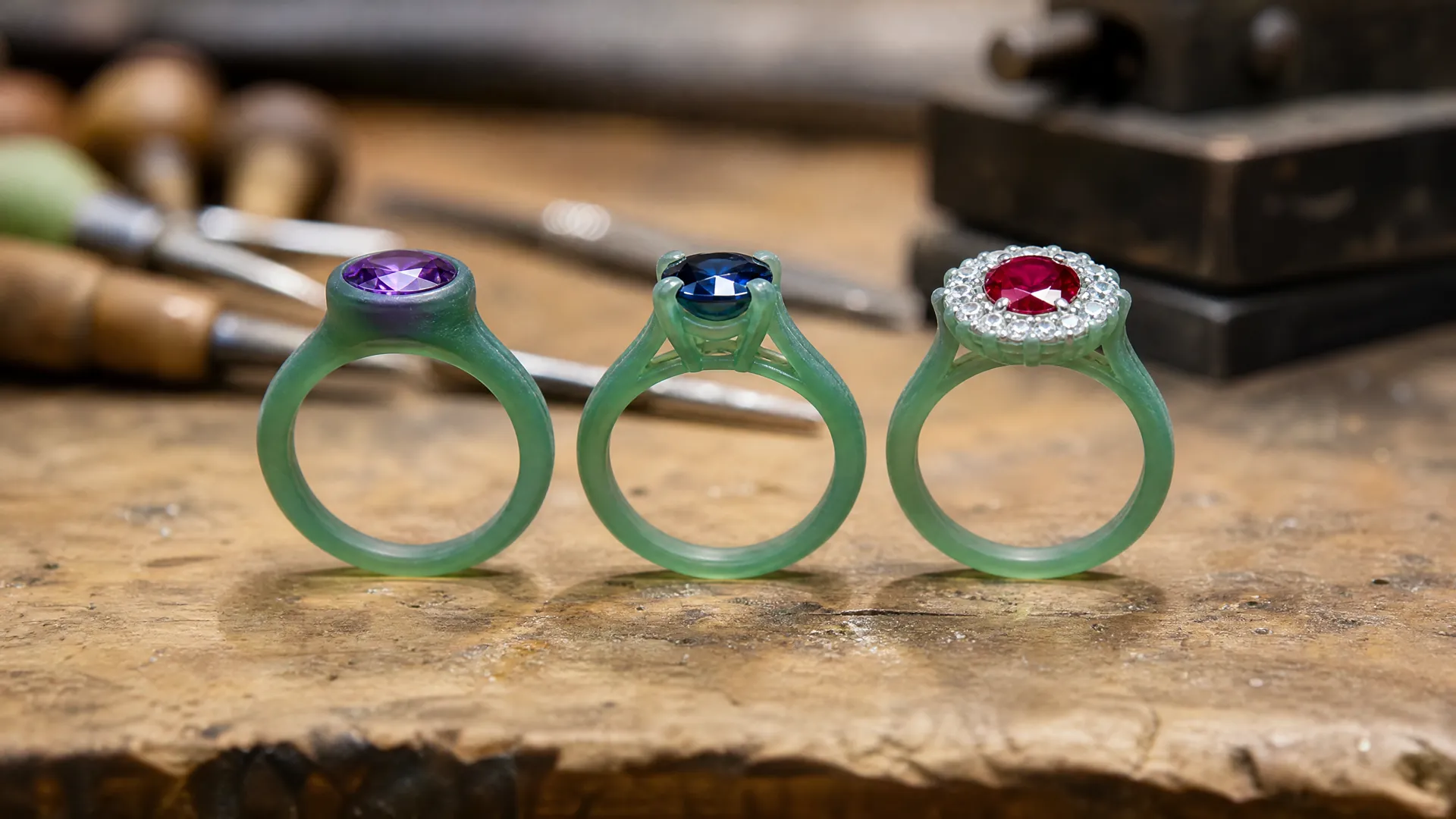
The three stone ring — trilogy ring, trinity ring — is compressed storytelling: a larger center stone flanked by two smaller stones, and the geometry IS the message. Past, present, future is the standard reading, but the format carries other sentences just as fluently: three children, three promises, mother-daughter-grandmother, or simply the number three that so many cultures loaded with completion.
Quick Answer: Reading the Design - **Proportions:** classic trilogy runs roughly 50-70% larger center stone; a 1:1:1 trio reads as three equals (family format), not a trilogy - **Stone language:** same stone three times = timeline; three different stones = three people or three months — any combination is a legitimate sentence - **Settings:** side stones at the same height frame the center; graduated heights add profile interest and catch light differently in motion - **Shape pairing:** round centers read timeless; oval or pear centers with round sides elongate the hand
What the format does optically is underappreciated: the two side stones feed light INTO the center. A trilogy reads bigger than its carat weight — the eye totals three stones and assigns the sum to the composition. That is why trilogy rings punch above their price at every budget: the design itself multiplies presence, no enhancement tricks required.
The gifting grammar is broader than engagement. Romance owns past-present-future, but a mother receiving a trilogy with one stone per child is receiving the family rendered as jewelry; grandparents get the three-generation version; anniversaries claim the timeline reading as renewal. The same ring is a different gift depending only on what the giver says when the box opens — which makes trilogy the most economical meaningful format in jewelry: one design, infinite sentences.
Buying notes that matter: check that side stones match each other exactly (mismatched sides is the discount-line tell), confirm the center sits level with its frame at equal height, and for daily wear prefer lower profiles that clear pockets and gloves. Our ruby three-stone ring carries July in the classic format, the garnet and topaz two-stone necklace is the neck-side sibling of the same grammar, and birthstone rings inventories stackable companions that keep the trilogy the sentence's verb.
Frequently asked.
What does a three stone ring mean?
Past, present, and future is the dominant reading for romantic gifts. Equally legitimate sentences: one stone per child for a mother, three generations for a grandmother, three promises, or three significant months. The trilogy format carries any three-part meaning the giver assigns — the design asks for a sentence, not a specific one.
What is the difference between a trilogy and a trilogy-plus?
The pure trilogy is three stones only. Adding a pavé band turns it into a trilogy-plus — more sparkle, busier read, higher daily-knock surface. The pure format reads more architectural and suits working hands better; the plus version is the occasion piece. Both are honest; they answer different lives.
Should all three stones be the same gemstone?
Same stone three times = a timeline, and it is the classic. Three different stones = three people or three months — the family format, and the more personal gift when a mother wears her children birth months in one ring. Mixed stones need matched size logic: keep the center visibly dominant so the composition still reads as one sentence.
Why does a three stone ring look bigger than a solitaire of the same price?
Optical summation — the eye totals all three stones and credits the sum to the whole composition. Two side stones at a fraction of the center cost add surface area, light entry points, and width to the silhouette. The trilogy design multiplies presence; solitaire spends the same budget on one concentrated stone.
Which center shape works best in a trilogy?
Round centers with round sides read timeless and symmetric. Oval, pear, or marquise centers elongate the finger and modernize the format. Emerald-cut centers with trapezoid sides are the architectural read. The pairing rule that never fails: side stones should echo the center cut family, not argue with it.
Related Articles
A Brief History of Birthstones
From the twelve tribes of Israel to the 1912 standard that rules the modern list — the 3,500-year origin story of why we wear our birth month.
Read MoreThe Ultimate Birthstone Cleaning Guide
Keep every piece in your collection gleaming. Step-by-step methods for gold, silver, and delicate birthstones — no harsh chemicals needed.
Read MoreBirthstone Energy: A Complete Crystal Healing Guide
From root chakra grounding to crown chakra clarity, discover how each birthstone carries healing energy. Learn to activate your crystal for meditation, sleep, and daily intention.
Read More