Wedding Band Guide: Matching Rings, Matching Meaning
Wedding bands are the only jewelry most people never take off. Metal choices, matching vs contrast, engraving, and how two rings become one decision.
Yueounb Editorial
Jewelry Historian
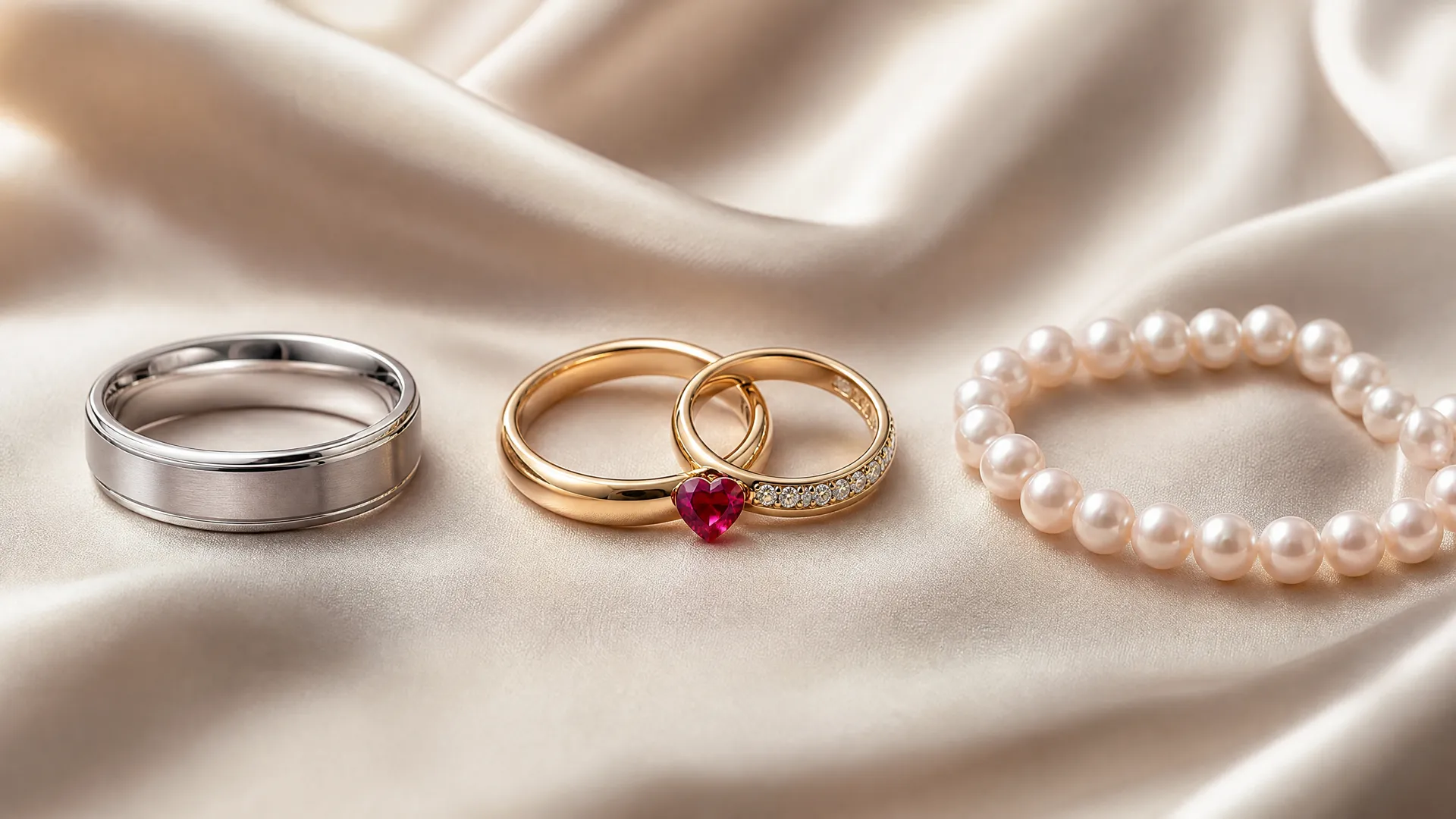
The wedding band is jewelry reduced to its minimum: a circle, worn permanently, chosen jointly. Everything else — stone, sparkle, statement — is optional. That reduction is why the decision feels disproportionately heavy: you are choosing the one object that will outlast phones, cars, jobs, and probably several hand sizes, and choosing it with another person whose hands are not yours.
Quick Answer: The Decisions - **Metal:** match the engagement ring when stacked (mixed metals read intentional only if both partners commit to the mix); sterling silver and gold vermeil bands deliver the permanence look at honest prices - **Matching vs mirroring:** matching = identical bands; mirroring = same width and finish, his and hers sizes — mirroring is the modern compromise - **Width:** 2-4mm suits most women stacking a band beside a ring; 4-6mm is the classic men width; under 2mm reads delicate and dents easier - **Comfort fit:** rounded interior costs slightly more and saves years of edge pressure — worth it on a never-off ring
The history is worth one minute: the band tradition runs through ancient Egypt (circles = eternity), Rome (iron, then gold, legally the bride price receipt), medieval Europe (the gimmel ring — two interlocking bands united at the ceremony, an anniversary gift market five centuries early), and WWII, when men away from home adopted bands to carry the marriage visibly — the moment men wedding jewelry went from rare to standard.
Practical honesty dominates a purchase worn daily for decades. Depth of comfort fit, allergy profile (nickel-sensitive wearers do better in 925 silver or solid gold than plated fashion metal), and occupation matter more than brand. Engraving — a date, initials, a phrase — turns a commodity circle into a document; inside the band it survives unseen for the life of the marriage. Width consistency between partners who want matching bands matters more than identical size, since the same width reads as a pair across different hand scales.
For stacking with an engagement ring, the band should sit flush — curved or notched bands solve the geometry when the engagement ring has a raised stone, and straight bands pair cleanly with low-profile settings. Our birthstone stack ring set is built exactly for the stack-a-story approach, the birthstone rings collection covers slim companion silhouettes, and anniversary-year stone choices run in the anniversary gemstones hub.
Frequently asked.
Should wedding bands match the engagement ring?
When stacked on the same finger, matching metal avoids visual collision — silver beside gold reads accidental unless mixed metals are a deliberate style. Matching the partner band is a separate choice: identical rings (matching) or same width-and-finish at different sizes (mirroring) both read as a pair.
How wide should a wedding band be?
Women stacking beside an engagement ring: 2-4mm. Classic wider bands: 4-6mm, the traditional proportions. Under 2mm reads delicate but dents and bends sooner on working hands. Try widths on your actual hand before deciding — the same band reads entirely different on different fingers.
What is a comfort fit band?
A band with a rounded interior instead of a flat one — the dome shape reduces contact pressure, which matters on a ring never taken off. It costs slightly more and feels noticeably better by year three. On rings worn occasionally the difference is minor; on a wedding band it is the upgrade worth taking.
What should we engrave inside wedding bands?
The three durable formats: the date, the initials, or a short phrase (under 25 characters fits most bands). Inside engraving survives for the life of the ring, invisible to everyone but the wearer — which is exactly the point. Coordinate the engraving across both bands so the pair reads as one document.
Can wedding bands include birthstones?
Yes — one band per person carrying the other person month is the quiet romantic version; both months alternating around the circle is the full story format. Birthstone bands pair naturally with plain partner bands, keeping the set balanced. Our stack ring set exists precisely for that reading.
Related Articles
A Brief History of Birthstones
From the twelve tribes of Israel to the 1912 standard that rules the modern list — the 3,500-year origin story of why we wear our birth month.
Read MoreThe Ultimate Birthstone Cleaning Guide
Keep every piece in your collection gleaming. Step-by-step methods for gold, silver, and delicate birthstones — no harsh chemicals needed.
Read MoreBirthstone Energy: A Complete Crystal Healing Guide
From root chakra grounding to crown chakra clarity, discover how each birthstone carries healing energy. Learn to activate your crystal for meditation, sleep, and daily intention.
Read More