October Birthstone Jewelry: Opal vs. Tourmaline
October has two birthstones: opal and tourmaline. One is high-maintenance and hypnotic; the other takes daily wear. The core comparison, care rules, and three gift scenarios.
Yueounb Editorial
Jewelry Expert
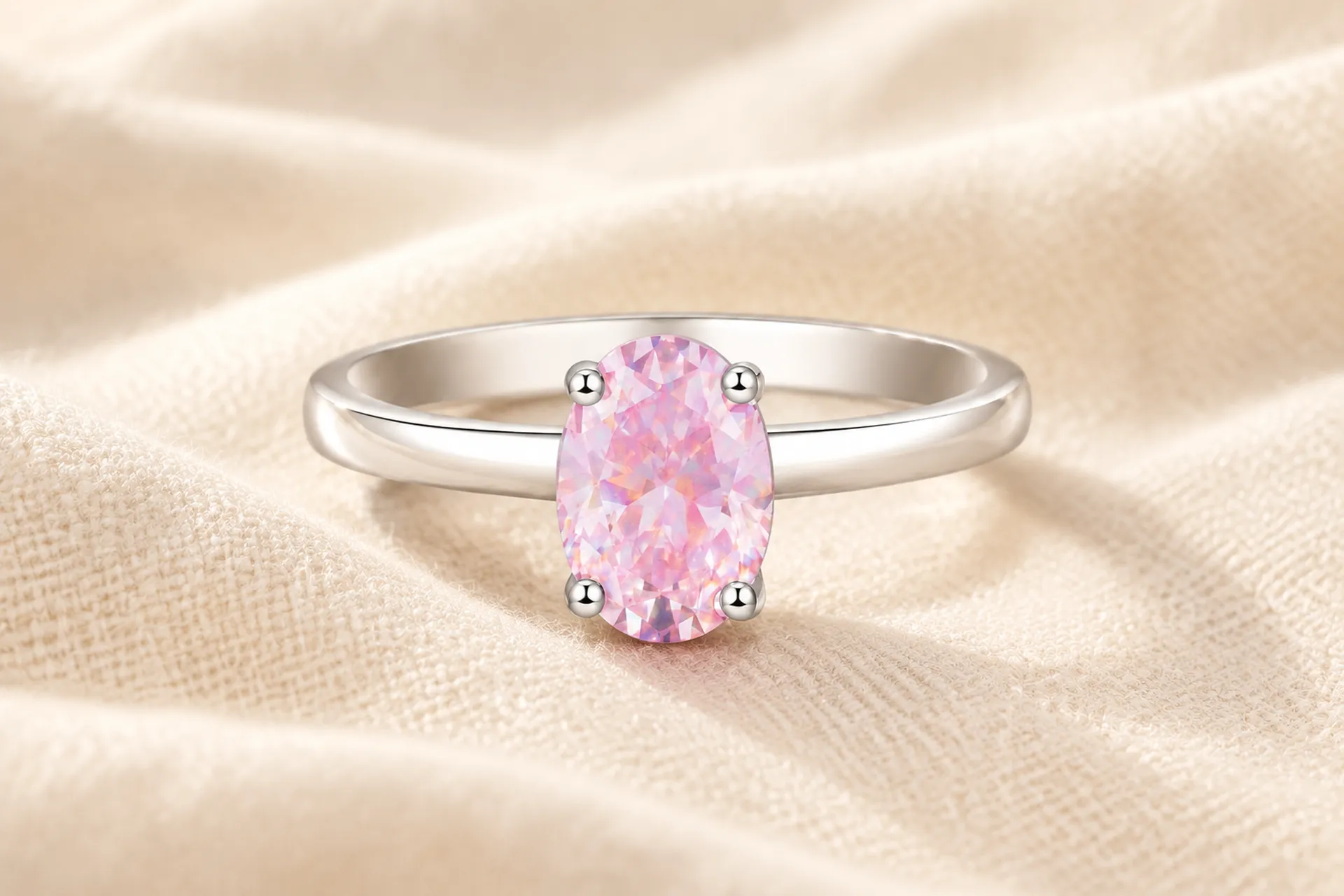
Quick Answer: October has two birthstones: opal and tourmaline. Opal (hardness 5.5–6.5 on the Mohs scale) is softer, contains up to 20% water, and needs gentler care — best for pendants and earrings. Tourmaline (hardness 7–7.5) is tougher and better suited for everyday rings. For a durable October birthday gift that's worn daily, choose tourmaline; for a striking occasional-wear piece, choose opal. Hardness numbers throughout follow the International Gem Society's Mohs chart.
Opal or Tourmaline: Which Should You Choose?
| Factor | Opal | Tourmaline |
| --- | --- | --- |
| Mineral | Hydrated silica (SiO₂·nH₂O) | Complex borosilicate |
| Mohs hardness | 5.5–6.5 | 7–7.5 |
| Durability concern | Brittle; can crack (craze) if it dries out | Generally durable; some varieties are heat-sensitive |
| Water content | Typically 3–10% | None |
| Color range | Play-of-color in nearly every hue; also common opal (no play-of-color) | One of the most colorful minerals — pink, green, blue, bi-color, tri-color |
| Common treatments | None routine; some dyed or smoke-treated matrix opal | Heat (lightening dark stones, e.g., rubellite to pink); irradiation for some colors |
| Best jewelry types | Pendants, earrings, occasional-wear rings | Everyday rings, bracelets, any setting |
| Typical care | Avoid ultrasonic cleaners, extreme heat, prolonged dryness | Warm soapy water; avoid ultrasonic for fracture-filled or heavily included stones |
Why Is Opal High-Maintenance?
Opal's beauty comes from its structure: billions of ordered silica spheres diffract light into flashes of color (play-of-color). But the same hydrated structure that creates this effect makes opal vulnerable in three ways: Opal's formation and properties are documented in GIA's Gem Encyclopedia.
1. Hardness. At 5.5–6.5, opal can be scratched by everyday dust, which often contains quartz (hardness 7). 2. Brittleness. Opal has poor toughness and can chip or crack on impact — a real risk for rings worn during daily activities. 3. Stability. Because opal contains water, extreme heat or very dry storage conditions can cause crazing (a network of fine surface cracks). Jewelers sometimes store opals with a damp cloth for this reason.
None of this means opal jewelry is off-limits. It means placement matters: an opal pendant or stud earrings face far less impact than a ring, and solid (not doublet or triplet) opals in protective settings like bezels can hold up well with reasonable care. Disclose treatment status when buying: doublets and triplets are layered assembles glued together — attractive and affordable, but they should never be soaked in water.
Why Does Tourmaline Win for Everyday Wear?
Tourmaline is the practical sibling. With hardness of 7–7.5 and reasonable toughness, it handles daily wear in rings and bracelets far better than opal. Its color range is arguably unmatched: pink tourmaline (a classic October choice), green verdelite, deep red rubellite, blue indicolite, and the famous watermelon tourmaline with a pink core and green rim.
- Heat sensitivity. Some tourmaline colors are produced or altered by heat treatment; prolonged high heat can also affect existing color. Normal wear is fine, but avoid torch work during resizing unless your jeweler knows the stone. - Inclusions. Heavily included or fracture-filled tourmaline should avoid ultrasonic cleaners. Warm, soapy water is the safe default. - Irradiation. Some colored tourmalines on the market have been irradiated. This is a stable, accepted treatment but worth asking about for full disclosure.
Pink tourmaline has a particularly strong October pedigree: it was named an October birthstone alongside opal on the 1912 modern list adopted by the American jewelry industry, and reaffirmed on the updated 1952 list.
How Do You Choose Between Them?
1. Daily-wear ring (October birthday, active lifestyle): Go tourmaline. A bezel-set pink or green tourmaline ring survives typing, gym sessions, and handwashing far better than opal.
2. Statement occasional piece: Go opal. Nothing matches a fine black opal or Ethiopian hydrophane opal's play-of-color for drama. Just advise the recipient to remove it before showers, cooking near heat, and cleaning.
3. Budget under ~$150: Tourmaline delivers more size and color per dollar in durable settings. Opal at this price is often doublets, triplets, or low-grade material — not wrong, but understand what you're buying.
Bonus angle — combining both: Watermelon tourmaline slices and opal pair beautifully in stackable designs, letting an October birthday celebrate both stones without durability trade-offs in ring position.
Where to Learn More
For deeper detail on each stone's history, sources, and buying grades, see our month page: October Birthstone Guide.
Frequently asked.
Which October birthstone is more expensive, opal or tourmaline?
At the top end, fine black opal (primarily from Lightning Ridge, Australia) commands some of the highest per-carat prices of any colored gemstone. Mid-market pricing favors tourmaline, which offers more consistent supply. Everyday gift-quality pieces in both stones typically overlap in the same price band.
Can opal be worn as an engagement ring?
It's possible but not recommended for daily lifelong wear. Opal's 5.5–6.5 hardness and poor toughness mean high scratch and chip risk. If the couple loves the look, tourmaline in a similar color, or an opal reserved as a special-occasion "second ring," is a more practical path.
Is pink tourmaline natural or treated?
Both exist on the market. Some pink tourmaline is naturally colored; some results from heat-treating darker reddish material to lighten it. Heat treatment in tourmaline is permanent and accepted, but a reputable seller should disclose it — always ask. ---
Related Articles
A Brief History of Birthstones
From the twelve tribes of Israel to the 1912 standard that rules the modern list — the 3,500-year origin story of why we wear our birth month.
Read MoreThe Ultimate Birthstone Cleaning Guide
Keep every piece in your collection gleaming. Step-by-step methods for gold, silver, and delicate birthstones — no harsh chemicals needed.
Read MoreBirthstone Energy: A Complete Crystal Healing Guide
From root chakra grounding to crown chakra clarity, discover how each birthstone carries healing energy. Learn to activate your crystal for meditation, sleep, and daily intention.
Read More