November Birthstone Jewelry: Citrine vs. Topaz Compared
November has two birthstones: citrine and topaz — one of the best value months of the year. The core comparison, durability facts, and how to choose between the warm and the cool.
Yueounb Editorial
Jewelry Expert
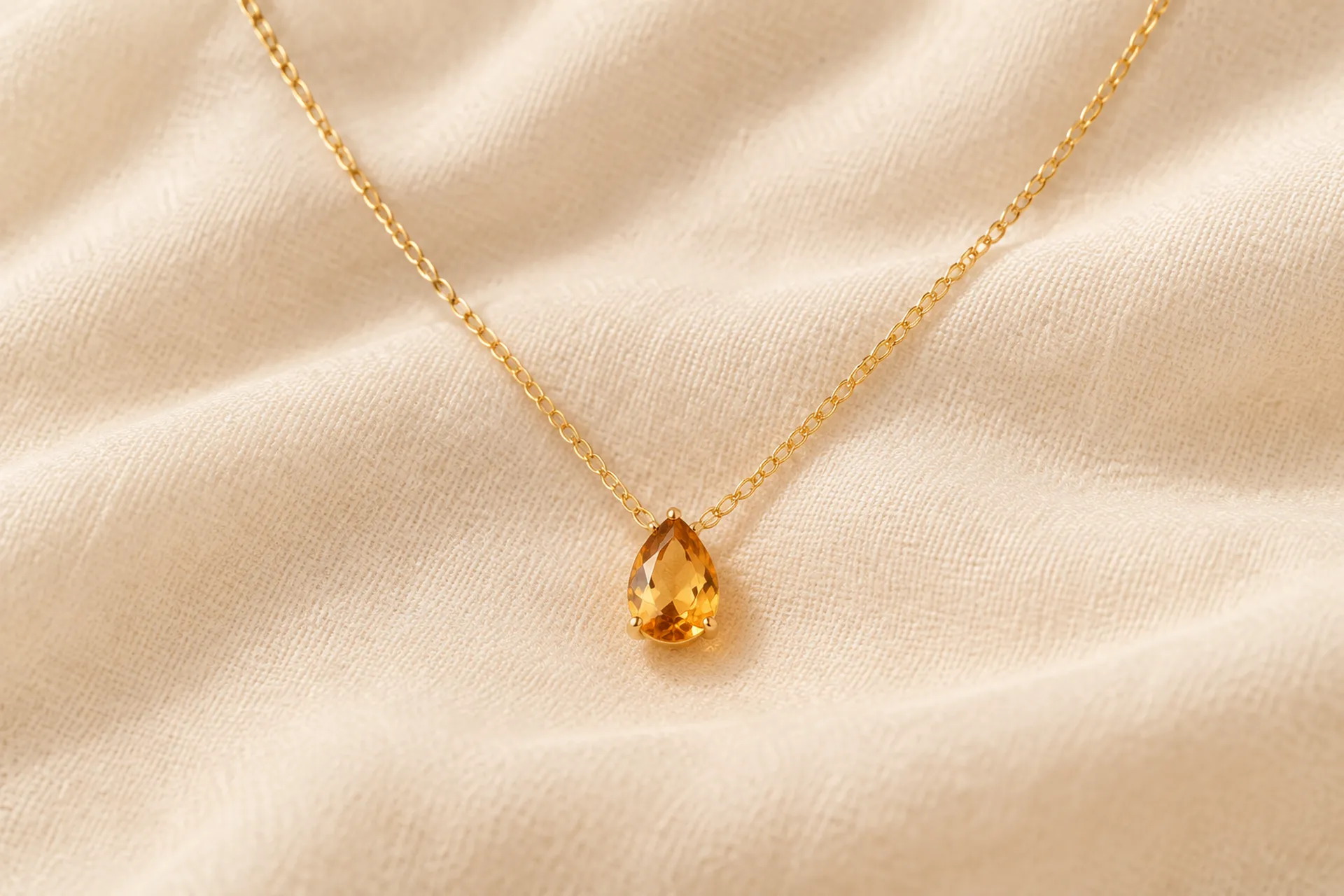
Quick Answer: November birthstone has two birthstones: citrine and topaz. Citrine is the yellow-to-orange variety of quartz (Mohs 7), prized for warm golden hues and very affordable prices — quality stones often start under $50. Topaz (Mohs 8) offers a wider color range, including the popular smoky-blue "London blue" and Swiss blue treated stones. For everyday rings, topaz resists scratches better; citrine is tougher and less likely to chip. Both are budget-friendly compared to most other birthstones. Both stones sit high on the International Gem Society's Mohs chart.
November Has Two Birthstones — Which Is Yours?
November is one of only three months (alongside June and December) with two officially recognized birthstones, a designation established by the American Gem Society and the modern birthstone list standardized in 1957 by the Jewelry Industry Council. The pairing exists largely for practical reasons: both stones occur in warm autumn tones, and historically, citrine and yellow topaz were so visually similar that they were routinely confused before modern gemological testing. Per-stone treatment and grading notes live in GIA's Gem Encyclopedia.
Today, that overlap is a gift for November-born shoppers. You get two genuinely different stones at two very different points on the color wheel — citrine locked into warm yellows and ambers, topaz spanning nearly every hue including the cool blues citrine can never achieve. This guide compares them across color, durability, treatment status, and price so you can choose with confidence.
Citrine or Topaz: What's the Difference?
| Factor | Citrine | Topaz |
| --- | --- | --- |
| Mineral family | Quartz (SiO₂) | Topaz (Al₂SiO₄(F,OH)₂) |
| Mohs hardness | 7 | 8 |
| Common colors | Yellow, golden, orange, "Madeira" reddish-orange | Blue (treated), colorless, yellow, pink, sherry, imperial orange |
| Typical treatments | Almost always heat-treated (usually from amethyst or smoky quartz) | Blue tones are universally irradiated + heat-treated |
| Price (1–2 ct calibrated stone) | Consistently low | Blue topaz similar; imperial topaz the rare exception at many times the price |
| Best for | Everyday pendants, earrings, budget-friendly rings | Statement rings, blue-hue lovers, gifting |
(Prices vary by cut, clarity, and seller; treat figures as directional ranges, not quotes.)
How Durable Are Citrine and Topaz?
A common misconception: topaz's Mohs 8 means it's "tougher" than citrine. Not quite. Durability has three components:
- Hardness (scratch resistance): Topaz wins — 8 vs. 7 on the Mohs scale. Topaz resists daily abrasion better in rings. - Toughness (chip/crack resistance): Citrine wins decisively. Topaz has perfect basal cleavage — a single sharp blow in the wrong direction can split the stone cleanly in two. Citrine, like all quartz, has no cleavage and only brittle fracture, making it more forgiving of knocks. - Stability: Both are stable to normal wear. However, citrine's color can fade with prolonged direct sun exposure — a documented concern for amethyst-family quartz — so store citrine jewelry away from windowsills. Topaz is light-stable but should never be steam-cleaned or exposed to sudden heat.
Practical takeaway: For a ring worn daily, topaz needs protective settings (bezel or higher prongs); citrine chips less but scratches more. For earrings and pendants, both are excellent.
Treatment Disclosure: What You're Actually Buying
This matters more with November's stones than most:
- Citrine on the market today is almost always heat-treated, typically from baked amethyst or smoky quartz. Natural untreated citrine is rare and mostly comes from Bolivia. Treatment is permanent and stable — no special care needed — but ethically, sellers should disclose it. - Blue topaz (Swiss blue, London blue, sky blue) does not occur naturally in commercially viable amounts; virtually all of it is colorless topaz irradiated and heated. The treatment is permanent, and U.S.-sold material is regulated for radioactivity safety by federal agencies. "London blue" refers to the darkest, greenish-smoky blue tone — a favorite for men's jewelry and November shoppers who prefer cool tones over warm ones. - Imperial topaz — the orangey-pink to golden-red variety, historically from Ouro Preto, Brazil — is the one November stone that commands serious premiums and is often untreated.
Why November Birthstone Jewelry Is a Bargain
Citrine and blue topaz sit at the affordable end of the birthstone spectrum. Citrine's supply is plentiful (Brazil is the dominant source), and calibrated stones in standard cuts keep costs low — a full citrine pendant or stud set routinely retails for well under $100. This makes November one of the best months for larger-carat statement pieces: a 5-carat citrine is attainable for what a half-carat ruby would cost.
The exception again is imperial topaz, which competes with much pricier gems. If budget is the priority, citrine or treated blue topaz delivers maximum visual impact per dollar.
How Do You Choose Between Them?
- Warm autumn palette / golden tones: citrine, especially Madeira-orange hues - Cool blues, or matching a cool skin tone / wardrobe: London or Swiss blue topaz - Daily-wear ring on a modest budget: citrine in a protective setting - A gift echoing autumn skies or a December-adjacent blue: blue topaz - Heirloom-quality splurge: imperial topaz with treatment disclosure
Frequently asked.
Is citrine or topaz better for an everyday November birthstone ring?
For scratch resistance, topaz (Mohs 8) outperforms citrine (Mohs 7). But topaz has perfect cleavage and can chip or split from a hard knock, so it needs a protective setting. Citrine is tougher against impacts but scratches more easily. For heavy daily wear, citrine in a bezel setting is the more forgiving choice.
Are blue topaz and citrine natural colors?
Blue topaz is virtually always irradiated and heat-treated — natural blue topaz is extremely rare in commerce. Most commercial citrine is heat-treated from amethyst or smoky quartz. Both treatments are permanent and safe to wear, but reputable sellers disclose them.
How much does November birthstone jewelry cost?
It's among the most affordable months. Quality citrine jewelry often retails from $30–$150, and blue topaz pieces similarly, with larger statement citrines remaining budget-friendly. Imperial topaz — the rare orange-pink variety — is the exception, the exception, commanding many times the per-carat price of its blue cousin. --- Explore our full November birthstone guide for curated citrine and topaz jewelry.
Related Articles
A Brief History of Birthstones
From the twelve tribes of Israel to the 1912 standard that rules the modern list — the 3,500-year origin story of why we wear our birth month.
Read MoreThe Ultimate Birthstone Cleaning Guide
Keep every piece in your collection gleaming. Step-by-step methods for gold, silver, and delicate birthstones — no harsh chemicals needed.
Read MoreBirthstone Energy: A Complete Crystal Healing Guide
From root chakra grounding to crown chakra clarity, discover how each birthstone carries healing energy. Learn to activate your crystal for meditation, sleep, and daily intention.
Read More