November Birthstone

Citrine

Sunshine you can wear.

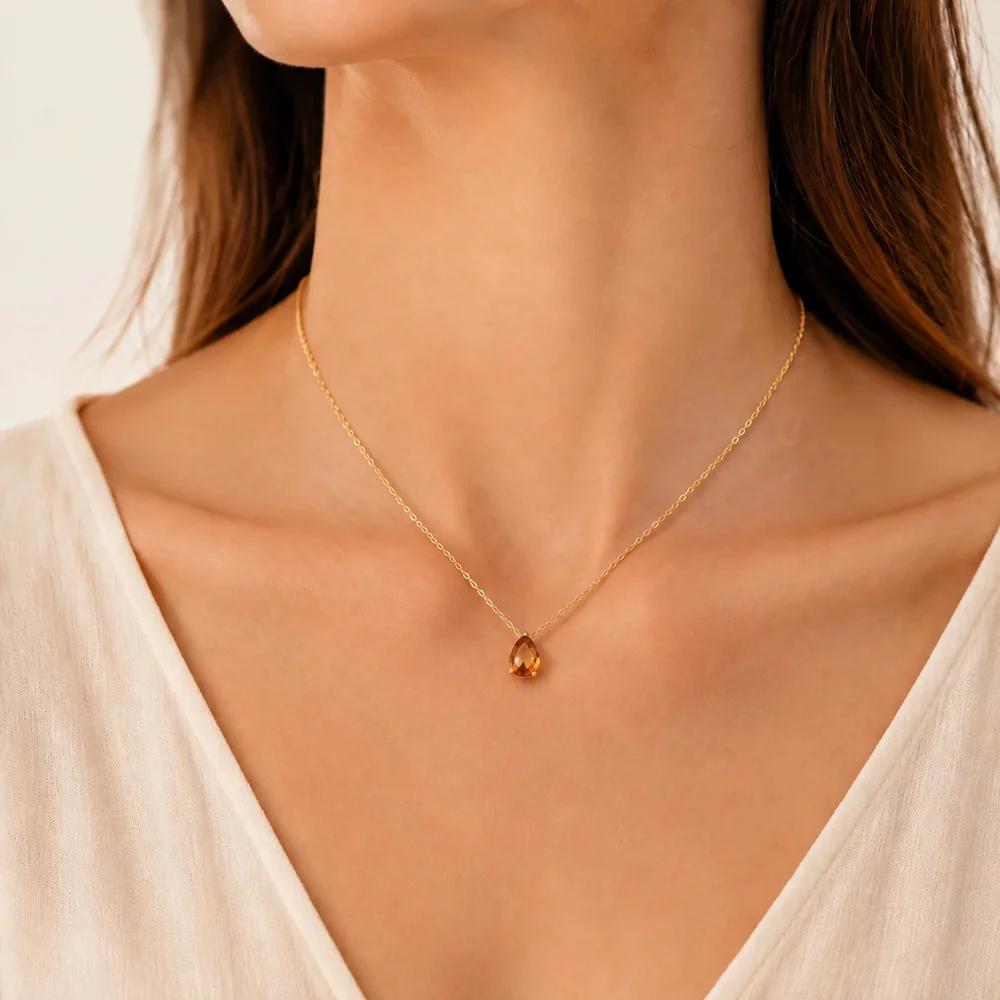
November's birthstone is Citrine (or Topaz) — a gemstone symbolizing abundance, warmth, and a sunny disposition. It rates 7 on the Mohs hardness scale and is the traditional stone for November birthdays, set in handcrafted necklaces, rings, earrings and bracelets.

AbundanceWarmthJoy
Citrine ($) — November birthstone

Primary Stone

Citrine

Mohs Hardness

7

Symbolizes

Abundance · Warmth · Joy

Alternative November Birthstone

Topaz

November Citrine Jewelry

4 handcrafted pieces for November babies.

November Birthstone Gifts for Her

November birthstone gifts carry one clear message: I know your month, I know your stone. A Citrine necklace is the classic November gift for her — personal, everyday-wearable, and impossible to regift. For a mom, choose a 2-stone or 3-stone design that pairs her Citrine with her children's birthstones; for a grandmother, family pieces hold 4, 5 or even 6 stones — one per grandchild.

History & Lore of Citrine

Citrine was prized in ancient Greece and Rome for carved intaglios and rings, and Scottish weapon smiths decorated daggers with it during the Victorian era. In the Art Deco era of the 1920s and 30s it became a favorite of Hollywood jewelers, who set large citrines into bold statement pieces.

Known as the "merchant’s stone," citrine is said to attract wealth and abundance, and shopkeepers have long placed a piece in the cash register. On the body it is worn to lift the mood, dispel negativity, and carry the warmth of sunlight.

Symbolism: Abundance, warmth, and a sunny disposition.

How to Care for Citrine

Citrine is a durable quartz (7 Mohs) well suited to everyday jewelry. Its color is remarkably stable under light and heat — in fact, most commercial citrine is heat-treated amethyst or smoky quartz. Clean with warm soapy water, steam, or ultrasonic cleaners.

  • Mohs hardness: 7
  • Suitable for everyday wear depending on setting and lifestyle.
  • Store separately to avoid contact with harder stones.
Full guide: The Ultimate Birthstone Cleaning GuideShop by stone: November Birthstone Jewelry Guide

Citrine Quick Facts

Everything about November's birthstone in one place.

Mineralogy

Mineral
Quartz (Citrine) / Topaz
Chemical Formula
SiO2 / Al2SiO4(F,OH)2
Crystal System
Trigonal / Orthorhombic
Mohs Hardness
7 (Citrine) / 8 (Topaz)
Specific Gravity
2.65 / 3.49 - 3.57
Refractive Index
1.54 / 1.61 - 1.64

Buying Guide

Primary Sources

Brazil, Russia, Madagascar, Sri Lanka

Color Variations

Golden yellow, Honey amber, Smoky, Imperial topaz (pinkish)

Popular Cuts

Oval, Emerald cut, Pear, Cabochon

Best For

November birthdays, 13th (Citrine) and 4th (Blue Topaz) anniversary, Scorpio and Sagittarius, Abundance seekers

Avoid With

Prolonged sunlight (fades), Strong heat

The November Birthstone, Answered Directly

November has two official birthstones: topaz and citrine. Topaz is the original — the only November stone when the modern chart was standardized in 1912 — and citrine joined in the 1952 revision, adding a more affordable golden partner. The two share more than a month: before gemology could tell them apart, yellow citrine was sold as topaz for so long that it inherited topaz's own supposed powers. Today they are an honest pairing of contrasts — topaz at Mohs 8 with poor toughness (hard but cleavable), citrine at Mohs 7 and practically unbreakable — and November buyers choose between royal history and working-stone value.

Raw Topaz and Citrine: Two Yellows, Two Different Minerals

Topaz is an orthorhombic mineral that grows in prismatic, striated crystals — some of the largest known: Minas Gerais has produced crystals over 270 kilograms. Its defining secret is perfect basal cleavage: hardness 8 on the scratch scale, yet one sideways knock can split a crystal flat, which is why the GIA grades its toughness poor and bans it from steam and ultrasonic care. Its name carries a gemological joke — it likely comes from Topazios, the Greek island that never produced topaz at all, only peridot (the August stone our August page knows by that island's other name, Zabargad); the Sanskrit tapas, fire, is the rival etymology. The famous imperial topaz — pinkish orange — comes from Ouro Preto, Brazil, with two origin stories the GIA tells side by side: Russian czars reserving Ural pink topaz, and Emperor Pedro II's 1881 visit blessing the Brazilian mine.

Citrine is quartz — trigonal, Mohs 7, and naturally rare: the GIA is plain that most market citrine began as amethyst or smoky quartz, heated to golden or Madeira orange (a color named for the wine, not the place). The legendary source is Bolivia's Anahí mine, a Spanish-conquest dowry lost for centuries and rediscovered in the 1960s, yielding two-colored ametrine crystals from a single stone. The generous consequence for November buyers: clean citrine exists in sizes and prices topaz cannot approach — the working half of a royal pairing.

November's Two Meanings: Strength and Success

The two stones split November's portfolio of luck. Topaz is the stone of power and protection: the Greeks wore it for strength, Renaissance Europe believed it could break magic spells and dispel anger, and Indian tradition set it over the heart for long life and wisdom — emperor's jewelry, literally in the imperial topaz case. Citrine is the merchant's stone, kept in cash registers for centuries by traders who credited it with maintaining wealth — commerce's amulet rather than the court's. And the honest footnote that belongs to both: because the pre-gemology trade sold citrine as topaz, citrine was long credited with topaz's calming powers too — a case of mistaken identity becoming its own tradition. November, in short, is the month whose two stones each manage a different kind of fortune: the crown and the cashbox.

How Our Artisans Hand-Set Topaz and Citrine

Topaz dictates its own workshop rules. Every stone is oriented with its cleavage plane in mind before a facet is cut — improper faceting can split a crystal outright — and finished stones favor oval and pear outlines whose curves avoid load-bearing corners. Daily-wear pieces get hand-burnished bezels wrapping the girdle, because a hard stone with poor toughness deserves armor where it knocks; and setting work happens at the bench, never with torch heat near the stone. Citrine is the opposite client: abundant in clean, generous sizes, priced kindly enough for bold Art Deco-scale statement pieces, and forgiving at Mohs 7 — our artisans cut it big when the design asks for presence without heirloom pricing.

How to Buy November Stones Without Getting Played

The name trap comes first, because it is legal and everywhere: topaz quartz, Madeira topaz, and Brazilian topaz are all citrine wearing topaz's coat — respectable dealers disclose, unscrupulous ones do not. The hand test settles identity in a second: topaz's specific gravity (3.53) makes a same-size stone feel distinctly heavier than citrine (2.65) or glass. Topaz also shows pleochroism — shifting color as it turns — while citrine barely moves. Two more honest cautions: blue topaz belongs to December's list (November's topaz is the golden precious topaz, a common mix-up), and blue topaz itself is irradiated colorless material by routine trade practice. Prices run modest for both — citrine at ten to seventy dollars a carat even fine, golden topaz accessible — so an inexpensive stone is normal; a wrong mineral at any price is the only real failure, and a certificate settles anything the hand cannot.

Who Should Receive November's Stones

The anniversary calendar is unusually generous to November: the 4th year is blue topaz, the 13th citrine, the 23rd imperial topaz — a full arc from early marriage to the heirloom tier. The zodiac splits the same way the stones do: Scorpio (through November 21) takes topaz's strength and depth; Sagittarius (from November 22) takes citrine's sunshine. And November owns one gift window no other month can claim except May: Thanksgiving, whose harvest golds are this month's exact palette — a golden topaz or Madeira citrine piece is the hostess gift that matches the table. The regulars our shop sees: the entrepreneur opening doors (citrine, the cashbox stone), the new homeowners, the thirteenth-anniversary couple — and every November birthday who wants the story of a month that could not decide between an emperor and a merchant, so it kept both.

Handcrafted Citrine, made to be inherited.

Each piece is set by hand, one artisan, start to finish.

Shop Citrine Jewelry

Birthstone Guide

November Citrine FAQs

Everything about raw crystals, energy, handmade craft, and how to choose your citrine jewelry.

Is there a raw crystal version of citrine / topaz? Can I get uncut birthstone jewelry?

Yes. Raw citrine forms in golden-orange points, often found in the same geode clusters as amethyst. Our November designs can feature natural citrine points that preserve the stone termination geometry.

What is the energy or healing meaning of citrine / topaz?

Citrine is called the merchant stone for its association with abundance and prosperity. Crystal workers place it in the cash register, believing it carries the energy of sunlight made tangible.

How is the handmade citrine / topaz jewelry crafted?

Most commercial citrine is heat-treated amethyst. Our makers source stones with a warm, honeyed glow rather than the flat orange of over-treated material, and hand-set each one.

Who is citrine / topaz the perfect gift for?

November citrine is the gift for the entrepreneur, the new homeowner, anyone stepping into a season of expansion. Ideal for new business launches.

How can I tell if my citrine / topaz is authentic?

Natural citrine is rare. Hold it to light: natural citrine glows a soft champagne or honey gold, while over-treated material looks flatly orange.

What is the November birthstone?

November has two official stones: topaz, the original from the 1912 chart, and citrine, added in the 1952 revision as a more affordable golden partner. Both carry the month's warm gold-to-honey palette — GIA lists them as a pair, and buyers choose between topaz's royal history and citrine's working-stone value.

What color is November's birthstone?

Golden to honey orange across both stones: citrine runs lemon yellow to the rich orange-red called Madeira, and precious topaz runs warm gold, with imperial topaz adding a pinkish-orange blush at the top grade. Blue topaz belongs to December's list — November's topaz is the golden one, a common mix-up.

What is the difference between citrine and topaz?

They are different minerals that share a color and a month: topaz (Mohs 8, poor toughness, one knock can split it along its cleavage) versus citrine (Mohs 7, practically unbreakable quartz). Topaz feels heavier at the same size, shows color shift as it turns, and carries royal history; citrine is naturally rare but affordable, mostly heat-treated amethyst, and generous in size. Daily wear favors citrine; milestone value favors topaz.

Find Your Citrine Piece

Handcrafted November birthstone jewelry, made to be inherited.

Shop Citrine Jewelry