Gemstone Stud Earrings: The Starter Collection Logic
Studs are the first earring everyone owns and the last they stop wearing. Building a gemstone stud collection in the right order — months, colors, sizes.
Yueounb Editorial
Jewelry Expert
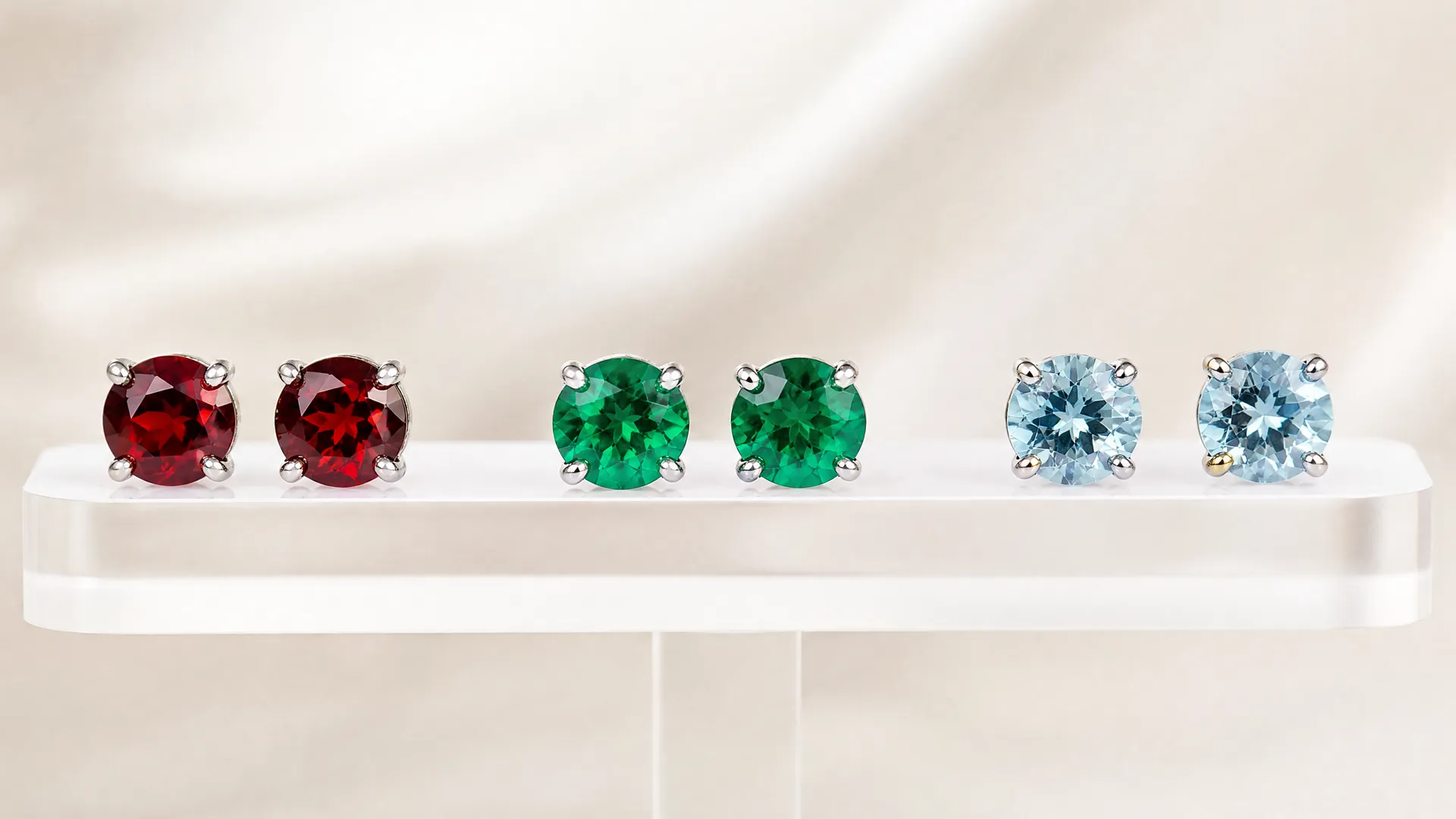
If jewelry wardrobes were built rationally, the first drawer would be all studs. They survive phone calls, headphones, helmets, hospital shifts, and toddlers — the five earring killers — while reading appropriate everywhere from a job interview to a wedding. Gemstone studs add the one thing plain metal studs cannot: color with meaning. Every month has its stone, so every person has their pair.
Quick Answer: Building the Set - **First pair:** your birth month — the no-decision decision, and the answer whenever anyone asks about them - **Second pair:** a neutral (white topaz, quartz) — the formal understudy that matches everything metal - **Third pair:** a contrast color you love wearing — this is where the collection becomes yours - **Size guide:** 4-5mm reads classic everyday; 6mm+ reads statement; under 4mm reads second-piercing - **Setting check:** bezel for hard lives, four-prong for maximum light — both honest, different trades
The starter-collection logic beats the one-pair-forever logic for a structural reason: studs are cheap enough to own in threes and small enough to store in one tin. A birthstone pair plus a neutral pair plus one wild-card pair covers roughly every occasion a real calendar generates. Buying them in that order also spreads the meaning: pair one says who you are, pair two says you planned, pair three says you chose.
Color arithmetic for gemstone studs follows skin-adjacency rules — earrings sit beside the face, where color reads harder than at the wrist or collar. Deep saturated stones (garnet, amethyst, sapphire tones) flatter most skin and read rich in every light; pale pastels wash out on video calls and need size to register. If choosing between two colors, hold each near your face in daylight: one will make the skin look brighter, and that is the pair.
Setting honesty closes the purchase: prong settings let light enter from beneath (more sparkle, more snag points), bezel settings wrap the stone edge in metal (less sparkle, near-indestructible — the correct choice for anyone whose days involve gloves, helmets, or grabbing hands). Our birthstone earrings collection inventories the month pairs, the starlight studs are the pavé neutral, and the everyday-pair logic is unpacked in necklaces for women — same three-piece wardrobe math, different body part.
Frequently asked.
What size gemstone studs should I buy first?
4-5mm — the classic everyday size that reads from across a room without shouting. It flatters every earlobe, suits every occasion, and registers on video calls. Go 6mm+ for statement presence, under 4mm for second piercings. If owning exactly one pair forever: 5mm round, bezel-set, birth month.
Are gemstone studs good for sensitive ears?
Stone is stone — sensitivity lives in the metal. 925 sterling posts suit the vast majority of nickel-sensitive wearers; verify the post, not the whole earring. Wipe posts with alcohol before first wear, and put earrings in after hairspray, not before. Bezel settings add no metal-to-ear contact difference over prongs.
Which gemstone color is most versatile?
Deep saturated tones — garnet red, amethyst violet, sapphire blue — flatter the widest range of skin tones and read rich in office and evening light alike. Pale pastels need size to register. The honest test: hold the stone near your face in daylight; whichever color brightens your skin is your versatile, regardless of theory.
Bezel or prong setting for studs?
Prongs let light enter from beneath the stone — more sparkle, but prongs snag. Bezels wrap the girdle in metal — slightly quieter light, nearly indestructible. Hard lives (gloves, helmets, children) get bezels; occasion wear gets prongs. Both settings are honest choices — the trade is sparkle against survival.
How many pairs of studs does a wardrobe need?
Three covers a real calendar: your birth month (identity + the answer to every question about them), a white neutral (formal understudy matching all metal), and one contrast color you love (the pair that makes the collection yours). Stored in one tin, chosen in that order, these three pairs outperform a drawer of twenty random pairs.
Related Articles
A Brief History of Birthstones
From the twelve tribes of Israel to the 1912 standard that rules the modern list — the 3,500-year origin story of why we wear our birth month.
Read MoreThe Ultimate Birthstone Cleaning Guide
Keep every piece in your collection gleaming. Step-by-step methods for gold, silver, and delicate birthstones — no harsh chemicals needed.
Read MoreBirthstone Energy: A Complete Crystal Healing Guide
From root chakra grounding to crown chakra clarity, discover how each birthstone carries healing energy. Learn to activate your crystal for meditation, sleep, and daily intention.
Read More