Zodiac Jewelry Guide: How to Choose Stones by Star Sign, Element, and Style
Zodiac jewelry uses gemstones matched to your astrological sign rather than your birth month.
Yueounb Editorial
Gemologist
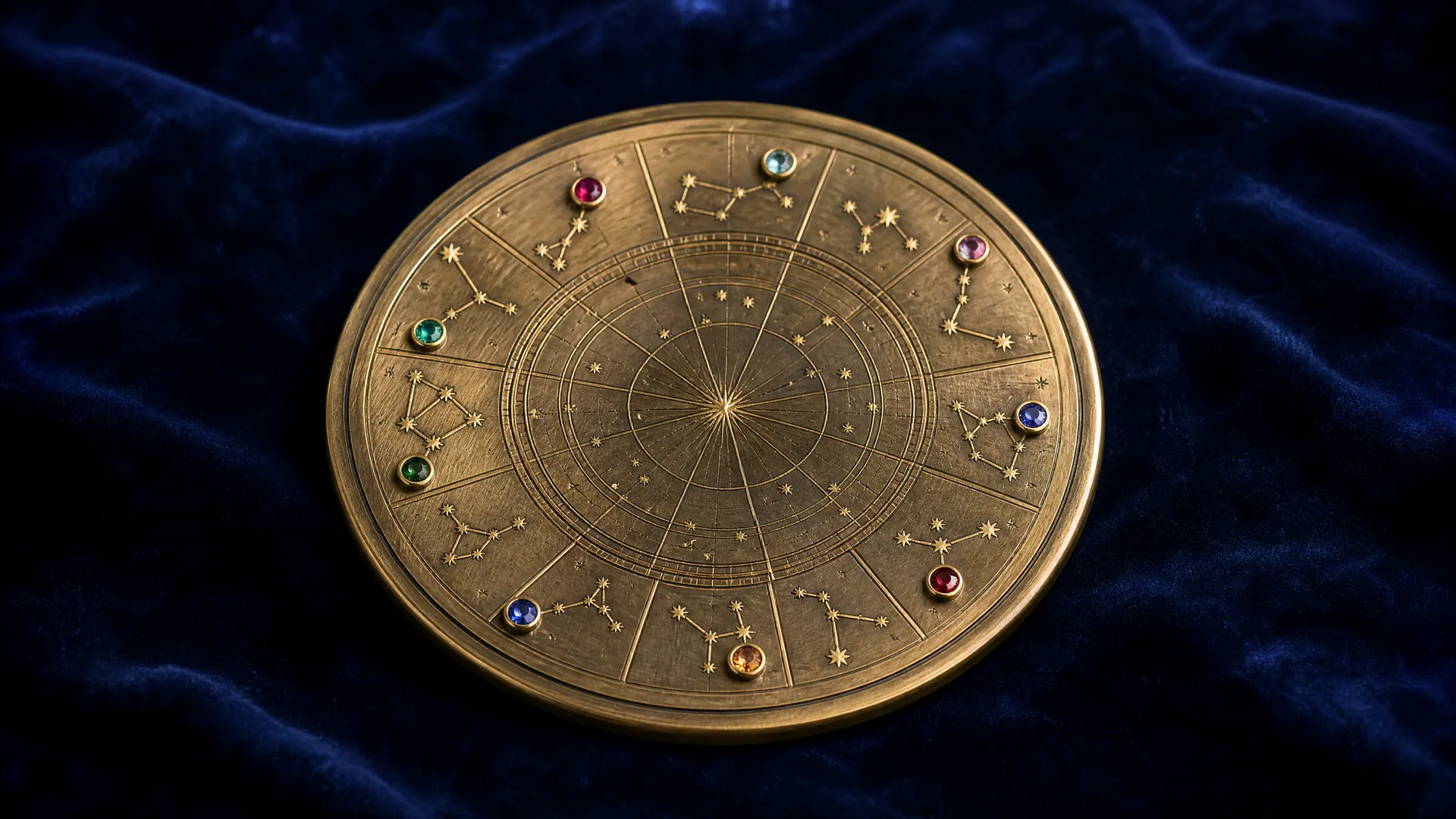
Zodiac jewelry uses gemstones matched to your astrological sign rather than your birth month. While traditional birthstones follow the calendar month you were born in, zodiac stones follow the twelve 30-degree sectors of the sun's path — so a March 5 Pisces and a March 25 Aries would wear different stones. This guide covers the classic stone for each of the 12 signs, explains how zodiac systems differ from the modern and traditional birthstone lists, and breaks down style choices by the four elements (fire, earth, air, water) so you can pick a piece you'll actually want to wear every day.
| Question | Short Answer |
| --- | --- |
| What's the difference between zodiac stones and birthstones? | Birthstones are assigned by calendar month (standardized lists); zodiac stones are assigned by astrological sign, which follows the sun's position and doesn't align cleanly with month boundaries. |
| How many stones can one sign have? | Typically 1–3. Systems vary — the Vedic (Hindu) astrological tradition, the ancient Chaldean order, and modern crystal guides often assign different stones to the same sign. |
| Are zodiac stones as durable as birthstones for daily wear? | It depends on the stone, not the system. Some zodiac stones (ruby, sapphire, diamond) are extremely durable; others (opal, pearl, amber) need gentler handling. |
| Can I wear a zodiac stone that isn't "my" sign? | Absolutely. There is no scientific evidence that stones influence outcomes — choose by color, meaning, and wearability. |
Before listing, one honest caveat: unlike the birthstone lists formalized by jewelers' organizations in 1912 and updated by the American Gem Trade Association in 1952 and 2016, there is no single governing authority for zodiac stones. The assignments below draw from the most widely cited Western sources; variations exist, and that's normal.
Aries (Mar 21 – Apr 19): Diamond and bloodstone — stones historically tied to courage and initiative. - Taurus (Apr 20 – May 20): Emerald and sapphire, associated with steadiness and luxury. - Gemini (May 21 – Jun 20): Agate and pearl, linked in older lapidary texts to communication and duality. - Cancer (Jun 21 – Jul 22): Ruby and moonstone — moonstone's adularescent glow made it a natural match for this lunar-ruled sign. - Leo (Jul 23 – Aug 22): Ruby (some lists: onyx or citrine), for warmth and presence. - Virgo (Aug 23 – Sep 22): Sapphire and carnelian. - Libra (Sep 23 – Oct 22): Opal and peridot, tied to balance. - Scorpio (Oct 23 – Nov 21): Topaz and malachite. - Sagittarius (Nov 22 – Dec 21): Turquoise and tanzanite — both December-adjacent stones. - Capricorn (Dec 22 – Jan 19): Garnet and black onyx, for discipline. - Aquarius (Jan 20 – Feb 18): Amethyst and garnet — amethyst appears across multiple systems for this sign. - Pisces (Feb 19 – Mar 20): Aquamarine and amethyst.
Notice something? The zodiac dates straddle month boundaries, which is exactly why the system can't map one-to-one onto birthstone lists. A Capricorn born December 27 falls in the garnet month anyway — but a Capricorn born January 15 would be told "garnet" by the birthstone system and often "amethyst or garnet" by astrological guides.
For a fuller treatment of the month-based system, see our January birthstone page (garnet) and the December page (turquoise, tanzanite, zircon — all of which overlap with Sagittarius and Capricorn stones).
How Zodiac Stones Actually Differ From Birth Month Stones.
The two systems come from different roots, and conflating them is the single most common mistake in "birthstone" jewelry content.
The month-based birthstone list is a commercial standard. It descends loosely from the twelve stones of Aaron's breastplate in Exodus 28, was reshaped through centuries of interpretation, and was codified by the (American) American jewelry industry's 1912 modern birthstone list. Later refinements — adding alexandrite to June, moving citrine into November — came from jewelers' trade groups, not astrologers. If you want that history in depth, our article on the modern and traditional birthstone chart covers it.
Zodiac stones come from astrological tradition. Ancient writers like Pliny and later Hellenistic astrologers assigned stones to planets and zodiac degrees; the Chaldean order (stones arranged by planet, not sign) is one of the oldest surviving schemes. Vedic astrology developed its own system of *navaratna* (nine gems), which maps stones to celestial bodies rather than to Western sun signs at all. This is why a single sign like Leo can be assigned ruby by one source and onyx by another — the traditions genuinely disagree, and any site claiming there's one "correct" zodiac stone is overselling.
The practical takeaway for shoppers: if a gift recipient identifies strongly with their zodiac sign, match the sign. If they think of themselves by their birth month (far more common in the U.S.), match the month. When budget allows, a piece that includes both — say, a Capricorn pendant pairing garnet (month + sign) with a small diamond accent — covers all bases.
If you're designing or selecting a piece and the specific sign stone doesn't appeal, the four classical elements offer a more flexible framework — one that jewelry designers actually use when building zodiac collections.
Fire (Aries, Leo, Sagittarius): Warm, high-saturation stones — ruby, fire opal, citrine, garnet. Most fire-sign stones score well on wearability: ruby is corundum at 9 on the Mohs scale, and garnet at 6.5–7.5 is fine for rings with protective settings. Be careful with fire opal specifically: despite the name, opals (including Mexican fire opal) contain 3–21% water and are sensitive to drying, heat, and impact. A fire opal pendant is a safer bet than an everyday ring.
Earth (Taurus, Virgo, Capricorn): Deep, grounded greens and blacks — emerald, black onyx, tourmaline, malachite. Emerald illustrates why hardness ≠ durability: at 7.5–8 on Mohs it's hard, but its typical inclusions (jardin) and natural brittleness make it more fracture-prone than quartz. Emeralds are also routinely oiled — ask for treatment disclosure before buying. Malachite is a softer copper carbonate (3.5–4 Mohs) with poor acid resistance; it belongs in earrings and pendants, not rings, and should never be cleaned ultrasonically.
Air (Gemini, Libra, Aquarius): Light, translucent, or iridescent stones — amethyst, aquamarine, opal, blue topaz. Blue topaz is a practical choice: it's affordable, durable (8 on Mohs), but note that nearly all blue topaz on the market is irradiated and heat-treated colorless topaz — a stable, permanent, and industry-standard treatment that should still be disclosed at sale.
Water (Cancer, Scorpio, Pisces): Oceanic and luminous stones — aquamarine, moonstone, pearl, amethyst. Pearls are 2.5–4.5 on Mohs and organic, meaning perfume, sweat, and acids degrade the nacre over years. The classic rule — "last thing on, first thing off" — genuinely extends pearl life. Moonstone (6–6.5 Mohs) has distinct cleavage in two directions; a cabochon in a bezel setting will outlast a faceted moonstone in prongs.
A Practical Buying Guide: Five Questions Before You Order.
1. Who's wearing it, and how hard? An everyday ring for a nurse or gym-goer needs corundum (ruby/sapphire, 9 Mohs) or quartz-family stones (7) at minimum. Pendants and earrings can safely host opal, pearl, emerald, and malachite.
2. Is treatment disclosed? Heat treatment is routine and stable in sapphire, tanzanite, and aquamarine. Irradiation produces nearly all blue topaz and much colored diamond color. Dye is common in cheaper malachite substitutes and some agate. A reputable seller states treatments plainly; "natural" alone tells you the stone came from the earth, not that its color did.
3. Sign-based or month-based? Check the recipient's actual birthday, not just their sign claim — people misremember their sign more often than you'd think, especially those born on cusp dates (the 19th–23rd of most months).
4. Silver or gold? Amethyst, aquamarine, and moonstone read beautifully in white metals; garnet, citrine, and ruby flatter yellow gold. For zodiac-stacking necklaces — currently one of the most popular formats — 14k gold fill or vermeil offers a middle price point, though vermeil plating wears through in 1–3 years of daily use.
5. What if the "correct" stone is ugly or impractical? Buy the stone they'll love. Astrological stone assignments have no empirical basis for affecting luck or health — meaning your real criteria are color, meaning-as-symbol, durability, and budget, in whatever order matters to the wearer.
Frequently asked.
Is a zodiac stone the same as a birthstone?
No. Birthstones are assigned by calendar month from standardized jeweler lists; zodiac stones are assigned by astrological sign, which follows the sun's path and spans roughly the 21st of one month to the 20th of the next. Someone born on the 5th of a month and someone born on the 25th share a birthstone but usually have different zodiac signs — and possibly different zodiac stones.
Which zodiac stones are best for an everyday ring?
Ruby and sapphire (corundum, 9 on Mohs) are the top choices — hard, tough, and stable. Garnet, amethyst, and blue topaz (roughly 7–8 Mohs) also hold up well. Avoid opal, pearl, emerald, and malachite in daily-wear rings; each has hardness, brittleness, or chemical-stability weaknesses that make them better suited to pendants and earrings.
Why do different websites list different stones for my sign?
Because no single authority governs zodiac stone assignments. Western lists draw on Hellenistic and medieval lapidary traditions, the Chaldean order assigns stones by planet rather than sign, and Vedic astrology uses the nine-gem navaratna system. Most signs have 2–3 commonly cited stones, and reputable sellers should present the range rather than claim one "official" stone.
Is zodiac jewelry a good gift for someone not into astrology?
It can be — but frame it as personalization, not prophecy. A zodiac pendant with the recipient stone and constellation engraving works as a birthday-adjacent gift even for skeptics, since the design carries the meaning. If they are actively indifferent to astrology, a month-based birthstone piece is usually the safer, more universally recognized choice.
Related Articles
A Brief History of Birthstones
From the twelve tribes of Israel to the 1912 standard that rules the modern list — the 3,500-year origin story of why we wear our birth month.
Read MoreThe Ultimate Birthstone Cleaning Guide
Keep every piece in your collection gleaming. Step-by-step methods for gold, silver, and delicate birthstones — no harsh chemicals needed.
Read MoreBirthstone Energy: A Complete Crystal Healing Guide
From root chakra grounding to crown chakra clarity, discover how each birthstone carries healing energy. Learn to activate your crystal for meditation, sleep, and daily intention.
Read More