Birthday Jewelry for Mom: Milestone Ages & Her Birth Stone
Choosing birthday jewelry for mom works best when you anchor it to something personal: her milestone age (50th, 60th, 70th), her own birth month stone rather
Yueounb Editorial
Jewelry Expert
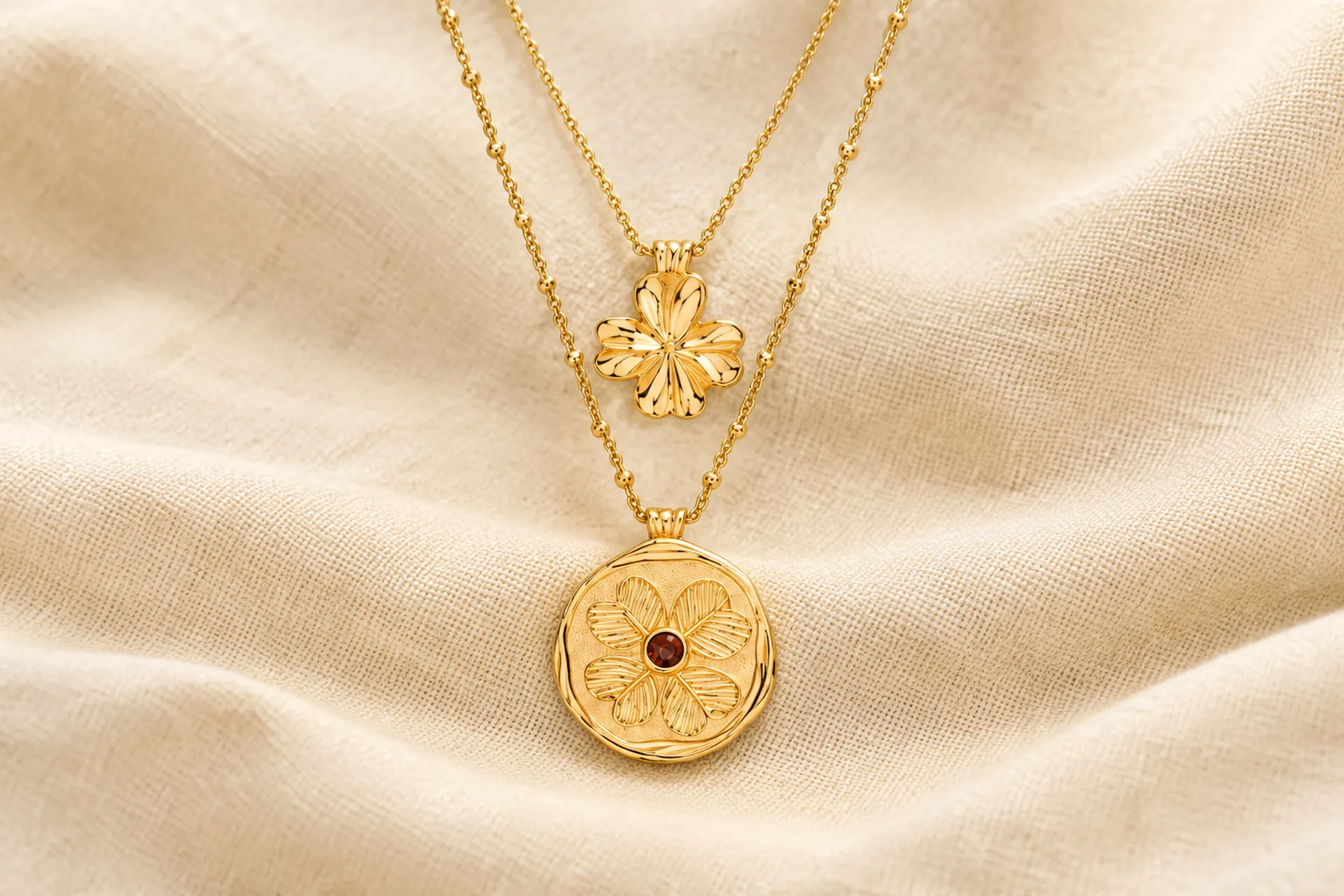
Choosing birthday jewelry for mom works best when you anchor it to something personal: her milestone age (50th, 60th, 70th), her own birth month stone rather than yours, or a combined-family piece that sets every family member's birthstone together. Budget-wise, quality sterling silver birthstone pieces start around $40–80, while gold and genuine-stone designs typically run $150–600+. The most meaningful gifts usually combine her birthstone with her children's or grandchildren's stones in one ring, pendant, or bracelet.
Quick Answer: What Birthday Jewelry Should I Get Mom?.
Milestone birthdays (50, 60, 70, 80): Choose a statement piece — a birthstone ring or pendant with her birth month gem as the centerpiece, sized up in carat weight or set in gold. - Any birthday: Jewelry featuring *her own* birthstone, not yours — many adult children mistakenly gift their own month's stone. - Family tribute: A "mother's ring" or stacked band holding the birthstones of her children and/or grandchildren. - Practical note: Check whether stones are natural, heat-treated, or lab-created before buying — reputable sellers disclose this.
Mom's Birth Month: Why Her Stone (Not Yours) Matters.
The most common mistake when buying mom birthday jewelry is defaulting to *your* birthstone because that's the month you associate with family. But a birthday gift celebrates her day. Gifting her own month's stone signals you paid attention to *her*, not the family calendar she built around everyone else.
| Mom's Birth Month | Birthstone | Everyday Durability Notes |
| --- | --- | --- |
| January | Garnet | Good hardness (7–7.5), generally untreated; very wearable |
| February | Amethyst | Hardness 7; avoid prolonged direct heat which can fade color |
| March | Aquamarine | Hardness 7.5–8, good clarity; durable for daily wear |
| April | Diamond | Hardest gem (10); excellent all-around durability |
| May | Emerald | Hardness 7.5–8 but often lower toughness due to natural inclusions; usually oiled — avoid ultrasonic cleaning |
| June | Pearl / Alexandrite | Pearls are soft (2.5–4.5) — better for occasional wear; alexandrite is durable but rare and pricey |
| July | Ruby | Hardness 9, excellent toughness; frequently heat-treated (stable, accepted) |
| August | Peridot | Hardness 6.5–7; avoid sudden temperature changes |
| September | Sapphire | Hardness 9, excellent for daily-wear jewelry |
| October | Opal / Tourmaline | Opals are soft (5.5–6.5) and sensitive to drying; tourmaline is more practical at 7–7.5 |
| November | Topaz / Citrine | Topaz hardness 8 but can chip on impact; citrine is usually heat-treated amethyst (stable) |
| December | Turquoise / Tanzanite / Zircon | Turquoise is often stabilized or dyed — ask; tanzanite (6.5–7) is softer than it looks |
You can explore each month in depth on our month pages, such as /birthstones/may or /birthstones/september.
Durability reminder: hardness measures scratch resistance, not overall durability. If mom wears one piece daily, prioritize gems with good hardness *and* toughness (sapphire, ruby, diamond, spinel). Softer or inclusion-heavy stones (emerald, opal, pearl) are better saved for occasional-wear designs like pendants or earrings, which take less impact than rings.
Milestone Birthdays: Matching the Gift to the Age.
Milestone birthdays deserve a deliberate upgrade in scale, not just a higher price tag:
50th — the golden birthday. Fifty is traditionally the "golden" milestone. A gold setting with her birthstone — or gold-accented jewelry if her stone suits white metal better — ties the material to the occasion. If her birthday falls in a yellow-gold-friendly month like November (citrine/topaz) or March (aquamarine in warm gold is an underrated combination), this is the moment.
60th and 65th. Diamond is the modern gift association for a 60th anniversary, and many families extend that logic to the 60th birthday. A small diamond accent paired with her birthstone — a halo pendant or three-stone ring — honors the milestone while keeping the piece personal.
70th and beyond. Comfort and ease of wear matter more now: pendant styles with secure clasps, stud earrings, or stretch bracelets that don't require fine dexterity to fasten. Consider lighter-weight settings and higher prong protection if her hands are active. Sentiment often outweighs size here — a combined family stone piece (below) frequently becomes the most treasured option.
A practical milestone tip: engrave the milestone year or her birthdate on the inside of the band or the back of a pendant. It costs little but makes a generic design one-of-a-kind, and it dates the piece for future generations.
Combined Family Stones: The "Mother's Ring" Done Right.
The mother's ring — every child's birthstone set together — has been an American tradition since at least the mid-20th century, popularized commercially in the mid-20th century. Done thoughtfully, it's one of the most emotionally powerful pieces of jewelry a mom will ever own. Done lazily, it looks like a random color sampler. Guidelines:
1. Limit to 3–5 stones. Beyond five, individual stones shrink and the design reads as cluttered. For large families, consider a pendant (more layout room) or two coordinated bands instead of one crowded ring. 2. Order by birth order, not color. The traditional arrangement sets stones in the children's birth order — left to right or clockwise. The story matters more than a color-matched gradient. 3. Handle clashing colors deliberately. Some months naturally pair (April diamond with any stone; July ruby with September sapphire). Others fight (green August peridot next to orange November citrine). A skilled designer separates strong colors with diamonds or metal spacers. 4. Include grandchildren thoughtfully. If grandchildren's stones would overload one piece, consider a *second* piece — a bracelet for grandchildren, a ring for children — so each generation gets its own statement. 5. Mixing hardness levels is fine — with caveats. A ring combining a diamond and a pearl means the diamond will eventually scratch the pearl in a shared setting. For rings, prefer stones of similar hardness; save soft stones (pearl, opal) for pendant or earring family pieces.
Treatment disclosure: ask whether stones are natural, heat-treated (common and stable for sapphire, ruby, amethyst, citrine), dyed (common in turquoise and some quartz), lab-created, or glass-simulated. All can be legitimate choices at different price points, but you should know what you're buying — and a seller who won't say is a seller to skip.
For a commercial-intent purchase, here's an honest allocation framework:
Under $100: sterling silver with genuine lower-priced stones (garnet, amethyst, citrine, peridot) or quality created stones. Very giftable for non-milestone birthdays. - $150–400: 14K gold vermeil or solid 10–14K gold with mid-range stones (aquamarine, tourmaline, smaller sapphires). The sweet spot for milestone gifts at most family budgets. - $500+: solid gold with fine sapphires, rubies, emeralds, or diamonds; custom family-stone work. Reserve for major milestones.
When in doubt between a bigger stone and better metal, choose the better metal — a gold setting ages far better than plated alternatives and can be reset with new stones later.
Frequently asked.
What jewelry do moms actually want for their birthday?
The survey answer hiding in every mother's jewelry box: her own stone, not the kids'. Mother-of-the-year gifts default to children's stones, but a birthday is the one day the calendar says her month. The winning compromise most families land on: her birthstone as the centerpiece, the kids' stones as accents below or behind — she gets her day and the family gets its cameo.
How do I choose a birthday gift when she never asks for anything?
Audit what she already wears daily — the chain that never comes off, the ring she twists when thinking, the studs she re-wears between washes. Her daily rotation is a complete specification: metal color, scale, format, formality level. Buy the birthday piece to join that rotation (one notch nicer), not to start a new one; the gift that gets worn is the one that matches the evidence.
Related Articles
A Brief History of Birthstones
From the twelve tribes of Israel to the 1912 standard that rules the modern list — the 3,500-year origin story of why we wear our birth month.
Read MoreThe Ultimate Birthstone Cleaning Guide
Keep every piece in your collection gleaming. Step-by-step methods for gold, silver, and delicate birthstones — no harsh chemicals needed.
Read MoreBirthstone Energy: A Complete Crystal Healing Guide
From root chakra grounding to crown chakra clarity, discover how each birthstone carries healing energy. Learn to activate your crystal for meditation, sleep, and daily intention.
Read More