60th Anniversary Diamond Gifts: Budgets and Engraving
A 60th wedding anniversary is the diamond anniversary. Three honest budget paths — accent stones, statement pieces, and the family reset — plus engraving that lands.
Yueounb Editorial
Gemologist
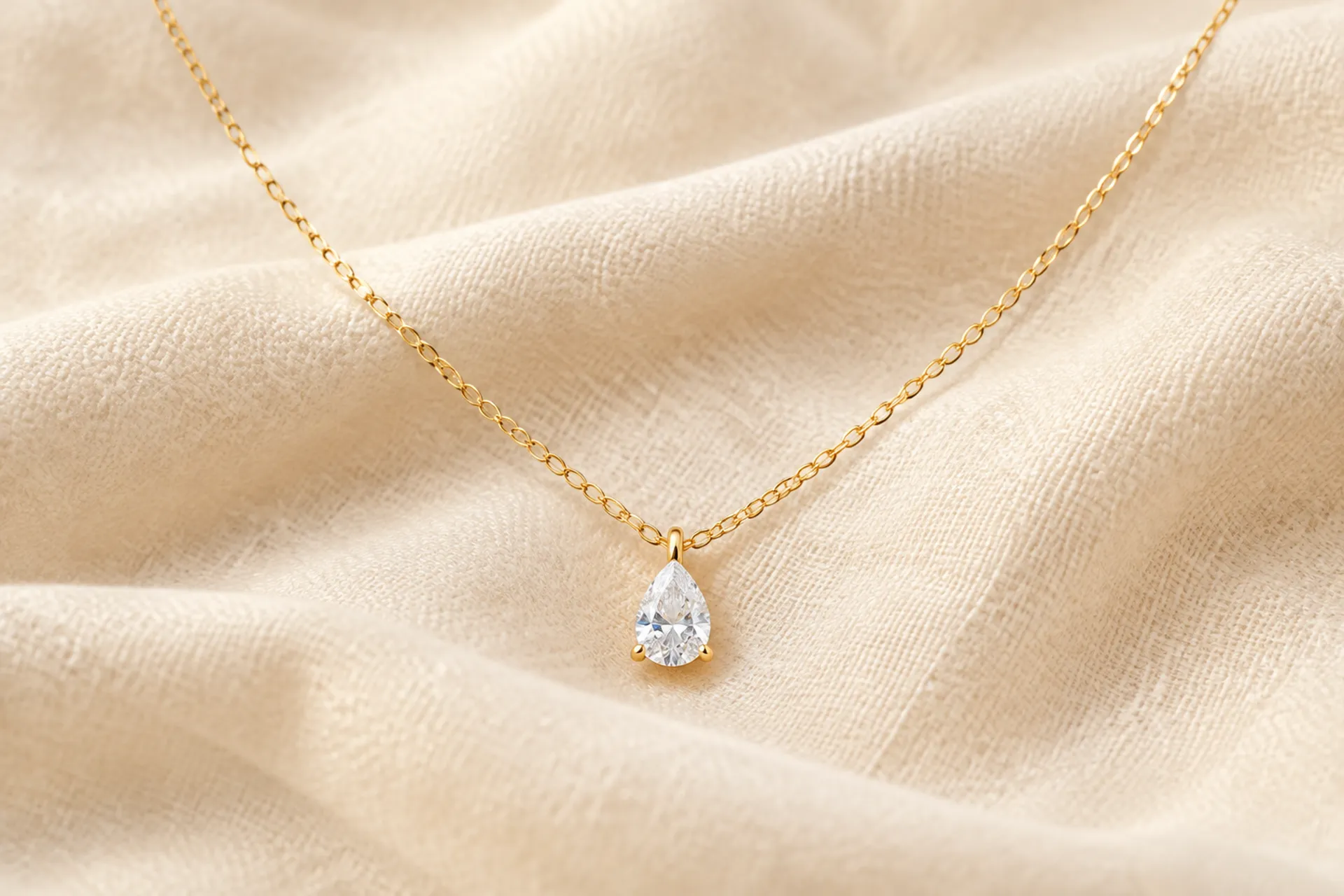
A 60th wedding anniversary is the diamond anniversary, and the traditional 60th anniversary stone is diamond. You do not need to spend tens of thousands of dollars to honor it well. Smart options exist at nearly every budget: a modest accent diamond added to an existing wedding ring, a engraved diamond pendant from roughly $300–$800, a lab-grown diamond piece at 50–70% below natural equivalents, or a full natural-diamond upgrade if the budget allows. Below, we break down realistic spending paths, engraving ideas that hold up over decades, and how to frame a 60th anniversary diamond as a future family heirloom. diamond grading fundamentals are documented in GIA's Gem Encyclopedia
Quick Answer: 60th Anniversary Diamond Gift Paths
| Budget path | What it buys (honest expectations) | Best for |
| --- | --- | --- |
| Under $500 | Lab-grown diamond accent jewelry (0.10–0.25 ct total), engraved settings, diamond halo pendants in 10K–14K gold | Sentiment-first couples, supplementing an existing ring |
| $500–$2,500 | Lab-grown solitaires 0.5–1 ct, natural diamond eternity bands with small stones, vintage-style pieces | A visible new piece without resetting the original |
| $2,500–$10,000+ | Natural diamond bands, resetting an original engagement stone into a new mounting, matching his-and-hers pieces | Upgrade or heirloom reset projects |
Prices reflect typical US retail ranges as of recent years and vary with gold market and diamond grades.
Why Do Sixty Years Equal Diamond?
The diamond became the recognized 60th anniversary gift in a formal sense through Britain's 1897 Diamond Jubilee for Queen Victoria, and the American list of anniversary gemstones later institutionalized diamond at year 60. Sixty years of marriage is rare enough that the durability symbolism is not marketing fluff: diamond sits at 10 on the Mohs scale, the hardest natural material. GIA's guide to gem durability covers why diamond leads it
But hardness is not the whole story, and we would rather tell you the truth than oversell. Diamond is hard and reasonably tough, but it can still chip along cleavage planes if struck at the wrong angle — girdles of older round brilliants cut with thick or sharp edges are especially vulnerable. After sixty years, many original engagement diamonds show wear: chipped girdles, abraded facet junctions, worn prongs. That is not a defect to hide; it is evidence of a life lived in the ring. A skilled jeweler can often re-polish a minor chip or recut the stone (with some weight loss that depends on the damage) and restore its sparkle for another sixty years.
For the full traditional list, our 60th anniversary gemstone guide covers the history and alternatives.
What Can a Modest Budget Buy for the 60th?
The most under-rated 60th anniversary move is not buying a big diamond — it's adding one to what she already wears.
Add diamonds to an existing band. Many jewelers can set small melee diamonds (0.01–0.03 ct each) into a plain wedding band, or add a diamond enhancer wrap that flanks the original engagement ring. Melee-grade natural diamonds keep this affordable; total costs commonly run $300–$800 in 14K gold depending on stone count.
Engraving does the emotional heavy lifting. Inside-ring or pendant engraving typically costs $20–$100 and can carry: the wedding date, "60 years," a line from the original vows, or the date plus both initials. Laser engraving can render handwriting — including a signature from a 1960s marriage certificate — at fine detail. One honest caution: engraving space inside a band is 20–30 characters for readable sizing. Plan the text before you shop.
A small lab-grown diamond pendant. A 0.25–0.50 ct lab-grown diamond in a simple 14K gold bezel or four-prong pendant frequently retails under $500. Lab-grown diamonds are chemically and optically the same material as mined diamond (same Mohs 10, same brilliance); they are not simulants like cubic zirconia or moissanite. What differs is origin, price, and long-term resale value — lab-grown stones currently carry minimal secondary-market value, which matters for heirloom framing (see below).
What Does a Statement Necklace Budget Look Like?
This is the sweet spot for most families, and lab-grown diamonds dominate it for a reason.
A 1-carat lab-grown round brilliant, G–H color, VS clarity, typically retails for a fraction of an equivalent natural stone at a fraction of the priceead]. That means a genuinely striking 1 ct lab-grown solitaire pendant or a substantial five-stone anniversary band becomes accessible at this tier. If the piece is meant to be worn daily and passed down as a symbol rather than a store of value, lab-grown is a defensible choice — say so honestly in the family narrative.
Natural diamonds at this tier mean smaller stones used thoughtfully: a 0.50–0.75 ct natural diamond pendant, or an eternity band set with 1.5–2.0 ct total weight of small natural diamonds. A three-stone (past-present-future) ring with a center natural diamond flanked by two lab-grown sides is a legitimate hybrid some couples choose — though disclosure to future inheritors should be equally clear.
One treatment disclosure to remember: most colorless diamonds on the market are untreated, but some are HPHT-processed or fracture-filled to improve apparent clarity. Fracture-filled diamonds in particular are not suitable for repair work involving heat (sizing, retipping) without special handling. Ask for the treatment status in writing; reputable sellers provide it.
What Is the Reset and Heirloom Path?
The most meaningful diamond gift at sixty is often one that already exists in the family.
Resetting the original engagement diamond. A custom reset — new mounting, updated prongs, perhaps adding diamonds from a mother's or grandmother's ring — typically runs $1,000–$3,500 in labor and mounting, before any added stones. This is also the moment to have the old stone checked: sixty-year-old prongs wear thin, and a worn prong is the most common way a diamond is lost. Ask the jeweler to check for chips at the girdle and to photograph the stone's inclusions before and after (a mapping that protects you during the work).
Combining stones across generations. If both original rings hold stones, a jeweler can combine them into one pendant or right-hand ring — a genuine three-generation piece if grandchildren's birthstone accents are added. Our birthstone collections by month can help match accent stones; choose hardness 8+ (corundum, diamond) for stones that will sit next to diamonds, because softer neighbors like opal or pearl will abrade first.
What Should You Ask Before Buying?
1. Grading documentation. For any natural diamond 0.30 ct and up, ask for a grading report (GIA or AGS). For lab-grown, IGI reports are the common standard. 2. Treatment status in writing — heat, irradiation, HPHT, fracture filling, or none. 3. Metal durability. After sixty years, skin chemistry and wear matter. Platinum develops a patina but holds stones securely; 14K gold is harder and more scratch-resistant than 18K but slightly more brittle at solder points. 4. Insurance appraisal for anything over roughly $1,000; sixty-year milestone pieces are exactly what insurance is for.
Engraving Ideas That Age Well
Short, specific, and dated beats poetic and vague. Options that have held up for our readers:
- The original wedding date + "60" (e.g., "9·14·65 — 60") - A phrase from the actual vows, abbreviated - The couple's first-shared address - "Still" — one word, the date it was engraved
Avoid trendy phrases and inside jokes that need explanation; heirlooms get read by people who weren't there.
Telling the Heirloom Story
A diamond's heirloom value is mostly narrative, not karats. Write down the story — when it was given, what the original ring looked like, who wore it, what the couple survived together — and keep it with the piece. A one-page "provenance letter" in the jewelry box, updated at the 60th, does more for the next generation than a half-carat ever will. If the piece mixes natural and lab-grown stones, say so in the letter. Future inheritors deserve accurate information, and honest documentation is what separates an heirloom from an estate sale item.
For more on the traditional gemstone ladder and what comes before and after year sixty, see our 60th anniversary diamond guide.
Frequently asked.
What is the traditional 60th wedding anniversary stone?
Diamond is the traditional 60th anniversary gemstone, an association formalized after Queen Victoria's 1897 Diamond Jubilee and adopted into American anniversary gift lists. Sixty years of marriage earned the comparison because diamond's exceptional hardness symbolizes endurance. If a diamond exceeds your budget, alternatives include diamond accents on existing jewelry, engraved gold pieces, or lab-grown diamonds, which offer the same material at a much lower price.
How much should I spend on a 60th anniversary diamond gift?
There is no required amount. Meaningful options exist under $500 (engraved pendants, lab-grown diamond accents, melee added to an existing band), while $500–$2,500 buys substantial lab-grown pieces or natural diamond bands with smaller stones. Resets of an original engagement diamond typically run $1,000–$3,500 plus stones. Choose based on what the couple will actually wear, not a percentage rule.
Can I add diamonds to an existing 60-year-old wedding ring?
Usually yes, but have the ring inspected first. After decades of wear, prongs and shanks thin out, and a jeweler may need to rebuild or reinforce them before setting new stones — budget for that structural work. Small melee diamonds can often be channel- or bead-set into a plain band. If the original stone is chipped at the girdle, ask whether re-polishing or recutting (with modest weight loss) makes sense before resetting.
Is a lab-grown diamond appropriate for a 60th anniversary heirloom?
Chemically and optically, lab-grown diamond is the same material as mined diamond — same hardness (Mohs 10), same brilliance. It is an excellent choice for a piece meant to be worn and passed down as a symbol. The honest caveat: lab-grown diamonds currently hold little resale value, so if financial value across generations matters to your family, natural diamond or a reset of an existing family stone is the stronger heirloom choice. Disclose the stone's origin in any provenance note.
Related Articles
A Brief History of Birthstones
From the twelve tribes of Israel to the 1912 standard that rules the modern list — the 3,500-year origin story of why we wear our birth month.
Read MoreThe Ultimate Birthstone Cleaning Guide
Keep every piece in your collection gleaming. Step-by-step methods for gold, silver, and delicate birthstones — no harsh chemicals needed.
Read MoreBirthstone Energy: A Complete Crystal Healing Guide
From root chakra grounding to crown chakra clarity, discover how each birthstone carries healing energy. Learn to activate your crystal for meditation, sleep, and daily intention.
Read More