Pearl Jewelry Guide: Types, Quality, and How to Wear June's Stone
Pearl jewelry spans four families — Akoya, Freshwater, Tahitian, and South Sea — and each reads differently at the ear, neck, and wrist. Here is how to buy and wear them.
Yueounb Editorial
Jewelry Expert
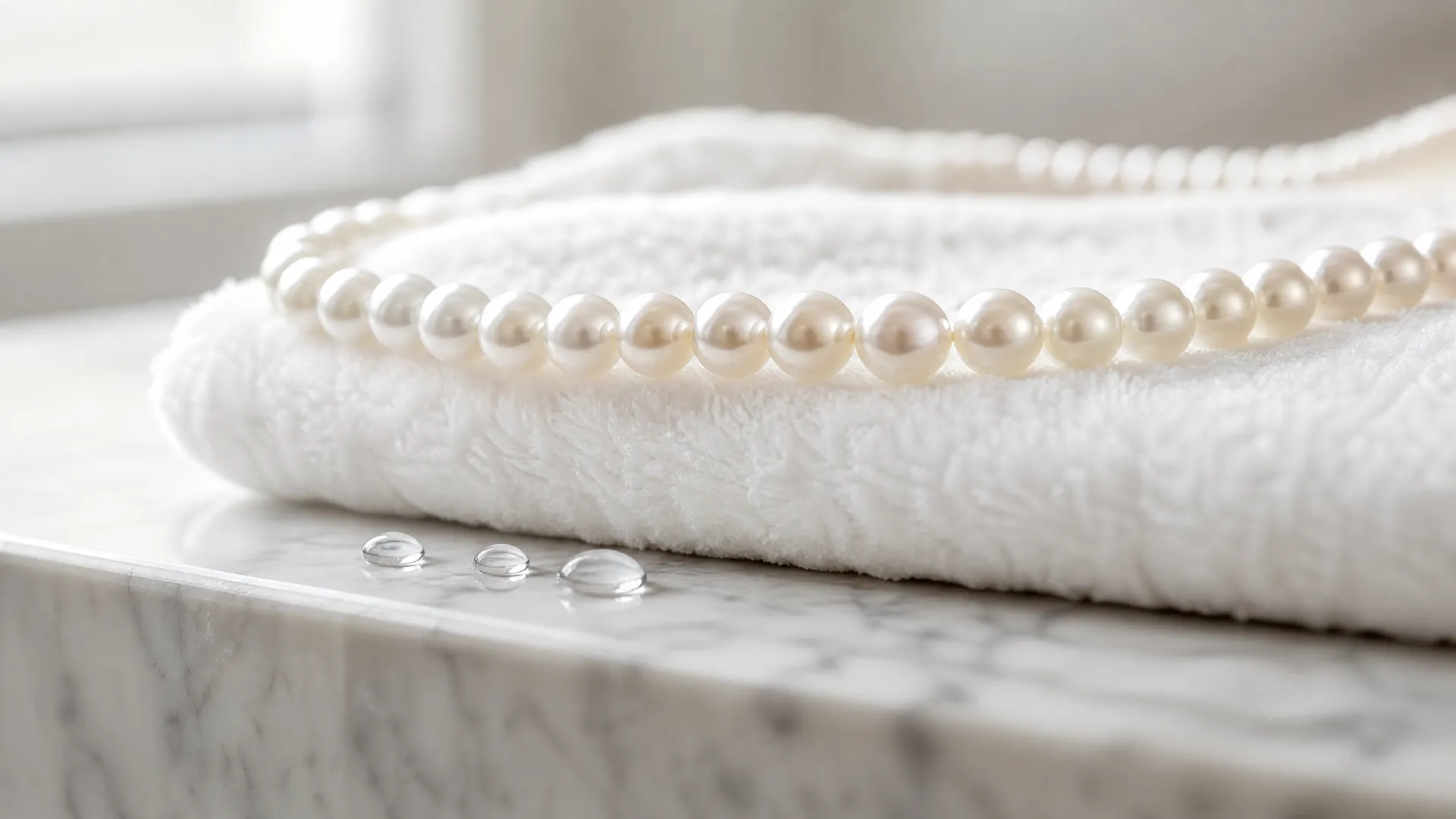
Every pearl on the market belongs to one of four families, and knowing which is which explains 90 percent of pearl jewelry pricing. **Akoya** pearls (Japan, saltwater) are the classic round white pearls of strand necklaces — usually 6-8mm, mirror-bright. **Freshwater** pearls (mostly China, lakes) are the everyday workhorses: friendlier prices, baroque shapes embraced by modern designers, and the entry point for most first pearl pieces. **Tahitian** pearls (French Polynesia) are naturally dark — peacock, charcoal, aubergine — and legally can't be called black pearls unless farmed there. **South Sea** pearls (Australia, Philippines) are the giants: 9-16mm, satin luster rather than mirror gloss, the top of the price sheet.
Quick Answer: Which Pearl for What
- **First real pearl piece:** Freshwater studs or pendant — honest pricing, forgiving wear - **The classic strand look:** Akoya, 6.5-7.5mm, 18 inches - **Statement with an edge:** Tahitian baroque pendant or drops - **Maximum presence:** South Sea studs, 10mm+, worn solo with nothing else competing
Luster is the quality grade that actually matters. Hold the pearl under a window: a top-grade pearl shows your reflection sharply and shows overtones — a pink or green shimmer rolling across the white. A dull pearl photographs flat no matter how round it is. Roundness matters most for strands (graded by millimeter uniformity); for single pendants and studs, luster beats roundness every time, because that is what the eye meets first.
June claims the pearl — one of three official June stones alongside moonstone and alexandrite — which makes pearl jewelry the default June birthday gift and a natural graduation classic. The softness is the honest footnote: at Mohs 2.5-4.5, pearls are the softest common gemstone, so the old rule last on, first off (after perfume, before the gym) is not fussiness but physics. Worn that way, a good strand outlives its owner — Victorian strands are still fully wearable.
The wearing math favors small pieces: pearl studs and a single pendant cover 95 percent of pearl occasions, layer better than strands with other necklaces, and don't fight clothing necklines. If you already own a birthstone necklace, a pearl piece in the same metal reads as a deliberate pair. June buyers can see how pearl and moonstone divide the month in our June birthstone comparison, and the full month-by-month framework lives on the twelve-month birthstones hub.
Frequently asked.
Are freshwater pearls real pearls?,
Yes — freshwater pearls are genuine pearls grown in mussels, mostly in Chinese lakes. They are not imitation (glass or shell beads). The difference from Akoya is the mollusk and the water: freshwater pearls are usually all-nacre (no bead nucleus), which makes them durable and lets them form baroque shapes at prices an Akoya cannot touch.
Why are Tahitian pearls black?,
The color comes from the Pinctada margaritifera oyster itself — its dark inner shell edge deposits dark nacre. No dye is involved in reputable Tahitian pearls; the trade even protects the name, requiring French Polynesia farming. Natural overtones run peacock green, silver, and aubergine.
Can I wear pearl jewelry every day?,
Studs and pendants, yes — they sit still and take few knocks. Strands take more risk because the nacre wears where pearls rub each other. Keep pearls away from perfume, hairspray, and sweat (all mildly acidic), wipe them with a soft cloth after wear, and restring a frequently-worn strand every few years.
What is the difference between pearl and mother-of-pearl?,
Pearl is the whole round formation the mollusk builds around an irritant; mother-of-pearl is the nacre lining of the shell itself. Same material, different architecture — which is why mother-of-pearl jewelry costs less and shows as flat iridescent panels rather than deep round luster.
Is pearl only for June birthdays?,
Pearl is June's birthstone (with moonstone and alexandrite) and the traditional 3rd and 30th anniversary gift, but its use has never been month-gated: pearl studs are one of the most-worn pieces in professional wardrobes year-round, and bridal jewelry runs on pearls regardless of anyone's birthday.
Related Articles
A Brief History of Birthstones
From the twelve tribes of Israel to the 1912 standard that rules the modern list — the 3,500-year origin story of why we wear our birth month.
Read MoreThe Ultimate Birthstone Cleaning Guide
Keep every piece in your collection gleaming. Step-by-step methods for gold, silver, and delicate birthstones — no harsh chemicals needed.
Read MoreBirthstone Energy: A Complete Crystal Healing Guide
From root chakra grounding to crown chakra clarity, discover how each birthstone carries healing energy. Learn to activate your crystal for meditation, sleep, and daily intention.
Read More