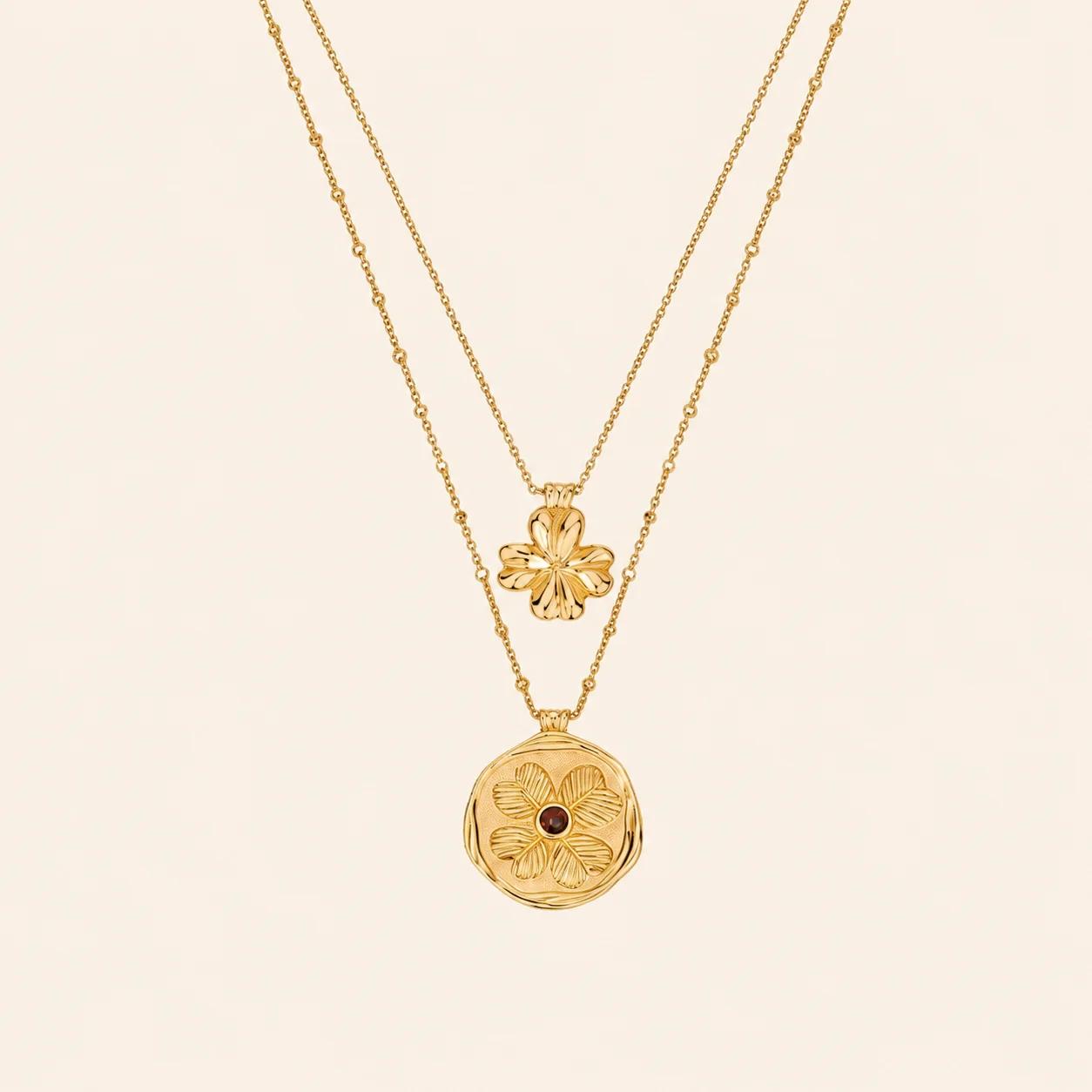
January · Garnet
Garnet Birthstone Necklace
Shopable garnet-ready necklaces on this page: $89.88–$159.88 · free insured US shipping on orders $75+.
A garnet birthstone necklace is the January classic: a deep-red stone that has meant protection for travelers and commitment between lovers since Roman times. Hard enough for daily wear (Mohs 6.5-7.5) and far more affordable than ruby, it suits gold settings, cluster pendants, and everyday layering.
What a Garnet necklace means
Long before garnet meant "January," it meant "come home safely." Roman and Persian travelers carried the deep red stone on journeys because they believed it glowed to warn of danger — a lantern you could wear. That origin is why garnet necklaces remain the classic gift for someone starting something with risk in it: a first job in a new city, a year of travel, a marriage. The stone says I want you back.
The other thread in garnet lore is commitment. The name comes from granatum — pomegranate seed — and a garnet pendant given between a couple has meant "my feelings are constant" for centuries. Unlike ruby, which shouts passion, garnet's red is quiet and steady: wine-dark, lantern-warm. January babies who wear it tend to say the same thing — it feels less like jewelry and more like a promise that happens to be beautiful.
How to wear Garnet
Deep red loves warm metals. A garnet pendant on a yellow-gold chain is the traditional pairing — the gold lifts the stone's warmth the way candlelight does. Garnet earns its keep in clusters: a small trio of stones reads richer than a single modest one. For layering, keep garnet against the skin and let silver and pearl chains fall longer — the contrast makes the red read intentional rather than accidental.
Garnet care
Warm water, mild soap, soft brush — never ultrasonic cleaners, and take it off before heavy work; garnet can chip along natural crystal lines.
Garnet necklace FAQ
Is a real garnet necklace expensive?
No — genuine garnet runs $20-150 per carat, making it one of the most affordable natural red stones. A quality garnet pendant typically costs less than a tenth of an equivalent ruby. If a large "garnet" is priced under fifteen dollars, treat it as glass until proven otherwise.
Can January babies wear garnet every day?
Yes. Garnet sits at 6.5-7.5 on the Mohs scale — hard enough for daily wear. The two rules: avoid sharp knocks (it can chip along crystal planes), and keep it away from ultrasonic cleaners.
What does a garnet necklace mean as a gift?
Traditionally, safe return and constancy. It was the traveler's protection stone of the ancient world and the promise-stone of couples — which is why it also marks the 2nd anniversary.
How do I layer a garnet necklace with other chains?
Garnet leads the short position: at 16-18 inches, against the skin, with silver and pearl chains falling longer beneath it. The deep red reads intentional when it is the warm note in a cool-metal stack — the mistake to avoid is pairing garnet with another warm statement piece, which turns two voices into noise. A cluster garnet pendant plus two fine plain chains is the proven formula.
Garnet or ruby for a January necklace — which should I buy?
Garnet, unless the budget ignores the question. Fine ruby carries gem-market pricing (four figures per carat for January-grade red), while deep red garnet delivers the same wardrobe function at pendant prices. The honest differences: ruby glows brighter under low light and outranks garnet on hardness (9 vs 6.5-7.5); garnet offers larger stones, deeper wine tones, and zero certificate anxiety. For a January birthstone necklace, garnet is the rational answer nine times out of ten.
Follow the Garnet thread
- Full stone guide: Garnet — the January birthstone
- Zodiac side: Capricorn ♑ · Aquarius ♒ — January babies land in these signs
- Anniversary years: the 2th are Garnet years
- Read deeper: our garnet journal guide · our garnet journal guide