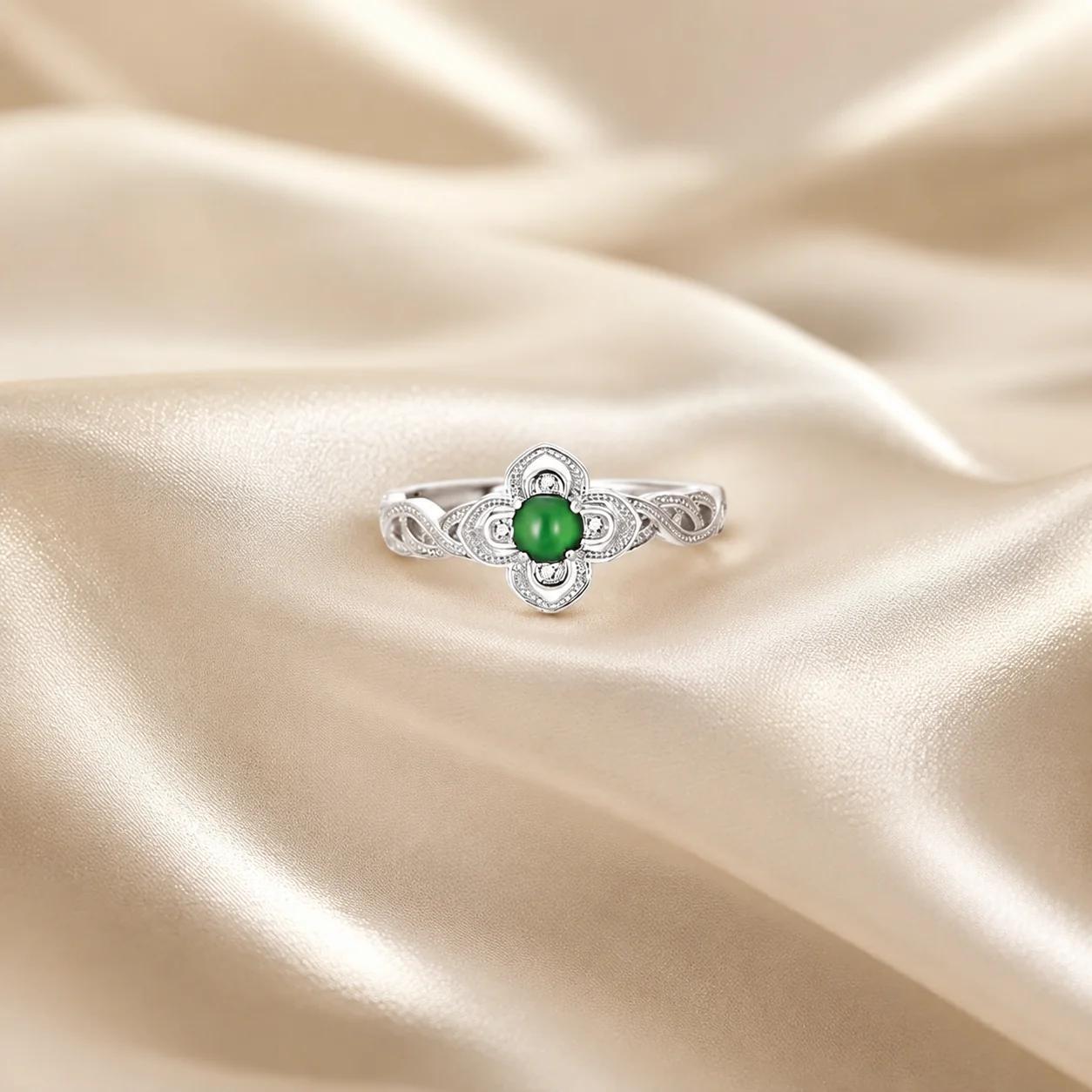
May Birthstone

Emerald

Verdant green, endlessly renewing.

May's birthstone is Emerald (or Chrysoprase) — a gemstone symbolizing rebirth, foresight, and flourishing love. It rates 7.5–8 on the Mohs hardness scale and is the traditional stone for May birthdays, set in handcrafted necklaces, rings, earrings and bracelets.

RebirthLoveFertility
Emerald ($) — May birthstone

Primary Stone

Emerald

Mohs Hardness

7.5–8

Symbolizes

Rebirth · Love · Fertility

Alternative May Birthstone

Chrysoprase

May Emerald Jewelry

5 handcrafted pieces for May babies.

May Birthstone Gifts for Her

May birthstone gifts carry one clear message: I know your month, I know your stone. A Emerald necklace is the classic May gift for her — personal, everyday-wearable, and impossible to regift. For a mom, choose a 2-stone or 3-stone design that pairs her Emerald with her children's birthstones; for a grandmother, family pieces hold 4, 5 or even 6 stones — one per grandchild.

History & Lore of Emerald

Cleopatra famously claimed Egypt’s emerald mines for herself, and the stone was revered from ancient Rome to Mughal India, where Shah Jahan — builder of the Taj Mahal — wore emeralds inscribed with sacred texts. Incan rulers treasured Colombian emeralds long before the Spanish arrived.

The stone of successful love, emerald is said to inspire loyalty and domestic bliss. Seers throughout history gazed into emerald to glimpse the future, believing it sharpened insight and invited truth.

Symbolism: Rebirth, foresight, and flourishing love.

How to Care for Emerald

Emerald is a beryl (7.5–8 Mohs) but is typically heavily included, making it more brittle than its hardness suggests. Never use ultrasonic or steam cleaners. Clean gently with warm soapy water and a soft cloth. Most emeralds are oil-treated to enhance clarity — re-oiling every few years keeps them looking their best.

  • Mohs hardness: 7.5–8
  • Suitable for everyday wear depending on setting and lifestyle.
  • Store separately to avoid contact with harder stones.
Full guide: How to Clean Precious StonesShop by stone: May Birthstone Jewelry Guide

Emerald Quick Facts

Everything about May's birthstone in one place.

Mineralogy

Mineral
Beryl (Emerald)
Chemical Formula
Be3Al2(SiO3)6
Crystal System
Hexagonal
Mohs Hardness
7.5 - 8
Specific Gravity
2.71
Refractive Index
1.57 - 1.58

Buying Guide

Primary Sources

Colombia, Zambia, Brazil, Zimbabwe

Color Variations

Grass green, Forest, Jardin inclusions, Deep verdant

Popular Cuts

Emerald cut, Cabochon, Oval

Best For

May birthdays, 20th and 35th anniversary, 55th anniversary (emerald), Taurus and Gemini

Avoid With

Ultrasonic cleaners, Sudden temperature changes

The May Birthstone, Answered Directly

May's birthstone is emerald — the bluish-green to green variety of the mineral beryl, and the only stone assigned to May on the modern 1912 chart (older traditional lists carried agate, and chrysoprase serves as a soft-green alternative on some modern lists). Emerald sits at 7.5-8 on the Mohs scale, is a sibling of March's aquamarine in the beryl family, and carries a price reputation few stones match: the finest emeralds sell for more per carat than comparable diamonds — Elizabeth Taylor's emerald pendant reached $280,000 per carat at auction. It is the gem of spring, and the most storied green in jewelry.

Raw Emerald: A Green Born in Black Shale

Emerald crystallizes as six-sided prisms — the classic beryl habit — and gets its green from chromium or van displacing aluminum inside the crystal lattice, a substitution so specific that geologists use it to read an emerald's birthplace. Colombia produced the original miracle: emeralds formed in hydrothermal veins inside Cretaceous black shale, a sedimentary origin essentially unique in the gem world, where the same shale supplied both the beryllium and the chromium — Muzo stones run deep pure green, Chivor leans bluer, Coscuez slightly yellower. Zambia's Kagem mine, the world's largest emerald operation, tells the other story: pegmatite fluids meeting chromium-rich rock, yielding a bluer, deeper green. Brazil, Pakistan, and Afghanistan round out the modern map.

The inclusions are not a defect but a biography. Dealers call the internal garden of a natural emerald its jardin — French for garden — and Colombian stones carry a signature no laboratory needs to guess at: three-phase inclusions, tiny cavities holding a crystal, a liquid, and a gas bubble, that serve as a birth certificate. And for scale: the oldest known emerald crystals are 2.97 billion years old, from South Africa — a green older than almost everything alive. At Yueounb we set stones chosen for how their garden catches the light, not for the absence of one.

Emerald Meaning: Venus, False Oaths, and Cleopatra's Mines

Rome dedicated the green stone to Venus, and an older tradition gave it a test no other birthstone claims: the GIA's history records that wearing an emerald was believed to reveal the truth or falseness of a lover's oath — and to make the wearer an eloquent speaker. Pliny the Elder, writing in the first century, praised it with the line gemologists still quote: nothing greens greener — and observed that gazing into its green rested tired eyes, a claim modern vision science has since confirmed about the color itself. Another old belief held that an emerald placed under the tongue let the speaker see what was coming.

Egypt adds the royal chapter. The Red Sea mines later romanticized as Cleopatra's Mines were worked from as early as 3500 BC — long before the queen made the green stone her signature — and were known to the Romans as Mons Smaragdus before falling lost for centuries and being rediscovered in 1817. Honest footnote: scholars note that some of the ancient world's famous emeralds were probably peridot, the August stone — a confusion our own August page returns the favor by mentioning. For May babies the inheritance is simpler: the gem of spring, of rebirth and growth, wearing the exact color the world turns in their month.

How Our Artisans Hand-Set Each Emerald

Emerald is the textbook Type III gem — the clarity grade that means visible inclusions are the natural condition, so each stone is judged against its own standard rather than a flawless ideal. That truth drives every craft decision. The emerald cut itself was invented for this stone: its step facets and cut-away corners remove the right angles where a fragile crystal fails first, trading a little brilliance for a great deal of survival.

Our artisans pre-inspect every stone for surface-reaching fissures before choosing the setting, favor hand-burnished bezels that wrap the vulnerable girdle in metal for daily-wear pieces, and reserve airy prong settings for designs destined for gentler occasions. One honest physics note belongs here too: at a specific gravity of 2.72, an emerald is noticeably lighter than a diamond of the same size — a one-carat emerald looks bigger on the hand than most gems its weight, which is quiet value every May piece inherits.

Care is the one place emerald asks for respect. No ultrasonic machines, no steam, no hot water, no long soaks: warmth and vibration work on fissure fillings and can extend a crack that was always there. Warm soapy water, a soft brush, an immediate dry — the same routine our cleaning guides teach for the whole calendar — is everything a healthy emerald ever needs.

How to Identify Authentic Emerald — and Its Treatments

Start with the fact most sellers only volunteer to direct questions: the GIA's own care pages put it plainly that the great majority of market emeralds — often cited at ninety percent or more — have had their natural fissures filled, traditionally with cedarwood oil. Modest oiling is accepted, disclosed practice, graded on certificates from minor to significant. The counterintuitive rule that follows: the cleaner a natural emerald looks at a friendly price, the harder the questions it should face. A big, glass-clear, cheap emerald is the classic trap — genuinely flawless natural stones exist only at the very top of the market.

Synthetics are the second honest chapter: hydrothermal and flux-grown emeralds are chemically emerald, indistinguishable to the eye, and only a laboratory report separates them — the certificate will say laboratory grown. Among lookalikes, the practical tells are mechanical: green glass shows round bubbles and warms quickly in the hand; green fluorite is soft enough (Mohs 4) for a steel knife to scratch; peridot runs yellower-green; chrome diopside and tsavorite are credible greens that a gemologist separates by refractive index. A Chelsea filter — under which many emeralds glow red while most imitators stay green — is a useful clue, not a verdict.

The price sanity check closes the loop: fine emerald escalates steeply with size, and top Colombian material trades in five figures per carat. Within reach of an everyday May gift, smaller stones with lively gardens are the honest, beautiful entry — the stone forgives size because the color never asks permission.

Who Should Receive Emerald

The calendar does half the selling: Mother's Day always falls inside May, making emerald the only birthstone that shares its month with a national gifting holiday — the stone of rebirth and growth, on the day of the year built for exactly that sentiment. May babies arrive as Taurus (through May 20) or Gemini (from May 21), and the zodiac traditions give each a claim on the green: the earth sign that loves real things, and the air sign that loves eloquent ones.

Beyond birthdays, emerald is the gem of the twentieth and thirty-fifth wedding anniversaries — and the traditional fifty-fifth is named the emerald anniversary outright. The personas our shop sees most: the new mother, wearing her child's birth month; the couple renewing after a hard chapter, choosing the stone that means growth; and the romantic invoking Venus with a green that has meant faithful love since Rome. Pair the piece with a handwritten note naming the meaning — rebirth, eloquence, the truest green — and let the stone close the argument.

Handcrafted Emerald, made to be inherited.

Each piece is set by hand, one artisan, start to finish.

Shop Emerald Jewelry

Birthstone Guide

May Emerald FAQs

Everything about raw crystals, energy, handmade craft, and how to choose your emerald jewelry.

Is there a raw crystal version of emerald? Can I get uncut birthstone jewelry?

Yes. Raw emerald forms in hexagonal prisms with a velvety, internal glow called jardin. These natural inclusions are not flaws; they are the fingerprint of a natural stone, and collectors prize uncut emerald crystals for their mossy, organic character.

What is the energy or healing meaning of emerald?

Emerald is the stone of flourishing love and rebirth, linked to the heart chakra. Crystal workers believe it opens the wearer to receive love, supports emotional healing after loss, and invites prosperity that feels alive.

How is the handmade emerald jewelry crafted?

Emerald is one of the most difficult stones to set. Our artisans hand-select each stone for structural integrity and use protective bezel settings rather than prongs, wrapping the stone in metal to shield its fragile edges.

Who is emerald the perfect gift for?

May emerald is the gift of renewal: for new mothers, new chapters, and relationships being rebuilt. Its green carries the energy of spring.

How can I tell if my emerald is authentic?

Natural emerald almost always has inclusions visible under magnification; flawless vivid green stones at low prices are almost certainly glass or synthetic.

What is the May birthstone?

Emerald is May's birthstone — the only stone on the modern 1912 chart for May, though older traditional lists carried agate and some modern lists offer chrysoprase as a soft-green alternative. Emerald is the green variety of beryl (March's aquamarine is its sibling), at Mohs 7.5-8.

What color is May's birthstone?

A very specific green: bluish-green to green, with the finest stones showing pure, saturated green with a blue undertone. Colombian Muzo stones set the deep-green benchmark, Zambian stones run bluer, and pale or yellowy-green stones trade at the accessible end. Too-blue or too-yellow usually means a different stone, not a cheaper emerald.

Is emerald more expensive than diamond?

At the top end, yes — fine emeralds can exceed comparable diamonds per carat (Elizabeth Taylor's pendant sold at $280,000 per carat), because gem-quality emerald is rarer in clean, saturated form. At everyday sizes, small emeralds with lively color are affordable; what is never cheap is a large, glass-clear natural emerald, which is the market's rarest sight.

Find Your Emerald Piece

Handcrafted May birthstone jewelry, made to be inherited.

Shop Emerald Jewelry